|
|
|
 |
 |
|
| About Us |
|
Read Past Issues | Resources | Composer Links |
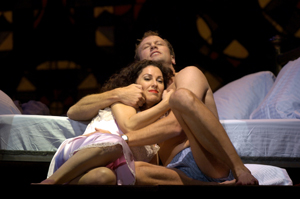
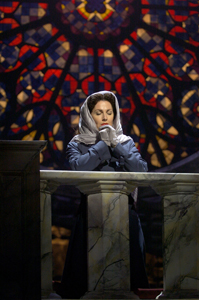
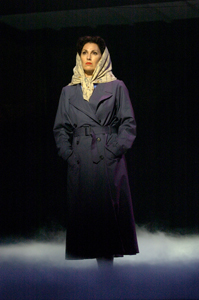
Heeeeeeeee’s back. Jake Heggie, who is either the savior of contemporary opera or a pretentious operatic wannabe, depending upon who you ask, may have hit the sophomore jinx with his adaptation of Graham Greene’s The End of the Affair, which opened Thursday night in Houston. “The work seemed musically taut but dramatically flawed,” wrote Cynthia Greenwood in the San Francisco Chronicle. “Heggie's adaptation, though it has an intriguing musical score that blends chromatic yearning and mellifluous lyricism, renders Greene's dark, psychological mystery into a banal morality play.” Charles Ward, writing in the Houston Chronicle, said the opera “drifted to..a snoozy, indecisive end.” The End of the Affair is based on Greene's 1951 novel inspired by his illicit affair with a married woman, his own muse and mistress, Lady Catherine Walston. The plot hinges on a well-kept secret. Sarah Miles, an adulterous married woman, prays that God will revive her lover, Maurice Bendrix, when he nearly dies in explosion. Believing him to be dead, Sarah bargains with God that if he survives, she will give him up forever. Moments later Bendrix appears, and Sarah remembers her spiritual contract that she feels compelled to honor. Alas, she doesn’t tell Maurice about her bargain, she simply disappears from his life. A couple of years later, her husband, Henry, notices the change in her, and voices suspicions to Maurice that she might be cheating on him. Out of jealousy, Bendrix, in turn, hires a detective, to follow her. The detective finds her diary and, of course, Maurice learns her secret…too late. On the surface, the story has a lot more potential for soap opera than high opera, but Heggie may have been attracted to some elements from his own life—at 21, and a closeted gay, he married his 71-year-old piano teacher, Johanna Harris. Heggie was born March 31, 1961 in West Palm Beach, Florida, and was raised in Ohio and California. He studied composition privately with the late Ernst Bacon in Northern California as a teenager and then went to UCLA to study piano with the late Johana Harris, composition with Roger Bourland and Paul Reale, and film scoring with David Raksin. He makes his home in San Francisco. Heggie burst onto the operatic scene in October 2000 with his adaptation of Sister Helen Prejean’s novel, Dead Man Walking, which became the most praised—and reviled—new opera in many years. I must confess that I enjoyed it although I don’t think it’s in a league with Mark Adamo’s Little Women or Tobias Picker’s Emmeline. With a libretto by Heather McDonald, The End of the Affair is much smaller in scale. There are only six singing roles, no chorus and a 24-player chamber orchestra.
|
|
An Interview with Tobias Picker Handmaid Tale's Debuts in English Rautavaara Joins B&G Who's Afraid of Julia Wolfe Derek Bermel's Soul Garden The Pianist: The Extraordinary True Story of Wladyslaw Szpilman John Adams' Atomic Opera A Bridge Not Far Enough Turnage Signs With B&H Sophie's Wrong Choice Copland's Mexico On Being Arvo Rzewski Plays Rzewski Praising Lee Hyla David Lang's Passing Measures Three Tales at BAM Naxos at 15 On the Transmigration of Souls Dead Man Walking David Krakauer's The Year After Steve Reich/Alan Pierson
|
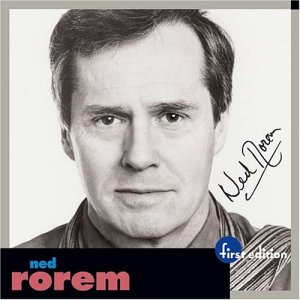
11 Studies for 11 Players: Piano Concerto Composer: Ned Rorem Performer(s): , Lowenthal, Mester, Louisville Orchestra First Edition Rorem ages well and a recent spate of re-releases of his early chamber and orchestral works demonstrate that he is a good deal more than simply a master of art songs. Like most of Rorem's work, 11 Studies is distinctly more European than American and recall Berio's marvelous Sequenzas. |
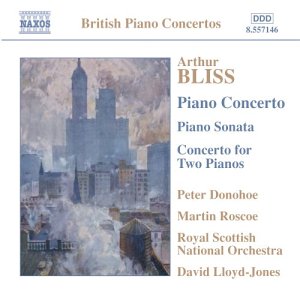
Piano Concerto. Concerto for two pianos. Piano Sonata Composer: Arthur Bliss Performers: . Peter Donohoe, Martin Roscoe (pianos), Royal Scottish National Orchestra, David Lloyd-Jones (conductor). Naxos The piano concerto is rip-snorting, full-blooded, heavy breathing romantism of the Rachmaninov variety played with over-the-top virtuosity by the nimble Peter Donohoe. Listening to it makes you want to invade Russia. |
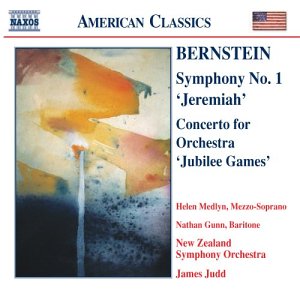
Symphony No.1, 'Jeremiah'. Jubilee Games Composer: Leonard Bernstein Performers: Helen Medlyn (mezzo), Nathan Gunn (baritone), New Zealand Symphony Orchestra, James Judd (conductor). Naxos Young Bernstein, filled with piss and vinegar and more musical ideas per page than any eight of his contemporaries. A joy to listen to a genius in the process of finding his compositional voice. |
Organ and Silence Composer: Tom Johnson Performer: Wesley Roberts, organ A collection of 28 organ pieces to be played separately or as a long recital A music concerned for, as the author writes in the disc notes, "… the importance of silence in music…". This work is conceived not "for organ" but, really, for "organ and silence", as the silence is a fundamental part of it, and it’s not possible to give it up. It’s an attempt, as the author explain " to permit as much silence as possible, without allowing the music to actually stop". Tom Johnson is one of the masters of minimalism, but he combines this with rigorous logic. His work, free from false glitters, defines, better that any other one, the sense of a research the goes beyond the strict genre definitions, and become poetic application of original ideas. |
Trans Composer: Lee Hyla Conductor: Gil Rose Performer: Laura Frautschi, Tim Smith New World Records A rare opportunity to hear several of the major symphonic works of a true American original. Hyla happily mingles expressionistic, complex contemporary atonal idioms with elements of avant-garde jazz, and rock and garage band with results that cannot be anticipated. His honking, strongly articulated rhythms mask an inner beauty that almost always seems ready to burst into radiant sunshine. The three works on this disc—Concerto for Bass Clarinet and Orchestra (1988), Trans (1996), and the Violin Concerto (2001)—show Hyla at peak form, with stunning performances by Gil Rose and the Boston Modern Orchestra Project.
|
Mein Herz Brennt Composer: Torsten Rasch Performer(s): Rene Pape, Katharina Thalbach, Dresdner Sinfoniker Deutsche Grammophon The best part of this odd little exercise is the sensational baritone Rene Pape, who sings these re-set songs by the German punk rock group, Rammstein, as if they were written by Mahler, on a good day. |
Four Psalms, Emerson Composer: John Harbison Performers: The Cantata Singers & Ensemble New World Records This is the first recording of one of John Harbison’s most important works, Four Psalms, which was commissioned to celebrate the fiftieth anniversary of the founding of the state of Israel. The composer describes Four Psalms as follows: "[It] opens with a prelude for mezzo-soprano and orchestra, a prayer composed by Amemar in 454 A.D., which states the major themes of the piece, both musical and philosophical … There follow four psalms, in Hebrew, alternating with the voices, in English, of people now living. The psalm settings employ fully developed forms—march, antiphon, passacaglia, and aria—suggested by the majesty and mystery of the Hebrew language. In contrast, the contemporary voices are set within brief inventions, their form echoing the momentary illuminations granted to those reflecting upon their own time." The other work, Emerson, is an a cappella setting of an extract from Emerson’s philosophical prose. Stunning performances and a must-have disk. |
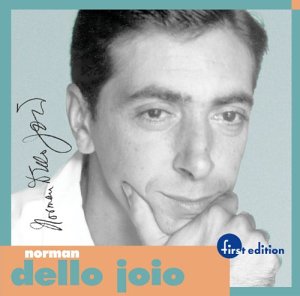
Homage to Haydn / Triumph of St Joan Composer: Norman Dello Joio Performer(s): Slatkin, Louisville Orch First Edition American composer Norman Dello Joio turned 91 in January and this re-issue of two of his significant works shows that his music is wearing well. Perhaps, a little too neo-classic or "accessible" for some modern sensibilities, Dello Joio's unique compositional fusion of American popular music, jazz, Italian opera and the liturgical music of the Catholic church has an elegance that transcends the label of easy listening. Two wonderful works by Dello Joio are featured on this First Edition release: the stirring, widely acclaimed Louisville Orchestra commission, Triumph of St. Joan Symphony, which debuted with Martha Graham as dance soloist, and his Homage to Haydn, an jubilant tribute that reflects Dello Joio’s studies with Paul Hindemith. |
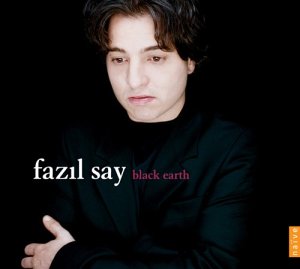
Black Earth Composer: Fazýl Say Conductor: Muhai Tang, Eliahu Inbal Performer: Fazil Say, Laurent Korcia Naive The Turkish pianist Fazýl Say has built a formidable reputation for himself through a string of first-rate recordings of Mozart, Bach, Gershwin and Stravinsky. This time around, Say demonstrates that he is also a composer of considerable talent. The title piece, Black Earth for solo piano, is based on a Turkish folksong, in which Say, evoking the saz, a Turkish traditional instrument, simultaneously plays the keys and the strings inside the piano, producing an otherworldly sound. Say's compositions are hardly classical--more like Keith Jarrett with a dynamite hook-- but these are daring and exciting performances. |
American Angels Performer(s): Anonymous 4 Harmonia Mundi Franc Anonymous 4 turns from the medieval repertoire to explore the roots of American sacred music. Developed in Toni Morrison’s Atelier program at Princeton in spring 2003, American Angels includes songs of redemption and glory from the time of the American Revolution to the present day: 18th-century psalm settings from rural New England, 19th-century shape-note and camp revival songs from the rural South, and some of the nation’s best-loved gospel songs. Drawing from collections including “The Southern Harmony,” and “The Sacred Harp,” - the album explores the beauty and power of early American sacred music and the relatively obscure form of a cappella choral singing known as Sacred Harp. |
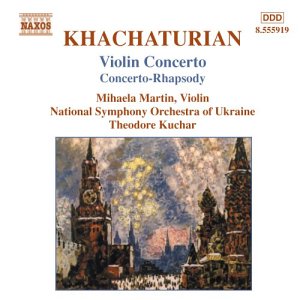
Violin Concerto Composer: Khachaturian, Performer(s): Mihaela Martin, Kuchar, Nat'l So Ukraine Naxos It takes a lot of virtuosity to keep Khachaturian's demanding Violin Concerto afloat and the Romanian violinist, Mihaela Martin, does a masterful job. Her version is less daring, say, than that of, David Oistrakh, to whom the piece is dedicated, but she skillfully navigates the bristling outer movements and pours her soul into the elegaic central movement. Among recent versions this holds it own with the very best.
|
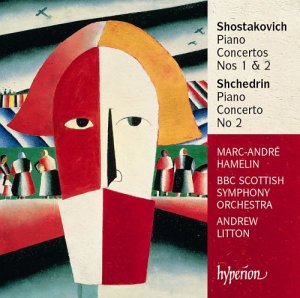
Shostakovich Piano Concerti Nos. 1 & 2 Shchedrin Piano Concerto No. 2 Marc-André Hamelin (piano), BBC Scottish Symphony Orchestra, Andrew Litton Hyperion Marc-Andre Hamelin makes child's play of these two very different piano masterpieces of Shostakovich. Fabulously accompanied by the BBC Scottish Symphony, led by Andrew Litton, Hamelin provides not simply his usual technical brillance but also a feeling for the material that sounds--to this listener--definitive. The Shchedrin concerto, though less well-known, is no less enjoyable. |
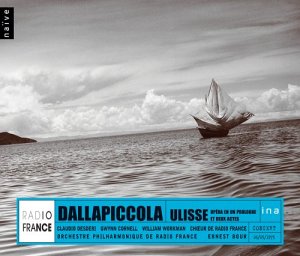
Ulisse Composer: Luigi Dallapiccola Conductor: Ernest Bour Radio France Dallapiccola's
final masterpiece, the opera Ulisse, which premiered in Berlin in 1968,
recounts the voyage both of Homer’s hero and of mankind's search
for eternal truths. Recorded in 1975, a few months after the composer's
death, this performance is the culmination of a lifetime of meditation
and musical discipline by one of the great humanists of the 20th century
arts.
|
Early and Unknown Piano Works Composer: Morton Feldman Performer(s): Debora Petrina OgreOgress Productions Previously
unrecorded pieces from the early 40s reveal Feldman during the period he
studied with Wallingford Riegger. No real surprises here but no klunkers
either. His composition style borrows 12-tone techniques and
atonality but deploys them within more traditional neo-classic structures.
|
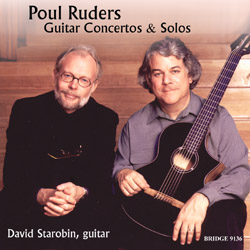
Guitar Concertos & Solos Composer: Poul Ruders Performer: David Starobin, guitar Bridge The
long and intimate collaboration between Poul Ruders, the brilliant composer,
and David Starobin, the splendid guitarist, (who also happens to be David
Starobin, the successful record executive--co-founder of Bridge Records)--has
led to some of the most challenging and original compositions in the modern
guitar repertory. Consider this a kind of "greatest hits" for the
modern classical guitar.
|
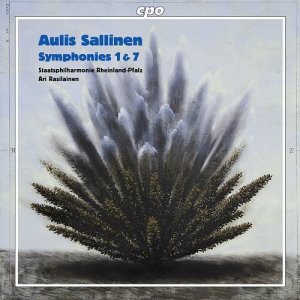
Symphonies 1 & 7 Composer: Aulis Sallinen Performer: Staatsphilharmonie Rheinland-Pfalz, Ari Rasilainen cpo Another great Finnish composer, ho hum, but Aulis Sallinen (b. 1935) is, with Rautavaara, the latest proof that small countries can produce big composers. There are hints of Sibelius, of course, but Sallinen is a unique voice that speaks directly. His work is tonal and completely devoid of the modern medievalism that characters much north of the Arctic Circle music. |
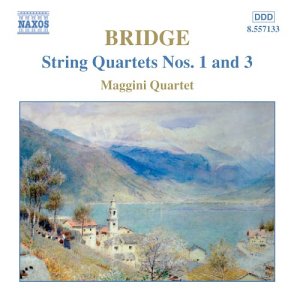
String Quartets 1 & 3 Composer: Frank Bridge Performers:. Maggini String Quartet Naxos Frank Bridge is a bit of a lost horse in the English stable of composers that includes such giants as Elgar, Vaughan Williams and, his student, Benjamin Britten. But he shouldn't be. No. 1, written in 1901, is a mature, fully realized work; No. 3, composed in 1927 is one of the pilars of 20th century chamber music. As always, the Maggini play magnificiently and the recording is first rate. |
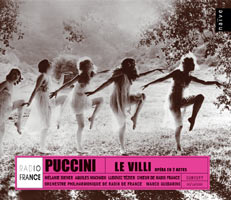
Le Villi Composer: Giacomo Puccini Conductor: Marco Guidarini Performer: Melanie Diener, Ludovic Tezier, et al. Radio France Chorus, French Radio Philharmonic Orchestra Naive Just
listening to young Puccini's first opera (as opposed to seeing it staged
and sung), you notice immediately that the big sweeping melodies, the ingenious
"hooks" are already there. Naive has also issued a Radio France recording
of Puccini’s second opera, Edgar,
written five years after Le Villi. In this more ambitious and
complicated work, Puccini develops his technique using a score that merges
stirring arias and ensembles.
|
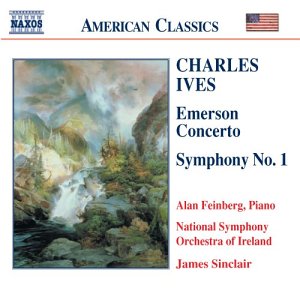
Emerson Concerto / Symphony 1 Composer: Charles Ives Performers: Alan Feinberg (piano), National Symphony Orchestra of Ireland, James Sinclair (conductor) Naxos Ives sketched the Emerson Concerto in 1907 but never fully finished it, although he used portions in other works. David G. Porter, a noted Ives scholar, was able to create a performing version which was premiered in 1998 by Alan Feinberg, the pianist on this premiere recording. The piece is extremely demanding, often abrasive, and demands exceptional virtuosity. Symphony No. 1 is fetching, but not as charateristic, of the great American maverick that followed. |
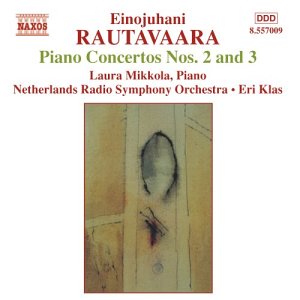
Piano Concertos 2 & 3 Composer: Einojuhani Rautavaara Performers: Laura Mikkola (piano), Netherlands Radio Symphony Orchestra, Eri Klas (conductor) Naxos The Finnish composer Rautavaara has enjoyed enormous success in recent years with his unique blend of northern lights impressionism and romanticism served up in an aura of modernity. His Cantus Articus is immensely popular, conjuring up associations of Messiean, although the latter is a much more important composer. The Third Piano Concerto from 1998 is forceful, drawings on the Russian school of pianism, although it not technically flashy until the finale. The Second, composed nine years earlier, is more traditional and Laura Mikkola, already on disc with a highly regarded account of the First Concerto, again provides an outstanding performance. |
 |
Search WWWSearch www.sequenza21.com |