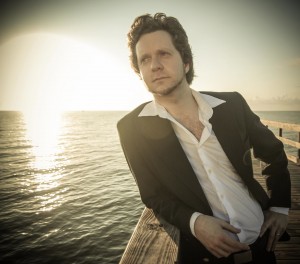
Some of Henryk Gorecki’s closest collaborators were the members of the Kronos Quartet. He composed all three of his string quartets for Kronos. As it happens, when the composer passed away yesterday, the group was in Poland. Late yesterday, David Harrington, Kronos’ first violinist, released the following statement:
“The three string quartets Henryk Górecki wrote for Kronos are a totally unique
body of work. With ‘Already it is Dusk’, Quasi Una Fantasia’ and ‘…songs are
sung’, Górecki extended a tradition that includes Bach and Beethoven, among
many others. When we rehearsed with Henryk, the experience was as close as
we have ever been to witnessing the raw, impassioned core in the heart of
Europe’s great invention: the string quartet. When he demonstrated phrases on
the piano for us I was always reminded of Beethoven: his fortes were shattering,
his pianissimos unfathomably inward. From us, he always wanted as much as
our bows could handle and more.
“Górecki represented a totally independent voice. He only listened inward.
There was no amount of pressure that ever pulled him away from his ideals. He
was known for his cancellations, as even the Pope discovered. Kronos waited 12
years for a piece that was so personal he couldn’t let it out of his sight until the
right moment mysteriously arrived. And I always loved him more for that
devotion to his muse.
“I learned that Henryk was a skilled furniture maker known for his beautiful
chairs. I once asked him if he would consider making me a chair. He said,
‘David, you can have the chair or you can have String Quartet #4. You choose.’ I
chose String Quartet #4. But it looks like I will have to wait.
“There is no one who can replace Henryk Górecki in the world of music. Many
others have created beautiful, passionate, even exalted music. But Henryk found
a way forward and beyond, through thickets of styles and fashions, that
resonates of the single human being in communion with the power of the
Universe. I miss him immensely.”
David Harrington
November 12, 2010
Wroclaw, Poland
Polish composer Henryk Gorecki died today at the age of 76. Gorecki was one of Poland’s most prominent musical figures and, along with Estonian composer Arvo Pärt and Englishman John Tavener, is widely credited with popularizing the “spiritual minimalism” strain of Postmodern era European music.
He is perhaps best known for his Symphony no. 3, Symphony of Sorrowful Songs (1976). Fifteen years after its premiere, a Nonesuch CD recording of the work, featuring soprano Dawn Upshaw and conducted by David Zinman, became a best-seller in 1992, breaking into the mainstream charts in the UK and dominating US classical sales during that year.
While the composer has denied a direct program for the work, it’s frequently been linked with the experiences of the Polish people under German occupation during the Second World War; in particular, with the Holocaust. Below is a video excerpt of the symphony performed at Auschwitz, from a film commemorating victims of genocide during WWII.
Higdon and Tchaikovsky: Violin Concertos
Hilary Hahn; Royal Liverpool Philharmonic Orchestra;Vasily Petrenko
Deutsche Gramophon
It’s pleasing to see mainstream media picking up the story of Hilary Hahn’s recent recording of Jennifer Higdon’s Violin Concerto. Like her previous pairing of Schoenberg with Sibelius, Hahn presents something new to most classical audiences alongside a “warhorse,” the Tchaikovsky Violin Concerto. She plays both superlatively; I wouldn’t want to have to choose which performance to prefer.
Far from seeming like an odd pairing, the two concertos complement each other wonderfully. Higdon has a compositional voice that doesn’t eschew contemporary orchestration – witness the brash percussion in the Violin Concerto’s first movement. But at the same time she makes numerous connections to the Romantic concerto tradition in her sense of phrasing and the unabashed lyricism of much of the work. But this is no mere “Neoromanticism:” Higdon gives us the real thing, with guts and, often, gravitas. Thus, it’s an excellent choice to pair with Tchaikovsky.
I’m particularly fond of the Higdon concerto’s pastoral, poignant second movement, which not only evinces a supple contemporary Romanticism, but also reminds me in places of a Twentieth Century American composer: Aaron Copland. Also, its passages for the woodwinds are just spectacular. And the final movement is a winning showcase for both the orchestra and its soloist: it fits Hahn perfectly.
One hopes that, someday, we’ll be seeing future recordings where the Higdon concerto is the repertoire work paired with a piece of “new music:” it’s not hard to imagine!
I’m looking forward to interviewing Ryuichi Sakamoto on Wednesday for Signal to Noise Magazine. His latest US release is a double CD featuring two albums: Playing the Piano and Out of Noise. The former is a collection of “self-covers,” featuring Sakamoto revising some of his most famous earlier pieces, many of them from film scores, for solo piano. The process of distillation and refinement has resulted in fascinating and fresh-sounding performances.
Out of Noise on the other hand, is a collection of a dozen new pieces. Here, Sakamoto explores an atmospheric and multi-hued sound palette, and enlists a host of noteworthy collaborators: among them Keigo Ayomada, Karen Filskov, Fretwork, Christian Fennesz, and Skúli Sverrisson.
Thus, the interview occurs at a timely crossroads, and will be a chance to ask Sakamoto about a broad range of music, from his earliest compositions to his current creative process. It will appear in the Winter issue.
Nico Muhly
A Good Understanding
Los Angeles Master Chorale; Grant Gershon, conductor
Decca CD
Before he became a Juilliard graduate, a session musician for stars such as Jonsi and Philip Glass, and then a famous composer with a pile of prominent performances and a bright future with lots of commissions, Nico Muhly was first a boy soprano. A Good Understanding, his latest Decca CD, one of two on the imprint more or less released simultaneously, demonstrates a strong connection to these musical roots and the choral music tradition. He’s also fortunate to have found ardent and well-prepared advocates in the Los Angeles Master Chorale and its conductor Grant Gershon. It’s a winning combination.
Bright Mass with Canons is a surprising and fascinating juxtaposition of traditional and postmodern elements. Its Kyrie is a good example of this. Underneath soaring vocal counterpoint, which often embodies the Anglican sound world of composers such as Whitbourne and Bennett is an underpinning of nervously skittering organ licks. The Sanctus thickens the broth further, its dense organ chords eliciting intriguing polychords from the voices.
The mass, as well as the cinematically swept Magnificat and Nunc Dimittis settings which follow, attractively wed these varied elements into well-crafted works. The Christmas anthem Senex Puerum Portabat is equally imaginative. It starts with long stretches of moody sostenuto cluster chords, but these give way to jubilant singing as well as bright flourishes and ebullient sliding passages for brass ensemble.
The title track, with its long legato lines for the voice somewhat curiously punctuated by boisterous percussion and a busy organ part, feels a bit more diffusely ordered, but there are a lot of very attractive moments. The LA Children’s Chorus provides a supple and affecting rendition. Expecting the Main Things from You, a triptych of Whitman settings, employs a kaleidoscope of textures circulating through the music, including pitched percussion and a prominent solo violin part. Muhly seems to favor interruptive accompaniments, and perhaps is responding to the digressive nature of the source texts with effusive variety, but the piece never quite settles in. The use of a “morse code” vocal accompaniment adds a fragmentary quality to some of the music. But again, it features affecting moments of skillful writing for both voices and instruments.
Thus, while its second half is uneven, all told the CD contains some of Muhly’s best work to date.
Simon Bolivar Youth Orchestra of Venezuela; Gustavo Dudamel, conductor
Deutsche Grammophon CD
True, Stravinsky’s Sacre du Printemps is a watershed work. It serves as many a classical listener’s jumping off point when first exploring Twentieth Century repertoire. But can a work, no matter how seminal, have too many recordings? Can it get programmed so often on concerts that it loses its zing?
I have several recordings of the piece myself, but I’d begun to wonder in the past couple years whether the Rite was in danger of being overexposed. And I’m not the only one…
Enter young conductor Gustavo Dudamel and his even younger colleagues from the Simon Bolivar Youth Symphony Orchestra of Venezuela. Their version of the Rite is viscerally powerful, rhythmically muscular, and impressively wide in its dynamic range. After getting a bit burnt out by the piece and its attendant folklore, I’m refreshed by hearing Dudamel’s rendition.
In a clever programming touch, the Stravinsky is paired with Silvestre Revueltas’ La Noche de los Mayas. Originally a 1939 film score, a concert suite of the work was only fashioned some two decades after Revueltas’ death. Latin dance signatures and melodic inflections are offset by virtuosic percussion writing, including some cadenzas that help to make evident the musical kinship between Rite of Spring and La Noche de los Mayas.
The sociocultural resonances are obvious as well. It might seem gruesome to pair works based on their common interest in human sacrifice, but Rite restores the vitality and bite of early modernism’s interest in still-earlier primitivism.
Sechs Motetten nach Worten von Franz Kafka; Choral Works
RIAS Kammerchor; Hans-Christopher Rademann
Harmonia Mundi CD 902049
Ernst Krenek’s Lamentations of Jeremiah is a work that I admire a great deal. A pivotal 12-tone composition, it proved greatly influential to a number of American composers and, reputedly, Igor Stravinsky. Indeed, Krenek is one of the first to discuss the use of a rotation as a serial permutation; a technique that would prove valuable to Stravinsky during his own late spate of 12-tone works.
The recording of Krenek’s Lamentations by RIAS Kammerchor (also on HM) was widely acclaimed as a near-flawless rendition of this famously challenging, dissonantly thorny a cappella work. Sechs Motetten is a worthy follow-up to the previous disc. It includes a wide range of Krenek’s shorter choral pieces, ranging in date of composition from 1923 to 1959. There is a disjunct, angular quality to the Kafka settings that seems to resonate well with the author’s legendarily terse and often tart prose. The RIAS singers perform with superlative control; one is particularly taken with the nuanced renderings of detailed dynamic shifts and articulations. Both sopranos and tenors negotiate an often high-lying tessitura with nary a flinch.
The CD also includes an arrangement of Baroque composer Claudio Monteverdi’s Lamento della Ninfa; it isn’t realized with a particularly informed sense of period practice, but retains Monteverdi’s nimble rhythms and canny word inflections. Also winning is the Op. 132 Kantate von der Vergänglichkeit des Irdischen. It pits twelve-tone writing against free harmonic progressions, both post-tonal and pantonal, as well as effects: frequent glissandi and passages of sprechstimme. Caroline Stein performs the virtuosic soprano solo with dazzling runs and warm tone; pianist Philip Mayers is equally impressive in his own limpid filigrees. Five Prayers (Op. 97) demonstrates Krenek’s talent for finely knit contrapuntal writing. A bit less forbidding in harmonic language, the Prayers demonstrate a sumptuousness that is almost startling when heard in such close proximity to the KafkaMotetten. Thus, the disc provides an overall impression of the composer as he should rightly be remembered: as an adroit creator in a wide range of compositional styles.
From the beginning of America’s history, its composers have displayed a remarkable capacity for experimentation, invention, and innovation. Early efforts by part-time composer Benjamin Franklin and Yankee tunesmith William Billings displayed ingenuity and a willingness to explore and expand the boundaries of received musical conventions.
This trend has continued to the present day, with notable practitioners continuing a path-finding tradition of innovative music-making. This course will discuss the contributions of a number of American innovators, including Gottschalk, Ives, Cowell, Crawford Seeger, Cage, Harrison, Nancarrow, Carter, Partch, Riley, Reich, and others. It will also evaluate reasons for America’s inventive spirit in the musical domain, including societal, cultural, political, and educational factors that have served to support or conversely to provoke and challenge composers in America.
Course Objectives
To learn more about innovative American composers;
To improve oral communication about music history and to work with others in a group;
To apply independent research, critical thinking and writing skills to music history; and
To improve skills at analyzing and evaluating information. (“Information Literacy”)