Claire Dickson: Balance (New Amsterdam, NWAM204)
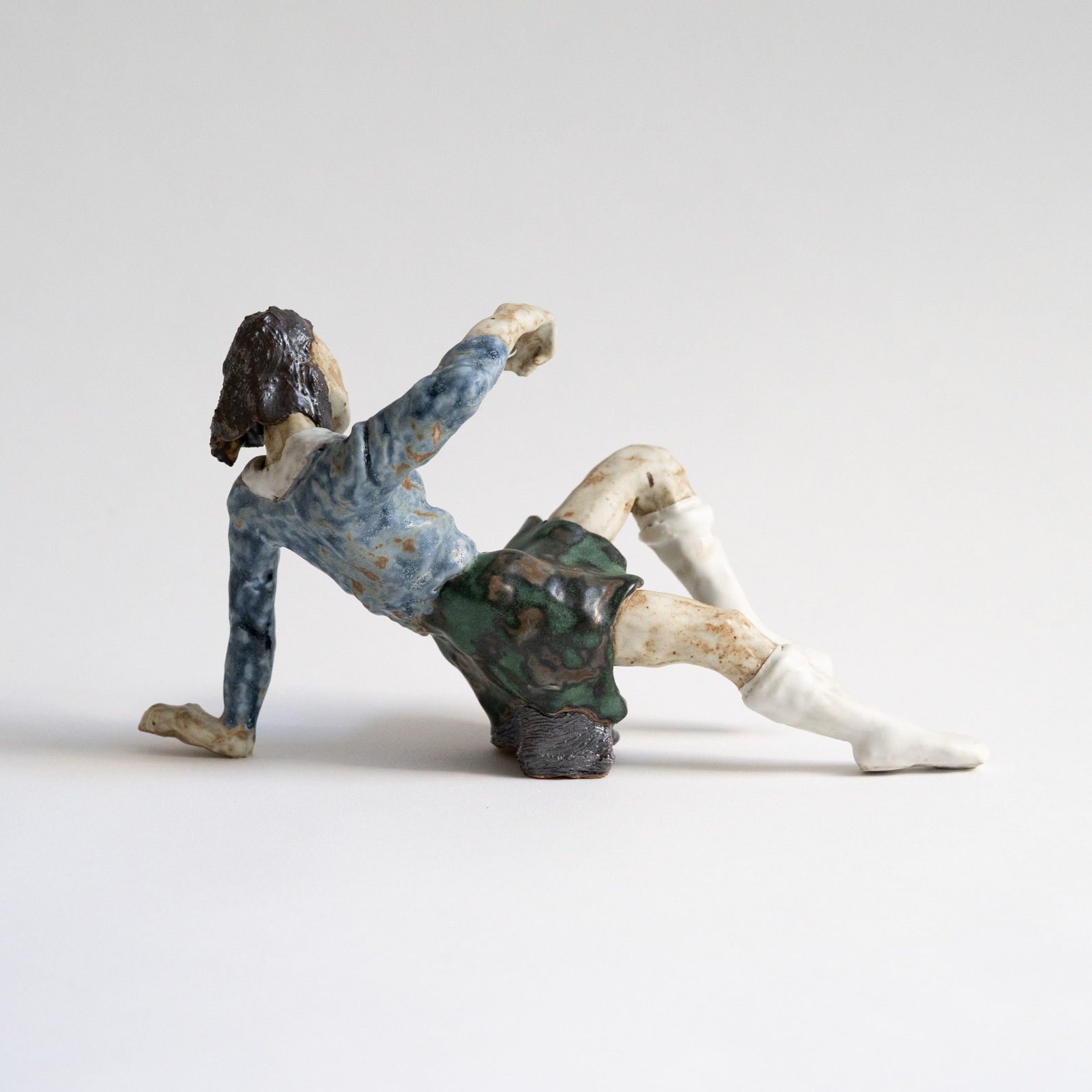
(Cover photography by Aaron Eidman of an artwork by Nina Blass)
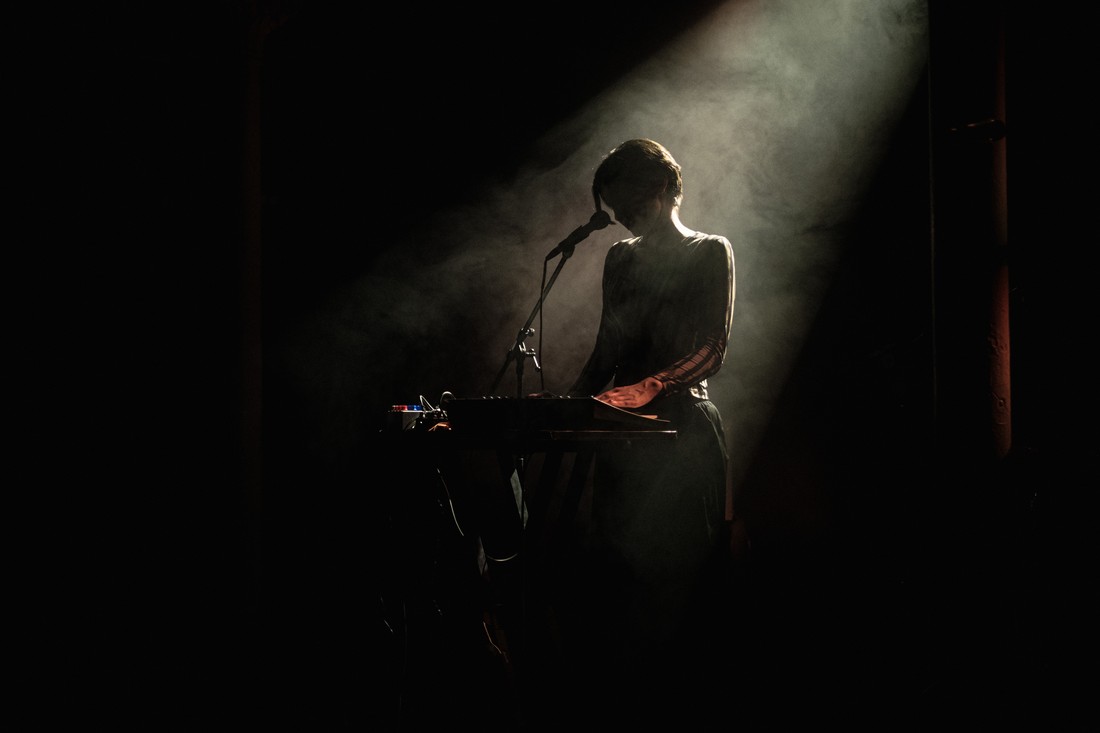
(Photo: Boris Seewald)
In Berlin Calling: A Story of Anarchy, Music, the Wall, and the Birth of the New Berlin (The New Press, 2017), Paul Hockenos’ illuminating account of the city’s music scene before, during, and after the fall of the Berlin Wall in 1989, he retells how its dynamic countercultural scene became a sanctuary for “off-grid experiments” by radical interventionist contrarians: neo-dadaists and situationists, punk rockers and producers of industrial techno, graffiti artists and queer activists.
It is not without reason that famous rock and art pop stars such as David Bowie, Iggy Pop, and Laurie Anderson made the pilgrimage there during the 1970s, hoping to find creative inspiration and solace in its isolated corners, in between the capitalist West and communist East.
Berlin remains a magnet for creative pioneers, but the antiestablishmentarian edge of the heady 1980s and 90s has softened somewhat—and with it, the music of some of its present-day practitioners. For every industrial techno, mathcore, and black metal group, one will find musicians whose approach foregrounds delicate, soft sounds, resonant timbres, immersive textures, deep listening, and orphic dynamics: music created in the belief that it’s possible to get one’s message across without having to shout it from the rooftops.
Nils Frahm, Hildur Guðnadóttir, Hania Rani, Dustin O’Halloran, Ólafur Arnalds, and the late Jóhann Jóhannsson have either lived (or live) in Berlin, or spent periods of time there.
A hotbed of hardcore has become the crucible for sonically ameliorated “microspaces of freedom” (to paraphrase Mack Hagood in his book Hush: Media and Sonic Self-Control), where ambient jazz, downtempo electronica, glitchy soundscapes, and minimalist dialects converse and converge. With offbeat venues and listening bars such as Rhinoceros, Club Gretchen, and Madame Claude opening spaces for fluid genres such as indie pop, contemporary jazz, and new classical, Berlin remains a beacon for artistic freedom and experimentation.
Another to fall under the city’s creative spell has been Claire Dickson, who has lived there since 2024.
In fact, the Medford-born, Boston-bred vocalist and composer’s third album, Balance, is a brilliant blend of Brooklyn-meets-Berlin, whose many elements—as the album’s title suggests—are kept in perfect equilibrium throughout. It’s an album that draws on ambient electronica, experimental jazz, and indie classical elements, but with its own creative vision and unique set of musical outcomes in place.
Dickson’s first album, the self-released, environmentally conscious Starland (2022), introduced listeners to several strands that have continued to sustain the singer’s work: Dickson’s voice (and its physical dimensions) as a framing device for communication; song—an endlessly fertile and flexible formal device—as an effective medium for musical expression; text-based narratives jostling with wordless, vocalised enunciations; acoustic and analogue combinations; and urban landscapes pieced together from fragments of found sounds.
These elements assume more multilayered dimensions on Dickson’s second album, The Beholder (her first on New Amsterdam), released in 2024, with tracks such as ‘Throw My Desire’ covering more varied, shifting, and occasionally bleak emotional terrain. Jazz elements also rise to the surface with greater frequency (Dickson took lessons at Harvard from influential jazz pianist Vijay Iyer, who hailed the singer as a genius), as heard in the rich harmonic tapestries of ‘Thrill of Still’ and ‘Skin of Words’—the latter constructed around a brainteasing, shapeshifting chord pattern that would have made Steely Dan’s Walter Becker proud.
Balance also sees Dickson operating on a broader landscape, with songs extending beyond the four-minute mark. The opening title track gradually zooms into panoramic view via incremental vocal layers and an arpeggiated six-note ostinato figure. These layers are supported by Joni Mitchell-era Wayne Shorter-like saxophone interjections from the remarkable Zoh Amba, alongside subtly sweeping, floating, Ryuichi Sakamoto-esque piano lines from Lex Korten.
Balance really settles into its stride at the album’s midpoint. ‘Sign’ sounds like a subverted dance track that flirts gleefully with its glitchy backdrop, while a busy Terry Riley-like thirteen-note (3+4+6) loop in ‘Waterfeel’ (repeated 76 times, for the number nerds amongst you) is cloaked in colourful acoustic and electronic timbral attire. Here, and in the following track—the Kate Bush-like ‘Stair’—Cleek Schrey’s violin lines project grittiness and grace in equal measure.
An inexorable drive takes over the album’s final tracks, with the music walking a delicate tightrope between cool stasis and active polyrhythmic complexity. The (nearly) hit-friendly ‘Hurt Me’ and ear-catching ‘Eyelid’ benefit from talented drummer Jon Starks’ endlessly driving and pulsing groove patterns, interspersed with further dreamy piano passagework, this time from Maya Keren.
Dickson’s voice nevertheless remains front-and-centre. Exuding a raw fragility, one can hear traces of many voices in there—Ella Fitzgerald’s phrasing, Billie Holiday’s timing, Meredith Monk’s vocal control—alongside contemporary artists ranging from Caroline Shaw and Bora Yoon to Nanna Bryndís Hilmarsdóttir and Eydís Evensen.
Dickson’s vocal sound world is very much her own, however. All of which takes us back to Berlin. A music video (directed by the innovative Boris Seewald) of one of the songs on the album, ‘Doors’, begins with grainy black-and-white images of Communist-era concrete city tenements and ends with a still moon surrounded by a snowy landscape scene. Perhaps therein lies the subtle beauty of Dickson’s song-form aesthetic, where doors connect urban life to the natural world, leading the listener through a gallery of experimental, electronic, free jazz, minimal, and ambient sonic pairings, serving as portals to a nostalgic past, uncertain present, and hauntological future. And when all these elements are perfectly weighted, as they are in Balance, one feels privileged to have experienced something that is truly special, rare, and unique.