Princeton Symphony Plays Cuong, Grant, and Stravinsky
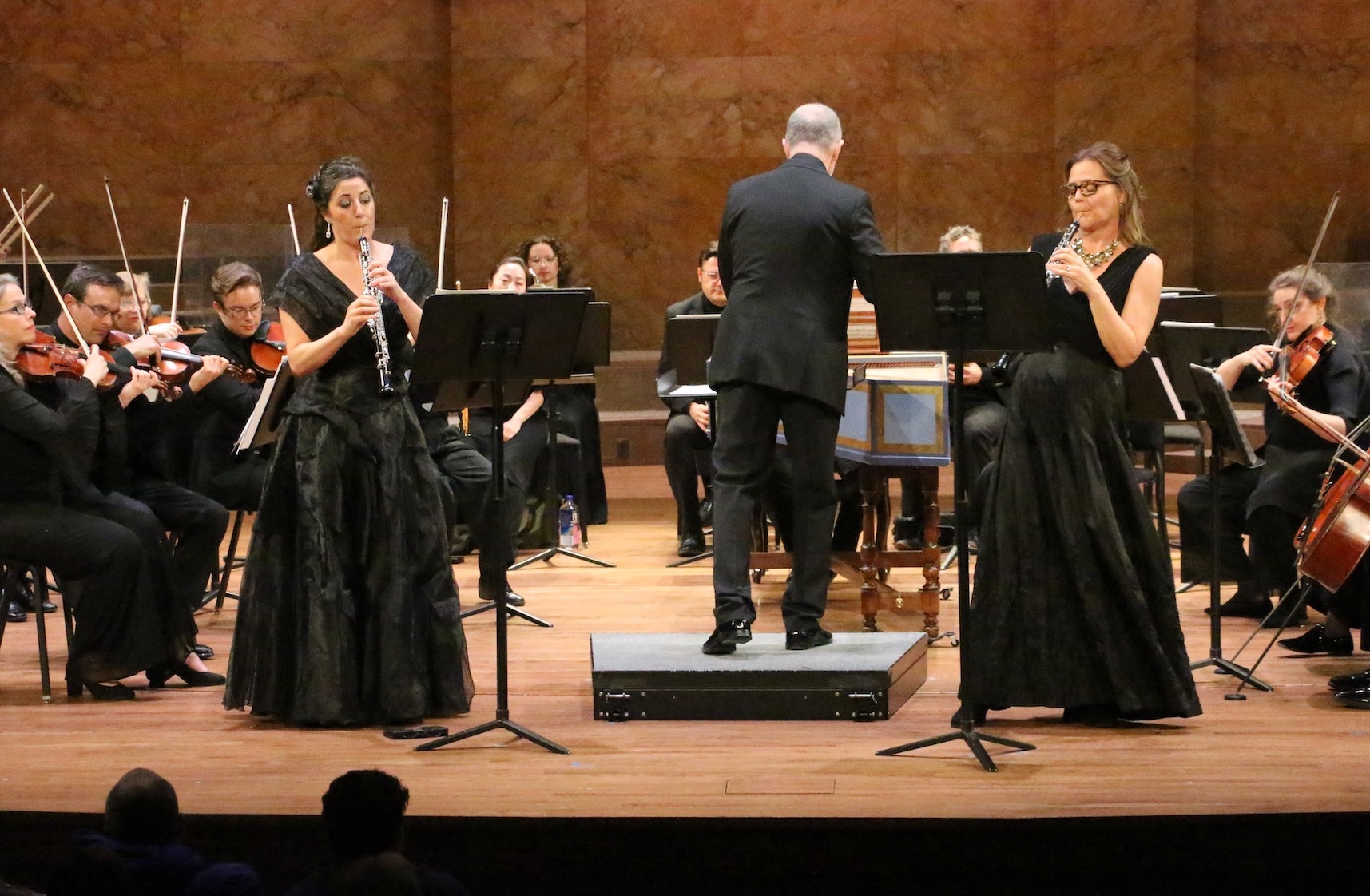
Princeton Symphony, Rossen Milanov, conductor
Richardson Auditorium, Princeton University
March 7, 2026
Published in Sequenza 21
By Christian Carey
PRINCETON – Some regional professional orchestras play it safe, not straying far from Mozart and Beethoven and considering a Brahms symphony their most adventurous outing. Not so the Princeton Symphony. Last Saturday, they played two new works by Viet Cuong and Julian Grant, as well as the complete ballet version of Stravinsky’s Pulcinella. Each composer in their own way dealt with a mélange of styles and multiple reference points.
In Extra(ordinarily Fancy, Viet Cuong uses the baroque concerto style as a template for postmodern roleplaying. The format may have been from a distant era, but the music certainly wasn’t. The soloists, oboists Lillian Copeland and Erin Gustafson, traded a chromatic theme back and forth, but whereas Copeland played the piece in conventional fashion, Gustafson distressed the lines with multiphonics, alternate fingerings producing multiple pitches. She hooted back at her partner in mischievous fashion. The puckish nature of their interplay was enacted enthusiastically. The orchestra got into a rambunctious spirit themselves, most memorably in a passage in which pizzicato strings seemed to goad the soloists to new heights in their sparring match. Eventually, Copeland relented, playing a multiphonic close with Gustafson.
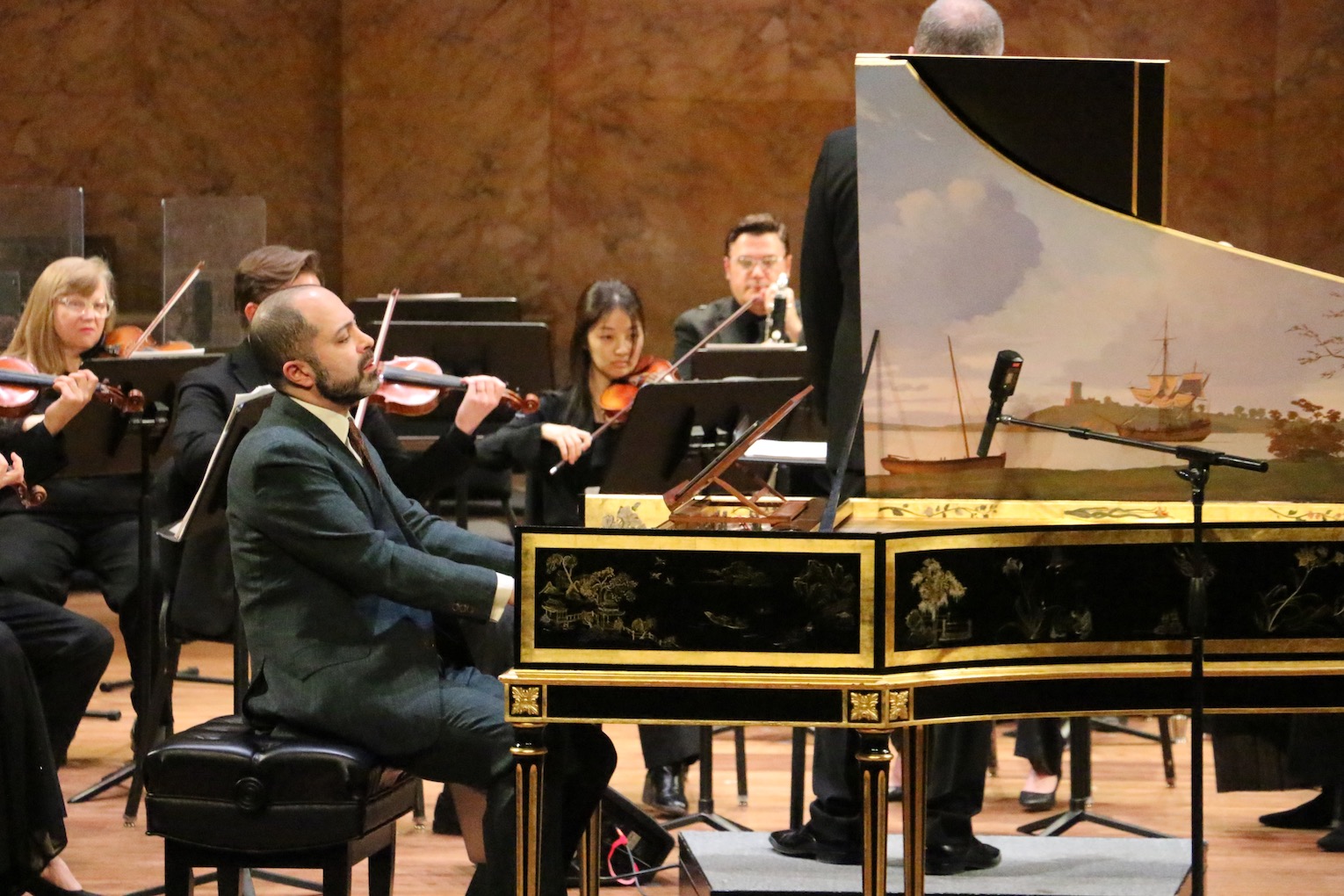
Vaudeville in Teal, featured the harpsichordist Mahani Esfahani, joined by a reduced orchestra of strings, bass clarinet, and bassoon. In remarks from the stage, Grant likened the piece to vaudeville shows at the turn of the twentieth century, with a plethora of routines, ranging from opera arias to flea circuses, providing entertainment to an audience that likewise cut through societal divisions. Grant is a prolific composer of operas and his flair for the theatrical shone through here. As in Cuong’s piece, the soloist is given a dramatic part to play, which Esfahani enacted enthusiastically. At times he was emphatic, insisting the ensemble cede terrain so that his instrument would be up front in the mix of activities. Elsewhere, he played the showoff, playing quicksilver roulades. There were moments in which Esfahani’s light-hearted demeanor shifted, with dissonant chords suggesting brooding ominousness. Grant is an adroit orchestrator, and he trusted the ensemble with challenging music of their own, including breakneck paced scalar passages, which were impressively played. Stylistic variation abounded, but an unerring sense of pacing pervaded the proceedings.
Pulcinella is an early example of Stravinsky’s mid-career neoclassicism, with thematic material based on music by the eighteenth century composer Giambattista Pergolesi. It is cast in twenty-one brief movements, many of which correspond to the era’s formal designs, such as the Gavotta, Tarentella, and Serenata. Three singers joined the orchestra, soprano Aubry Ballarò, tenor Nicholas Nestorak, and bass-baritone Hunter Enoch. The libretto is filled with pastoral texts picturing shepherds and shepherdesses describing longing, jealousy, and betrayal. Ballarò has a warm lower register and also sang the solo Se tu m’ami with clarion high runs. Nicholas Nestorak inhabited the role of scorned lover with expressive scorn, and Enoch was a powerful presence. Milanov conducted with graceful clarity, even after he lost his baton in the early part of the piece. Pulcinella contains exposed writing for the instruments, but apart from a couple of hiccoughs from the brass section, the playing retained its high level.
The connections between the pieces demonstrated careful curation. Over a demanding and rewarding evening, the Princeton Symphony acquitted themselves well. More regional orchestras should engage in adventurous programming like what was undertaken here.