The Marian Consort Provides a Window Into Renaissance Rome
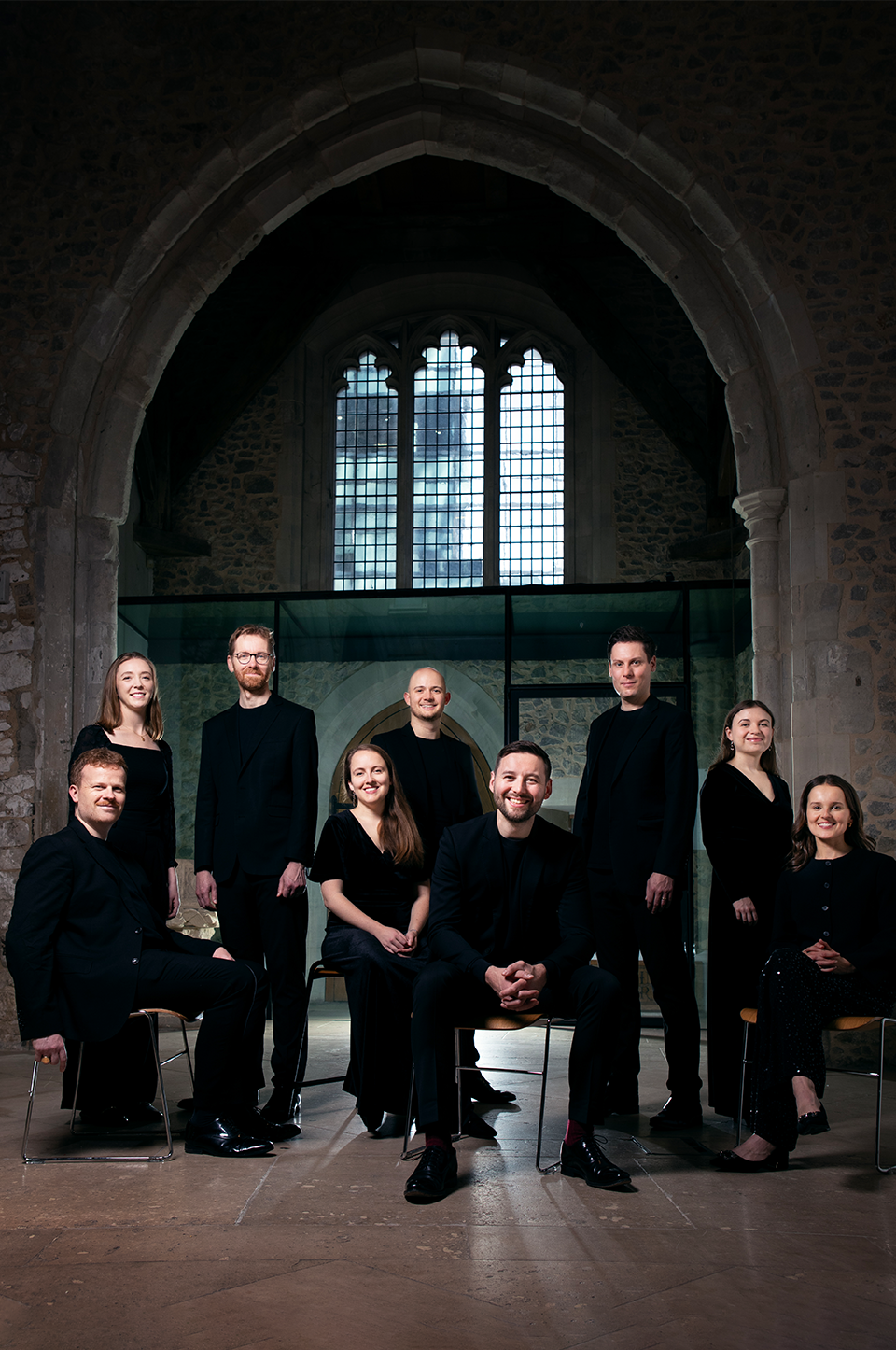
The Marian Consort
Miller Theatre Early Music Series
Church of Saint Mary the Virgin
February 13, 2026
By Christian Carey
NEW YORK – The Marian Consort are a highly-regarded vocal ensemble, specializing both in early music and recent repertoire. The former was on offer in their performance last Thursday as part of Miller Theatre’s Early Music Series. The program was titled “City of Echoes – Rome in the Sixteenth Century,” and all of the music was performed in the city during this time period. While the program included works from three generations of composers – those relatively contemporaneous to Josquin, the succeeding “lost generation” of composers, and the group of composing during the Counterreformation (the “Palestrina generation”) – special attention was given to the year 1551, when all sorts of musical milestones were achieved. TMC’s artistic director, Roy McCleery, provided detailed program notes that set the stage for these events and provided edifying context for the rest of the program as well.
Most composers during the Renaissance were vocalists, many quite accomplished singers who sang in the papal choir or other prominent posts. Time in Rome, either as a student or in order to build their professional bona fides, seems like it was an almost mandatory career move, even for those creators who ended up spending the bulk of their time elsewhere. Thus, Tomás Luis De Victoria is often associated with his home country Spain, but spent over two decades singing, studying, and composing in Rome, while Orlando de Lassus spent a comparatively short time there.
The concert included several “greatest hits” of the Renaissance, including the “Ave Maria” setting by Josquin Des Prez (1450-1521), its overlapping duets delivered with purity of sound in a gently lilting manner. Perhaps the best known work by Giovanni Perluigi Da Palestrina (1525-1594) is his Missa Papae Marcelli, which was represented in an expanded arrangement of its Gloria by Francesco Soriano, as was his excellent Missa Benedicta Es, represented by its Kyrie. The Benedicta Es mass connects Palestrina to Josquin, as it is a parody of the latter’s eponymous motet that served as compositional framework for the mass. Both were based on a plainchant, and this was sung prior to the performance of the Kyrie.
The less celebrated figures Felice Anerio, Ghiselen Danckerts, and Jean L’Héritier, were represented on the program as well. The latter’s Surrexit pastor bonus, with its tightly overlapping lines, made a particularly fine impression.
The Marian Consort have been strong champions for the music of Vicente Lusitano (1521-1561), whose music they have recorded and frequently performed. Originally from Portugal, there is evidence that he was a person of mixed race. He did not allow discrimination to curtail his composing and is famous for debating the rules of modal writing with one of his day’s preeminent music theorists, Vicentino. Lusitano won their debate, and his advocacy for greater flexibility in the employment of modes and chromaticism paved the way for successors ranging from Lassus to Gesualdo to Monteverdi, who all did their part in pushing the envelope still further. The ensemble demonstrated their fluency in Lusitano’s music, their rendition of his Regina caeli laetere displaying his then adventurous approach to writing.
As McCleery said from the podium, it may be difficult for contemporary listeners to realize just how daring Lusitano was, “Once you’ve heard The Rite of Spring you can’t go back,” he quipped. However, the program at St. Mary’s was sensitively sequenced to provide a framework in which to compare these various compositional styles and apprehend their differences.
Jean Mouton never lived in Rome, but his music was performed there with some frequency. Accordingly, two of his pieces appeared on the program, the canonic Ave Maria gemma virginum and the brief and winning Ave virgo caeli porta, which was performed as an encore. The concert proper concluded with another piece by Lusitano, Inviolata, which was elaborate and expansive.
The curation of the City of Echoes program was exemplary and the singing throughout was equally as impressive. On a future visit, it would be great to hear The Marian Consort sing a concert of their other specialty, recent music.