Blue Heron Brings Ferrara to New York
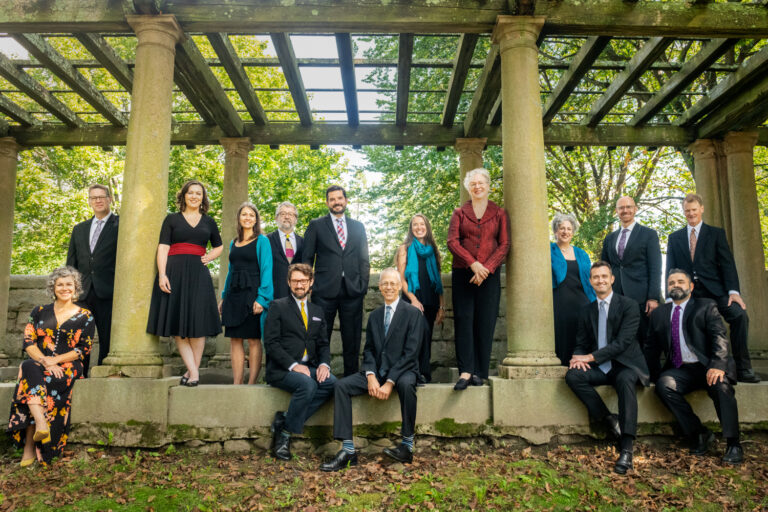
Blue Heron in New York
In Praise of Laura Peperara – Music for the Concerto delle dame • Ferrara, 1580s
St. Ignatius of Antioch
Published in Sequenza 21
By Christian Carey
February 25, 2026
NEW YORK – Blue Heron always presents thematic programs, and they excel at giving the audience a sense of the time and place in which the music they perform resides. This past week in their program at St. Ignatius of Antioch Church, they featured the music performed in the court of Ferrara in the 1580s, specifically by the Concerto delle dame. These were a trio of female performers who captivated listeners with their prowess in singing and instrumental performance. One, Laura Peperara, was an exceedingly talented vocalist and harpist. Such was her popularity that a number of composers wrote pieces either for the Concerto or in Laura’s honor. Indeed, two collections, Il lauro secco and Il lauro verde, were published in the early 1580s, containing pieces by a wide range of composers, including Luca Marenzio, Luzzasco Luzzaschi, Giaches de Vert, and Allessandro Striggio, some of the most distinguished madrigalists of their day. That Laura’s fame had spread far and wide is made clear by the varied geographies of the composers who participated in the publications: Ferrara, yes, but also Mantua and Rome. The Concerto may have performed in select, relatively private, settings, but word of them spread far and wide.
The original group was a trio of women, Laura best known but all three abundantly talented. This was also true of the four women who took on the roles of the Concerto at Blue Heron’s concert: soprano Sonja DuToit Tengblad , mezzo-sopranos Sophie Michaux and Laura Pudwell, and harpist Amanda Beranek. They were joined by male singers: tenors James Reese, Jason McStoots, and Sumner Thompson, and basses Paul Guttry and Steven Hrycelak. The harpsichordist Alessandro Quarta both played and did dramatic readings, and Blue Heron director Scott Metcalfe appeared to give a brief talk and perform recitations as well. Quarta stood in for Luzzaschi, who directed the Concerto from the keyboard, also serving as their music coach.
DuToit Tengblad’s performance of de Wert’s Cara la vita mia, in which she was accompanied by Beranek, was impressive, with florid runs and incisive embellishments showing off much vocal dexterity. Beranek’s solo turns included similarly nimble ornaments, and the instrument’s purity of intonation was beautiful. Quarta’s playing was subtle, as was his direction, but it provided a framework that buoyed the singers and synced well with the harp. Until the last madrigal, Striggio’s All-apparir della leggiadra figlia, the full cohort didn’t perform together, but even fractals thereof made a full, cultivated sound that few other renaissance specialists can match. Short of a time machine, this was about the best way to hear the storied Concerto and the music it inspired.
Blue Heron stepped outside of their usual wheelhouse on their latest CD release. Songs from Nightingales, performing the music of contemporary composer Mehmet Ali Sanlıkol. Originally from Turkey and of Cypriot descent, Sanlıkol now teaches at New England Conservatory. His group DÜNYA appears in a recording that includes The Triumph, which was written for Blue Heron’s 25th anniversary. A number of Middle Eastern wind and percussion instruments are deployed, with cymbals and bass drums underscoring the intense chanted melodies that crescendo to a fervent fortissimo.
Sanlıkol uses an extended harmonic palette, with added-note chords and modal inflections creating a sumptuous atmosphere, particularly in Devran, Nos. 1 and 2, a cappella pieces that close the CD. His employment of counterpoint bridges that gap between new classical and Blue Heron’s bailiwick, and they flourish in this collaboration.