Tag: @cbcarey. @sequenza21

CD Review, Chamber Music, Contemporary Classical, File Under?, Rock

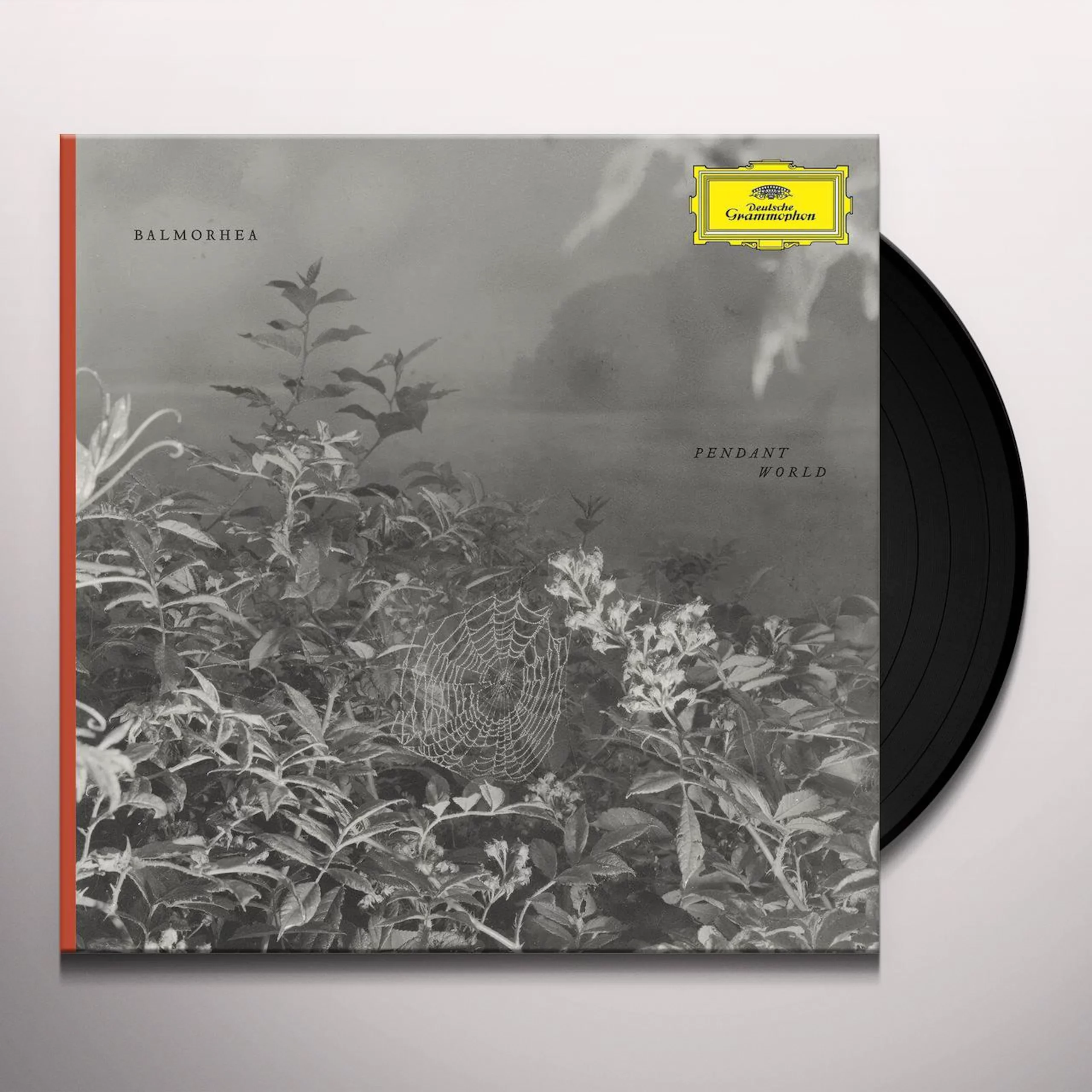
Balmorhea – Pendant World on DG (CD Review)

Balmorhea

Pendant World

Deutsche-Grammophon


In recent years, Deutsche-Grammophon has been releasing crossover albums incorporating the work of pop/electronic artists, particularly those who sit in the post-rock and ambient pockets. Balmorhea, the band name for the trio Rob Lowe, Michael A. Muller, and Aisha Burns are an ideal grouping for this type of project. Their work has long been influenced by classical music and their arrangements are well wrought. In 2021, their first recording for DG, The Wind, made a strong impression. If anything, their latest for the imprint, Pendant World, is even stronger. 


Guests artists from the A-list of contemporary classical music join them, including cellist Clarice Jensen, percussionist Jason Treuting, vocalist Lisa Morgenstern, and guitarist Sam Gendel. Lower and Muller handle keyboard duties, and Burns contributes violin. Many of the songs are aphoristic, but even the smallest slices of music yield atmospheric moments. “Nonplussed,” Pendant World’s opener, clocks in at a mere forty-one seconds, but Treuting’s chimes and gradually accelerating drums give it a striking resemblance to a locomotive gearing up to leave the station. “Range” is a showcase for  Gendel’s arpeggiated guitar, with supple strings in the background and a brief piano bridge between the guitar solos. Less than two minutes, it would make an excellent cut for a film score. “Fire Song” too, is short yet memorable. It features Gendel, this time taking on a more melodic role with plaintive harmonies behind him.


Pendant World doesn’t just contain morsel-sized pieces. “Step, Step, Step” is a showcase for the band and all of their guests. Solos ricochet between them, with Burns a particular standout and Treuting providing an ardent motor. The arrangement is well-conceived: the concert music analog to a post-rock anthem. Similarly, “Oscuros” is for the ensemble, with a repeated note piano riff girding the verses and strings taking up a variation of the tune in a subdued middle section. At the end of the piece, the piano takes the foreground again with a harmonically tweaked, more fully realized version of the tune. 


The final piece,”Depth Serenade”  features Balmorhea with Burns and Jensen handling string duties. The violin and cello melodies are beautiful, set against ambient keyboards. The overall effect has echoes of Gavin Bryars’s Sinking of the Titanic and Harold Budd’s work, but the sound world of Balmorhea commingles with them, and doesn’t merely co opt past sounds. It ends with repeated shimmering piano chords and soaring strings..


Pendant World makes a strong case for the vitality of crossover in a contemporary classical context. One hopes Balmorhea will continue in this vein.


-Christian Carey


CD Review, File Under?, jazz

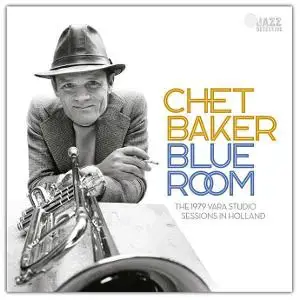
Chet Baker – Blue Room (CD Review)

Chet Baker

Blue Room: The 1979 Vara Studio Sessions in Holland

Jazz Detective 2xCD


A double CD (or limited edition vinyl, if you prefer) set of unreleased sessions from 1979 displays Chet Baker in fine form, both as a trumpeter and vocalist. These recordings were originally made at Vara Studio in Holland for Dutch radio broadcast. Baker is joined on Disc 1 by pianist Phil Markowitz, bassist Jean-Louis Rassinfosse, and drummer Charles Rice; the trio had been touring with him fairly regularly. They provide  impeccable support. A particular standout is Rassinfosse, whose walking lines and soloing are creative contributions. Markowitz’s playing is distinguished as well, with tasty chord voicings and ebullient solos that provide a strong foil to Baker. Disc 2 includes two groups of supporting personnel: the group from Disc 1 on some of the tracks, and pianist Frans Elsen, bassist Victor Kaihatu, and drummer Eric Ineke on others. The latter group does stalwart work, but clearly have not had the benefit of significant musical acquaintance. 


Disc 1 opens with “Beautiful Black Eyes,” by Lou McConnell and Wayne Shorter. Baker plays a florid solo. Markowitz responds with a chord solo that finishes with flourishes that resemble Baker’s lines. Markowitz’s solo on “The Best Thing for You” is a standout, boisterous and virtuosic. Baker and Rice trade fiery fours before the trumpeter repeats the tune to close. “Oh You Crazy Moon,” by Johnny Burke and Jimmy Van Heusen, is an ideal vocal vehicle for Baker, who sings and plays with exquisite phrasing and effortless high notes for good measure. 


“Blue Room” is a well-loved Rodgers and Hart song,  recorded multiple times by Baker (Madeleine Peyroux has also made a lovely recording of it). The ballad is played with a graceful cast, with both Baker and Markowitz embellishing the tune with chromatic extensions and playing with a cool demeanor. The Miles Davis composition “Down” is played by Baker with fleet scalar passages and peppery blues scales. The rhythm section keeps up a muscular groove, with Markowitz playing a forceful solo. 


On Disc 2, Baker stretches out on his original “Blue Gilles,” creating a suave solo that takes its time percolating, but is filled with expressive playing that ultimately reconnoiters the upper register in faster note values. Markowitz also takes a gradual approach, ending an ostinato passage with a flourish. Rassinfosse then begins pressing forward in his solo turn, providing a good contrast to the others. Baker’s final cadenza begins with bits of riffs and ends with a long held line.


The Miles Davis tune “Nardis” follows. Baker presents a West Coast version of the tune. Markowitz puts a little bit of bite in his comping. Rassinfosse and Rice too are quite assertive.“Luscious Lou” is a medium swing instrumental  on which Baker exercises his high notes and leans into blues thirds. 


“Candy” is a vocal number, written by Mack David, Alex Kraimer, and Joan Whitney. Baker would record it again in a trio date released in 1985. His signature croon imitates the swinging solo to follow. “My Ideal” is also a vocal, here the singing more reserved than the ensuing trumpet solo. 


The recording concludes with a show tune, “Old Devil Moon” from Finian’s Rainbow by Yip Harburg and Burton Lane. The most uptempo tune on the dates, it is given a bit of bebop swagger in an extended solo by Baker. 


These sessions feature some of Baker’s favorite songs, but in fresh and often inspired renditions. 


-Christian Carey


CD Review, Chamber Music, Contemporary Classical, File Under?

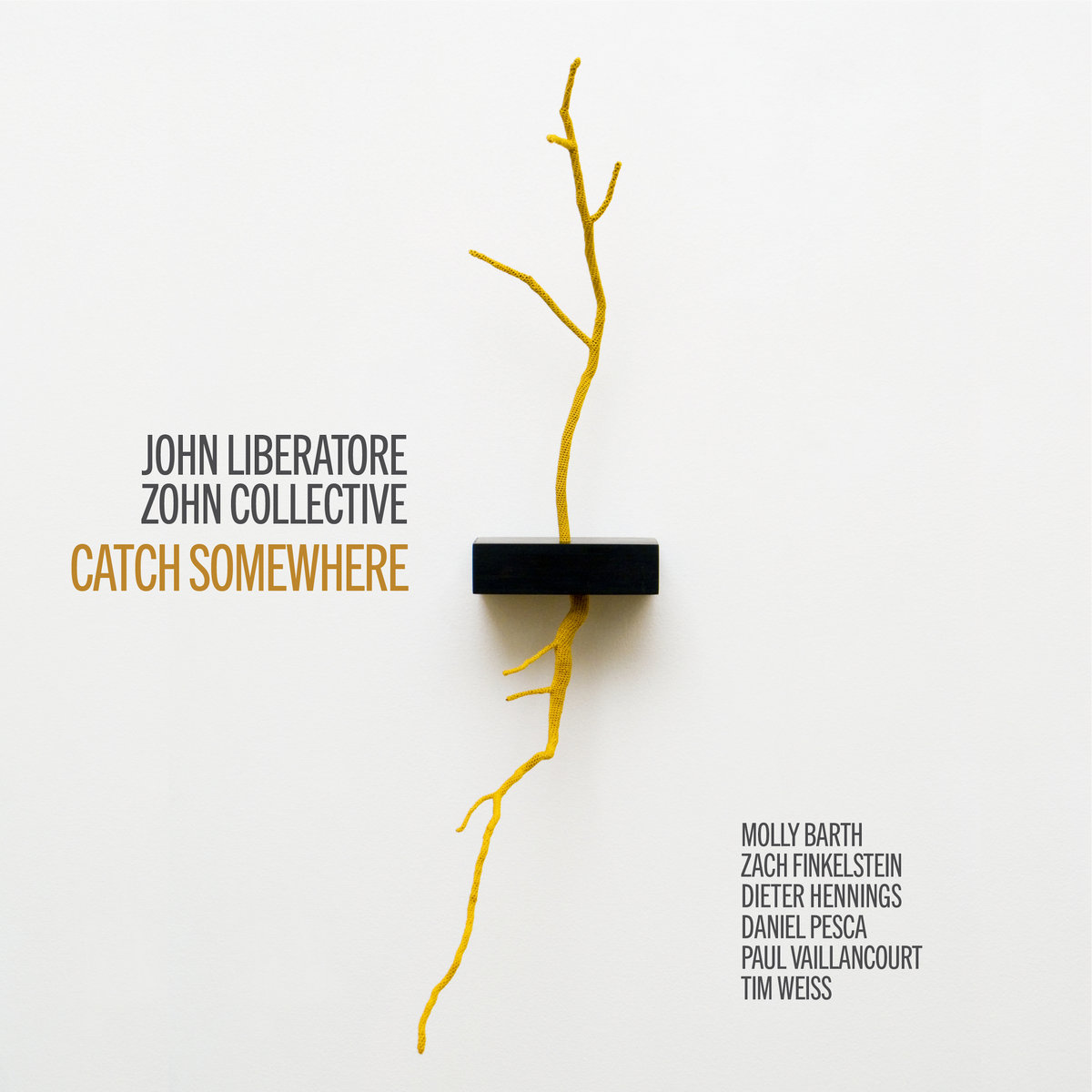
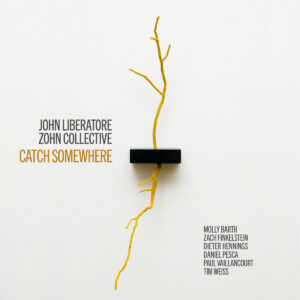
John Liberatore – Catch Somewhere (CD Review)

John Liberatore

Catch Somewhere

Zohn Collective – Molly Barth, flute; Andrew Nogal, oboe; Sammy Lesnick, clarinet; Paul Vaillancourt, percussion; Dieter Hennings, guitar; Daniel Pesca, piano/harpsichord; Hann Hurwitz, violin; Dominic Johnson, viola; Colin Stokes, cello; Robert Simon, bassoon; Ryan Berndt, trumpet; Brant Blackard, percussion, Nöel Wan, harp; Brendan Shea, violin; Philip Serna, contrabass; Zach Finkelstein, tenor; Tim Weiss, conductor

New Focus Recordings


Composer John Liberatore teaches at Notre Dame, and has traveled widely through the benefit of various fellowships, including those from MacDowell, Millay, Tanglewood, Yaddo, the Brush Creek Arts Foundation, and a Presser Music Award to study in Tokyo with Joe Kondo. His music has traveled widely too, with many contemporary ensembles commissioning and performing it. As a performer himself, John Liberatore has revived an old and esoteric instrument, the glass harmonica. 


Catch Somewhere, a portrait CD of Liberatore’s chamber works on New Focus, is well performed throughout by the Zohn Collective, a sinfonietta-sized ensemble containing some of the most prominent contemporary performers in the United States. Various subsections of the group are utilized in the programmed selections. 


The recording opens with “A Very Star-Like Start,” a capriccio for eight instruments that demonstrates well Liberatore’s general approach: rhythmically vibrant with frequent ostinatos, and a chromatic pitch language that at times hews close to tonality and then veers towards shadowy post-tonal sections. “A Very Star-Like Start” is an excellent curtain-raiser, with compound melodies built between strings, winds, and percussion that then unfold into fleet ostinatos and angular lines. 


Flutist Molly Barth plays “Gilded Tree,” a four-movement solo piece with titles from the poetry cycle “Fable” by Randall Potts. Here as elsewhere, there is a poetic impulse that operates alongside the musical one in Liberatore’s creative approach. Even in instrumental pieces, the resonances found in word groupings provides a generative role. Barth plays in a number of demeanors: slow delicacy in “dark inside secure,” punctilious rapid passages in “black twig lips,” mysterious lyricism moving to brash high notes in “silence lost to echoes,” and liquid trills paired with repeated melodic cells in “quivering with light.” Barth’s dynamic control and virtuosity are most impressive. 


The title work is an eight-movement suite for guitar, prepared piano, and percussion, which alternate prominence in the various movements. Once again, a poem, Walt Whitman’s “A Noiseless Patient Spider,” which Liberatore found while at MacDowell Colony, serves as inspiration. “Catch Somewhere” includes particularly beautiful writing for prepared piano, not at all Cagean but entirely its own preparation. In the first movement, “vacant, vast, surrounding,” motives, many timbral, that will be used throughout are introduced. Pianist Daniel Pesca plays a beautiful cadenza in the second movement “surrounded, detached,” which then becomes a soft duet with guitarist Dieter Hennings.  Hennings continues with a cadenza of his own, featuring snapped pizzicato, in the third movement “little promontory.” This too is succeeded by a duet, this time with percussionist Paul Vanillancourt, whose motifs are responses to the guitar’s riffs. The movement then erupts, with piano, unpitched percussion, and guitar playing thick passages fortissimo. Repeated notes from the piano initially signal a dialing back, but the trio continues in vigorous fashion to its close. 


“thread 1” returns to mallet instruments and guitar harmonics, creating a brief, undulating groove. The longest movement, at six minutes, “O my soul,” begins with an arpeggiated guitar solo with rich tone from Pesca. Mallet instruments are featured in the next solo, gradually shadowed by the other instruments. The guitar’s cadenza then returns with gongs providing resonance behind it in a hushed close. “thread 2” is another brief piece for mallet instruments, once again with guitar harmonics joining, this time at the close. “filament, filament, filament” opens riotously, then juxtaposes various instrumental deployments in a brisk moto perpetuo, dissipating at its conclusion. The piece’s final movement “catch somewhere” features bright harmonies and repeated notes, particularly prominent in unpitched percussion. A strong, arcing melody presses the music forward towards its conclusion. Repeated patterns then succeed this, with thunderous repeated bass notes from the piano juxtaposed against gentle guitar lines. A denouement ensues, in a decrescendo to niente. “Catch Somewhere” is a well-crafted, engaging, and entertaining piece. 


The only piece that includes a singer is the CD’s final one, Hold Back Thy Hours, a setting of fragments of seventeenth century English poetry. Tenor Zach Finkelstein performs the four songs that comprise the set with precision and expressivity, his high notes suffused with easy lightness and his phrasing thoughtfully unpacking the aphoristic texts. The ensemble accompanies him with a complex thicket of pitch slides and knotty tunes, out of which offset attacks provide a sense of surprise that supports the nonlinearity of the textual fragments. My favorite among these is perhaps the most traditional, “violets pluck’d,” which includes a lamento bass. Its imaginative scoring, however, is fully of the present. 


Liberatore’s Catch Somewhere is one of my favorite recordings thus far in 2023. Highly recommended. 


-Christian Carey


CD Review, File Under?, Improv, jazz

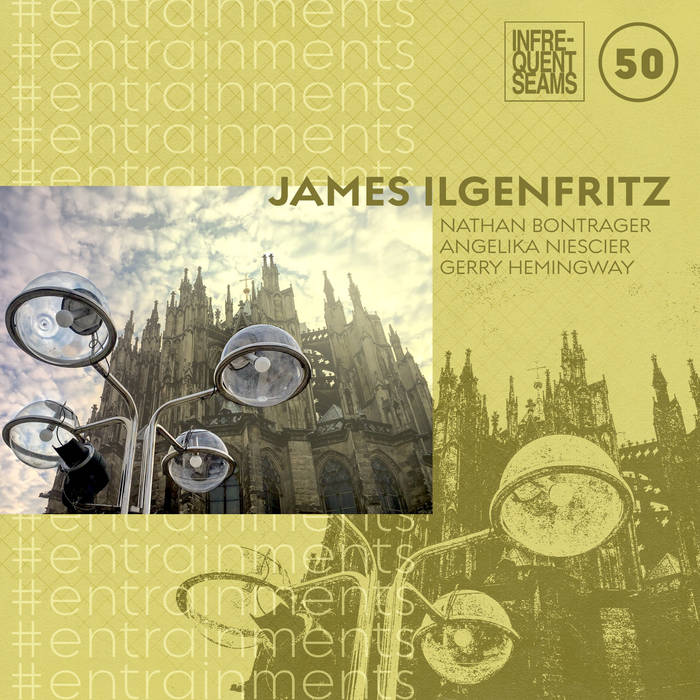
James Ilgenfritz – #entrainments (CD Review)

James Ilgenfritz

#entrainments

Infrequent Seams

Angelika Niescier, saxophone; Nathan Bontrager, cello; James Iglenfritz, bass; Gerry Hemingway, drums


Ecstatic jazz/free improv bassist James Ilgenfritz underwent brain surgery just months before being back in the studio to record #entrainments, the fiftieth release on the Infrequent Seams label. The recording makes reference to this traumatic event in some of its titles, such as “#frontmatter” and “#scarequotes.” 


This  is the first recording to employ Ilgenfritz’s modular improvisation system #entrainments, a term also reflecting the bassist’s work to repair his cognitive abilities. The body and brain have an extraordinary capacity to heal, especially when one is as dedicated to returning to their musical passion as Iglenfritz clearly is. 


If one didn’t know of Ilgrenfritz’s tremendous health challenges, they certainly wouldn’t guess when hearing him play. The bassist is in fine form, creating imaginative solos and intricate supporting lines. His countermelody on the opening tune “#frontmatter” is fleet and sonorous. His collaborators are equally estimable. Saxophonist Angelika Niescier and cellist Nathan Bontrager are regular collaborators of Ilgenfritz. Drummer Gerry Hemingway, an extraordinary talent with an ample discography of his own, is new to the bassist’s quartet. He provides support on the opener. Bontrager plays searing sul ponticello lines and Niescier’s solo skates through scalar passages at lightning speed. 


“#frontmatter” features a duel with Niescier versus Hemingway, who plays freely but with metric articulations. Likewise, Bontrager and Ilgenfritz have an extended contrapuntal fray. The whole group figures in the next section, which breaks it up into varying duet textures. 


“#scarequote”s is aptly named. Niescier plays multiphonics and then a dodecaphonic solo, accompanied by forceful fills from Hemingway and open-string chords from the strings. “#facepalm” has a more jocular cast, with a syncopated riff as tuneful as it is buoyant. Niescier fires off fast sheets of runs in her solo. Ilgenfritz’s solo combines the riff with slinky interspersed passages, only to lead the group into a morphed version of the initial tune which swiftly leads the proceedings home. 


Ilgrenfritz has long been a favorite musician of mine. I am moved, however, by his indomitable spirit and continued musicality. #entrainments is both a celebratory document of Infrequent Seams’s continued relevance, and one of Ilgenfritz’s healing and questing journey. Recommended. 

Christian Carey 


CD Review, File Under?, jazz

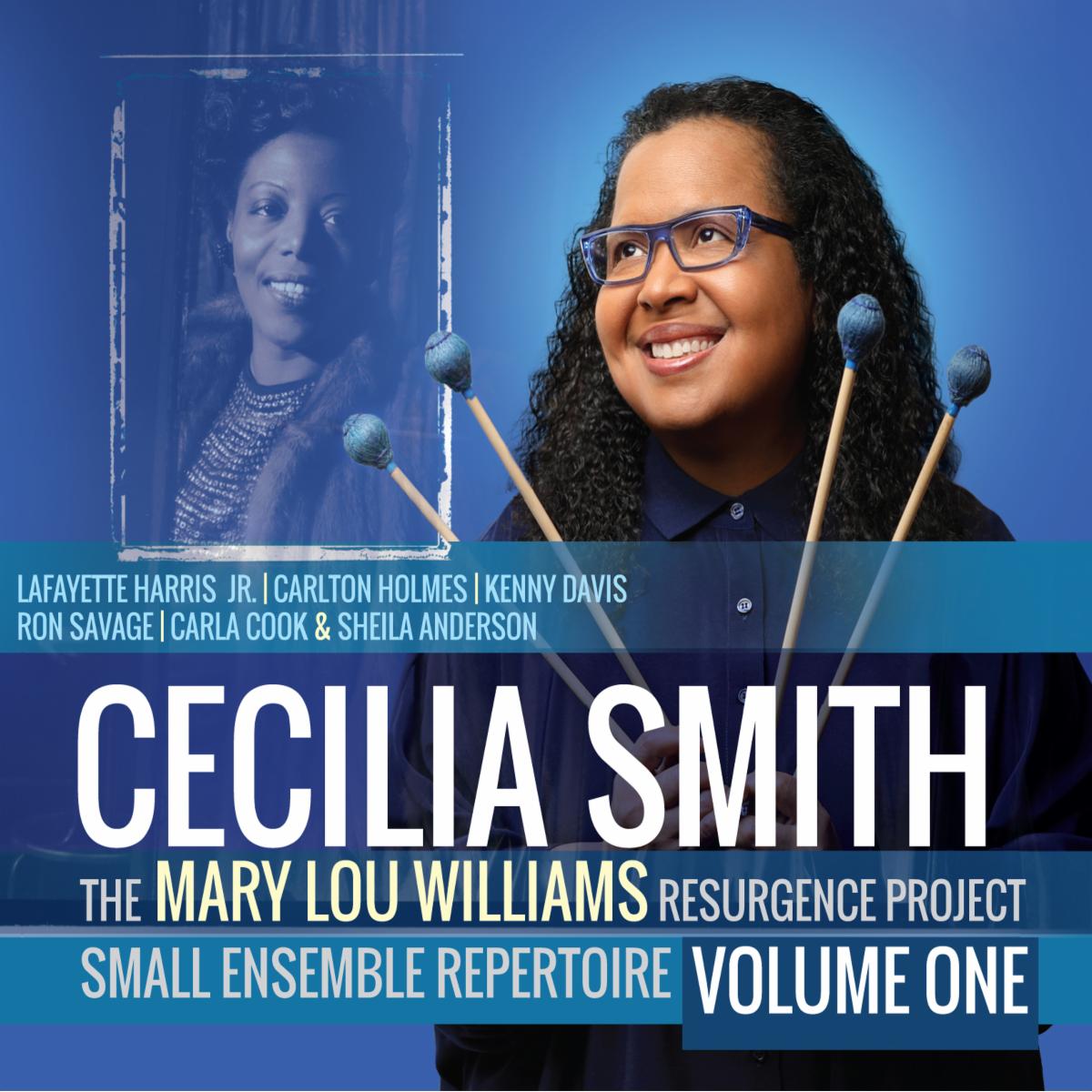
Cecilia Smith Celebrates Mary Lou Williams

Cecilia Smith

The Mary Lou Williams Resurgence Project, Vol. 1: Small Ensemble Repertoire

Cecilia Smith, vibraphone, Lafayette Harris, Jr. & Carlton Holmes (piano/organ), 

Kenny Davis (bass), Ron Savage (drums), Carla Cook (vocals)

Self-released


Mary Lou Williams was an extraordinarily gifted jazz pianist and composer, particularly prominent during the Swing band era, but also rightly held in esteem for her late modern jazz work “Zodiac Suite.” Among her accomplishments, she played with Benny Goodman and arranged for Duke Ellington. Vibraphonist Cecilia Smith has decided to commemorate her legacy with the recording The Mary Lou Williams Resurgence Project, Vol. 1: Small Ensemble Repertoire. Smith has been at work on Williams’s repertoire since 2000 and the Resurgence project has been granted an NEA American Masterpiece Award. 


Smith incorporates material by Williams into her own original “Truth be Told for mlw,” in which she exchanges chord solos, and a puckish riff doubled by organ, with drum fills. Partway through, the quick phrases are juxtaposed with a slow blues drag. The uptempo time then returns, with ebullient solos from Cecilia Smith and pianist Carlton Holmes. The tune ends with the chordal soloing alternating with the phrases of the blues section. 


Composed by Williams in honor of the philanthropist Doris Duke, “D.D.” features an elaborated blues progression built in chromatic seconds played midtempo. Smith’s solo exploits a variety of dense scalar patterns and then builds in syncopated substitutions on the tune’s original patterning. Harris’s piano solo reveals the underlying blues framework of the tune. After a brief turn by bassist Kenny Davis, the tune returns to complete the performance in traditional fashion.


Standards associated with Williams as a performer and arranger also feature prominently. A suave rendition of “Body and Soul” is a standout, as is Smith’s playing on “St. Louis Blues.” My favorite is the rendition of Dr. Billy Taylor’s “It’s a Grand Night for Swinging,” a tune to which over the course of her career Williams frequently returned. Here, the whole band plays the head in effusive fashion, with Carlton Holmes’s organ added to Harris’s piano-playing to fill out the rhythm section. Harris’s solo recalls Taylor’s voicings and fragments the melody into small subsections that then are developed. Smith cools things down a bit at the beginning of her solo, with repeated quarters succeeded by swinging eighths. It eventually becomes faster moving and more intricate, perfectly paced. Holmes’s succeeding solo is slinky, with a number of blues thirds complicating his melodies. Davis plays his ostinato riff solo. The return to the head trades fours and repeats to finish. 


The recording’s last track is a second version of “Miss D.D.” This one is a couple minutes longer, allowing the group members to stretch out on their respective solos. Organ is more prominent and Davis’s bass riff more elaborate. 


Smith’s first installment of The Mary Lou Williams Resurgence Project honors Williams with a sampling of her repertoire and further develops her material into stirring originals. I look forward to hearing what Smith does with a larger ensemble.


-Christian Carey


Brooklyn, CD Review, Contemporary Classical, Festivals, File Under?, jazz, Piano, Twentieth Century Composer

Ethan Iverson Curates Sono Fest; Han Chen’s Ligeti

Ethan Iverson by Keith Major.

Ethan Iverson Curates Sono Fest; Han Chen’s Ligeti

Like many listeners, I first became acquainted with pianist Ethan Iverson via The Bad Plus recording These are the Vistas, which contained strong originals and a jaw-dropping rendition of Nirvana’s “Smells Like Teen Spirit.” Several albums later, Iverson moved on from The Bad Plus to a variety of projects. His blog Do the Math outlines his work as an educator (at New England Conservatory) and a variety of interests that, unsurprisingly, focus on jazz, but also encompass twentieth and twenty-first century concert music. Starting next week, he brings his omnivorous musical instincts, and significant talents as a pianist, to bear, curating Sono Fest from June 6-23rd at Soapbox Gallery (636 Dean Street, Brooklyn, NY 11238l).  

Timo Andres by Michael Wilson.

Iverson’s newsletter has been a veritable feast of material previewing the festival (sign-up is free). He doesn’t just plug events, but gives detailed discussions of the programmed music and featured artists. Essays on Timo Andres, Miranda Cuckson, and Judith Berkson are all revealing.

Miranda Cuckson, violin
Judith Berlson.


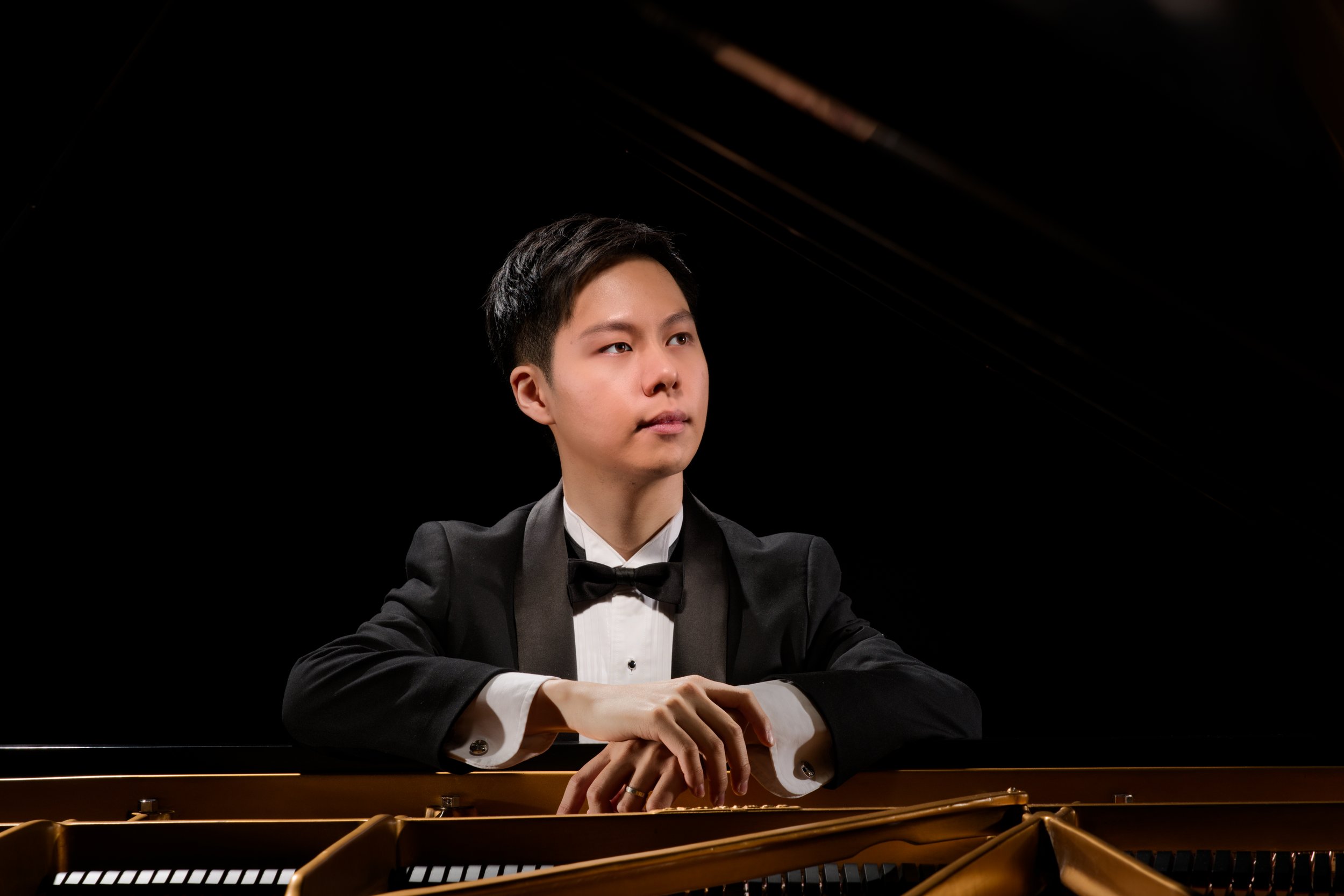
My favorite of the posts is about Ligeti, which discusses the piano etudes and includes a link to an interview by Benoît Delbecq with Ligeti included on DTM. Pianist Han Chen isn’t playing any Ligeti on Sono Fest, but his recital on June 17th looks tantalizing, with pieces by Berg, Corigliano, Adès, and Ravel.  


__

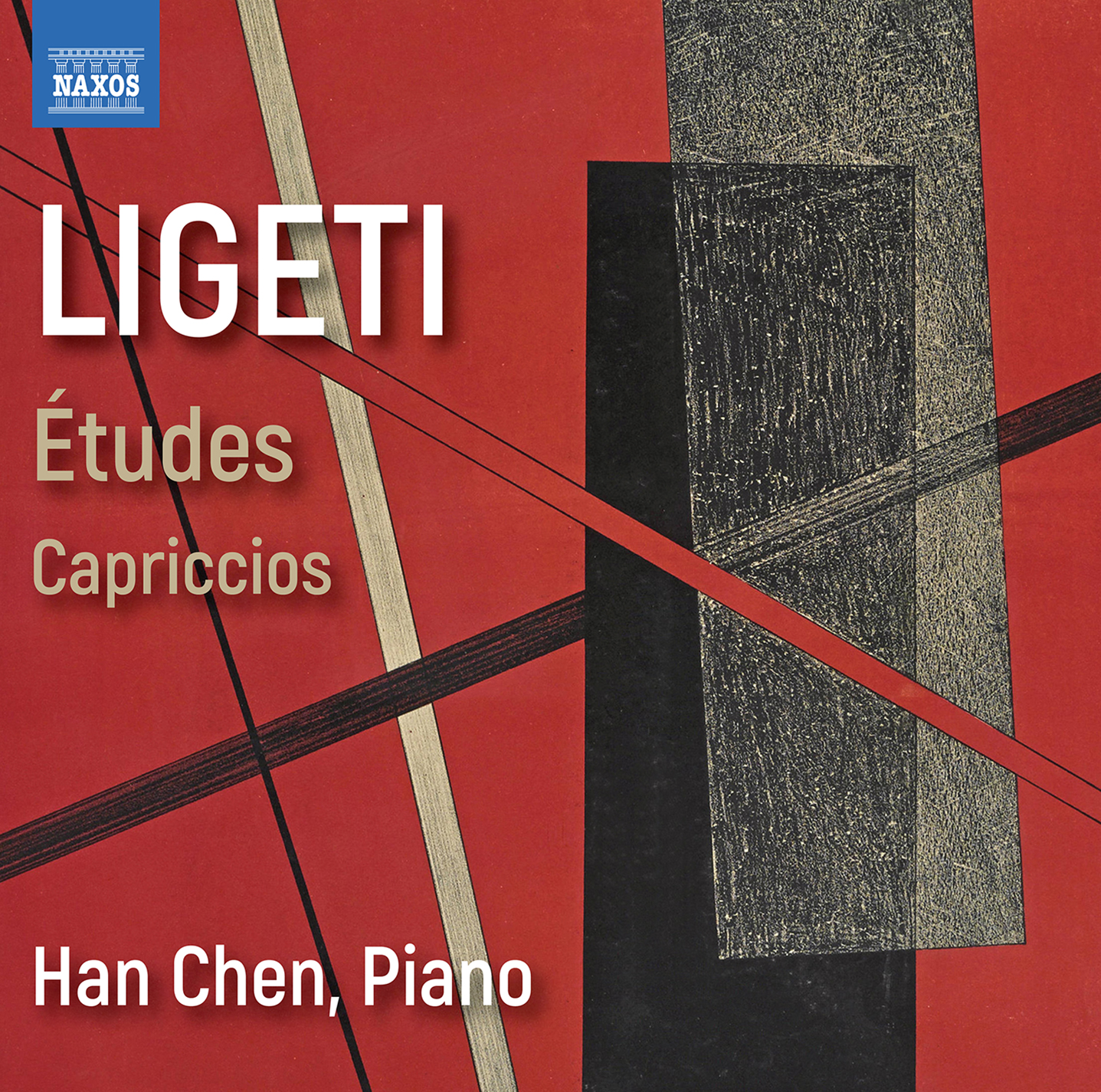
Han Chen’s new Naxos recording (8.574397) is a sterling document of the Ligeti Etudes. Iverson is voluble in praising it and I will add my own acclamations. The pieces themselves are one of the finest collections of the twentieth century, abundant in variety and virtuosic in demands. Ligeti’s early modern and postmodern concerns are updated by his late career interests in minimalism, Asian, and African music. There are a number of fine recordings of the etudes, but Han Chen’s is a welcome addition. 

The pianist is tremendously fluent in the plethora of dynamics and articulations required by Ligeti. His execution of formidable polyrhythms and hairpin transitions are uniformly excellent. The first etude from Book 1, “Désorde,” in which the left hand has complex scalar patterns and the right spiky, syncopated progressions, is performed at a breakneck pace. “Galamb borong,” from Book 2, in which a gently percussive opening, evoking Balinese gamelan, gradually builds to thunderous chords, with a denouement at its close, is equally stirring. Directly following this is a rhythmically incisive performance of the polyrhythmic “Fém.” The diaphanous diatonicism of Book 3’s “White on White” is performed with superbly controlled delicacy. Its ebullient coda is a welcome surprise. Han Chen’s Ligeti CD shows that there is plenty of room to reinterpret the composer, particularly during his centennial year.

__


Taka Kigawa


Sono Fest Schedule


Tickets are $25 in-person, or $15 for the live-stream, available at SoapboxGallery.org.


Tuesday, June 6 – Ethan Iverson and Miranda Cuckson

Wednesday, June 7 – Ethan Iverson and Chris Potter

Thursday, June 8 – Miranda Cuckson

Friday, June 9 – Taka Kigawa

Saturday, June 10 – Timo Andres

Sunday, June 11 – Sam Newsome

Monday, June 12 – Momenta Quartet

Tuesday, June 13 – Judith Berkson

Wednesday, June 14 – Marta Sánchez

Thursday, June 15 – Aaron Diehl

Friday, June 16 – Scott Wollschleger

Saturday, June 17 – Han Chen

Sunday, June 18 –Robert Cuckson (set 1); Ethan Iverson (set 2)

Friday, June 23 – “Coda Concert:” Mark Padmore, Sarah Deming, and Ethan Iverson

Mark Padmore by Marco Borgrevve.


CD Review, Contemporary Classical, Electro-Acoustic, File Under?, Minimalism

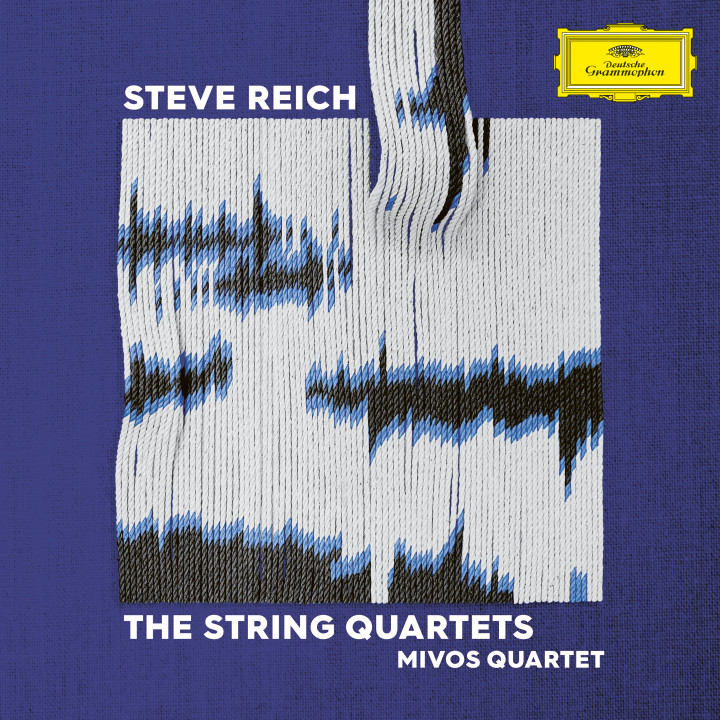
Mivos Quartet Plays Steve Reich (CD Review)

Steve Reich: The String Quartets

Mivos Quartet

Deutsche Grammophon


Steve Reich wrote his three string quartets for the Kronos Quartet, who have premiered, recorded (for Nonesuch), and continued to champion them. With Kronos still active, why does another quartet record these pieces? Mivos Quartet makes a strong case that there is room for other interpretations of Reich’s string quartets.


I remember well being at the Carnegie Hall premiere of Steve Reich’s piece for string quartet and multimedia WTC 9/11, performed by Kronos Quartet. Its incorporation of sound recordings, a dead phone line, air traffic controllers, and those trying to escape the building, was harrowing. Like his first quartet, Different Trains, Reich creates instrumental motives out of spoken word passages, imitating their contour and imparting pitch. The final movement, in which Jewish prayers are said over remains from the site, is extraordinarily moving. By the end of the work, many in the audience were visibly shaken by its visceral impact. Kronos has since recorded WTC 9/11, in a gritty rendition reminiscent of the energy of the live performance. 


Mivos plays with equal poignancy, but also with  a laser beam clarity that brings an entirely different palette of textures to bear. The recorded voices too have been remastered to emphasize incisiveness of utterance. Even with the constraints of overdubbing and vocal samples, there is freshness to Mivos’s approach to phrasing, taut and lithe. 


Triple Quartet features three quartets overdubbed throughout the piece (no vocal samples). Mivos play up the polyrhythms that festoon the work. Just when you think the groove is interlocked for good, Reich throws another intricate rhythmic relationship into the mix. Lest things become too motoric, glissandos and solo turns enliven the texture. Triple Quartet doesn’t have the narrative arc that defines the other pieces here, but it is a fine piece of abstract music 


Different Trains is an iconic work. At the beginning of the Second World War, Reich was shuttled back and forth on trains between separated parents. The “different trains” are those destined for the death camps in Poland. Its first movement features voices from Reich’s train rides, a porter, and governess, and clangorous train sounds. As in WTC 9/11,  Reich creates melodic phrases that mimic the contours of the sampled speeches. The second movement is terrifying, with speakers who are survivors of the Holocaust describing their trips on trains to the death camps. Air raid sirens are added to the train sounds, which move on a different polyrhythmic pathway. The final movement describes the end of the Second World War, bringing voices from America and Europe together to consider what has transpired. The last section moves from the emphasis on rhythm to a major key cadence accompanying the description of a deportee with a beautiful voice. One of the masterpieces of the late twentieth century, Different Trains is a piece that delves into issues of ethnicity and religious persecution that are, sadly, all too present in today’s society.  


The renditions by Kronos are irreplaceable, but Mivos creates compelling complementary readings. Recommended.


-Christian Carey