Fifteen years on and Dustin O’Halloran’s ‘Lumière’ still sounds as fresh as ever
During the first decade of the twenty-first century, music took another turn on its ambient axis, and ‘post-classical’ was born.
Mark Prendergast had already claimed the previous century to be the ambient century, with everything from Mahler to Trance falling under its all-encompassing sonic spell. One nevertheless suspects that, had Prendergast published his book a few years later, he may have been persuaded to call it The Long Ambient Century, such was ambient and its offshoots’ enduring appeal to post-millennial listeners. For better or worse, performers and musicians from Chilly Gonzales, Peter Broderick, Nils Frahm, Johann Jóhannsson, Hildur Guðnadóttir to Ólafur Arnalds have all been associated with ‘post-classical’ at one time or another.
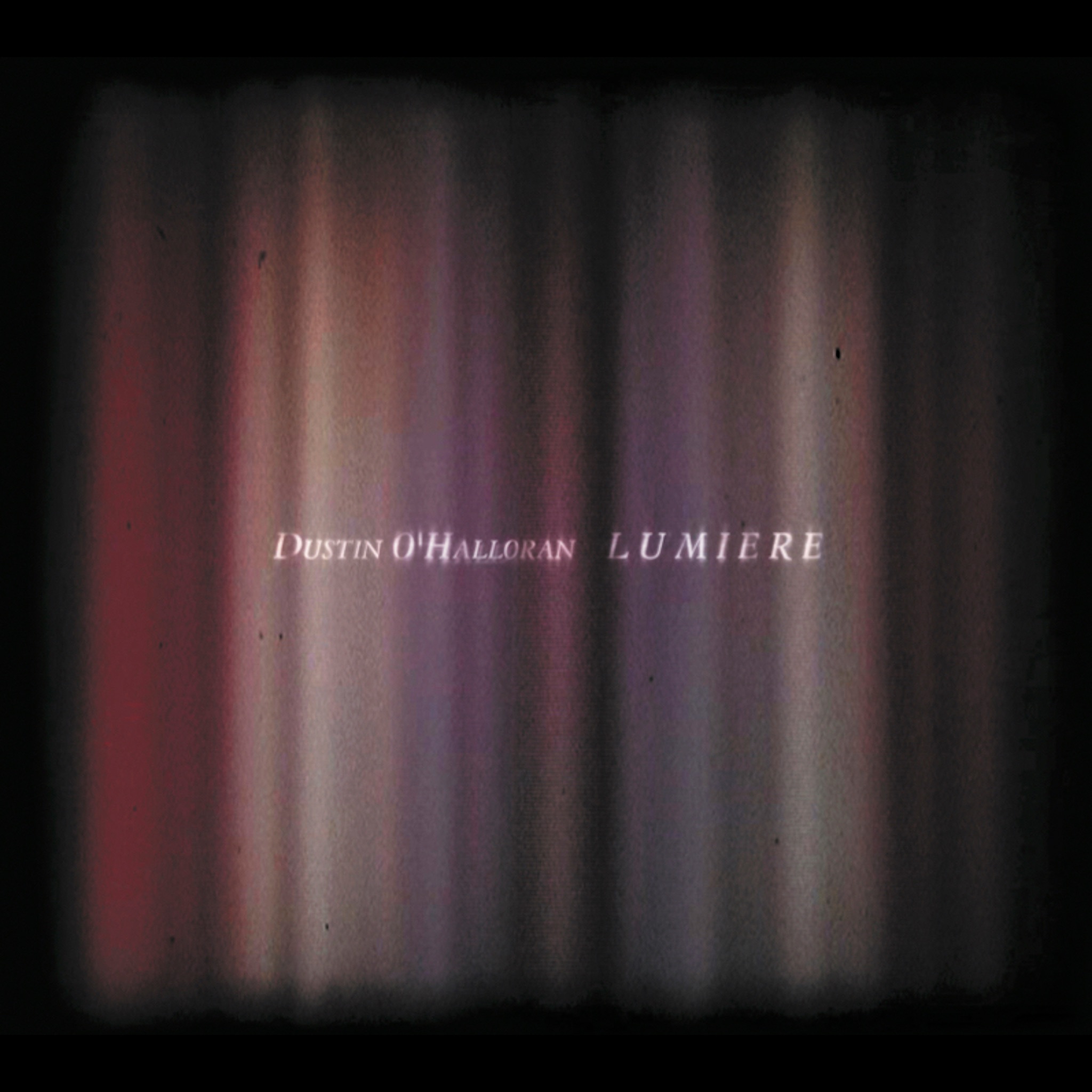
If the seed of this quiet musical revolution was sown in the early 2000s, it blossomed into full view in the neo-post-classical music of artists as varied as Eydís Evensen, Kali Malone, Hania Rani and Dobrawa Czocher. Post-Classical lives on! Yet at its epicentre lies Dustin O’Halloran’s Lumière. Originally released on FatCat Records in February 2011, this expanded reissue offers a timely opportunity to take stock of the album’s enduring impact and significance.
So, has Lumière stood the test of time? For these ears, O’Halloran’s magnum opus sounds as fresh and relevant as it did fifteen years ago.
With its resonant bells, crackle of FM static, atmospheric electronics and prepared piano, the opening track, ‘A Great Divide’, sets the tone for the rest of the album. Lumière starts positively enough, but as the timbral glow subsides, we are left with something more precarious and uncertain. The track unfolds into an expressive Max Richter-esque cello melody which, despite its upward trajectory, reinforces the bleak mournfulness that pervades the album. This sense of solipsistic despair is heightened further by a falling piano line at the end of ‘A Great Divide’, seemingly trapped in a harmonic cycle that cannot escape its own unanswered question.
All of which begs the question: what is the great divide? Is it a divide between hope and despair? Perhaps the significance of O’Halloran’s album resides in the kind of ambivalent melancholy that Michel Faber wrote about in his foreword to the second edition of David Toop’s groundbreaking Ocean of Sound, where a tension lies between ‘wanting to float bodiless and contextless beyond the egocentric specificities of one’s own life, but then wanting to touch base with home turf and humanity’. This dichotomy lies at the heart of Lumière. It is a light that radiates from within while simultaneously casting its own solipsistic shadow.
These shadows are not always those of the doppelgänger, however, although they often appear that way. ‘Opus 44’ demonstrates O’Halloran’s mastery of minimalist gestures, the piano’s darkly mellow patina subtly exploring the liminal space between repetition and difference. Likewise, the quilt-like design of ‘We Move Lightly’ is stitched together through a series of overlapping oscillating patterns, its simple strophic design enabling the striving textural build-ups of nudging string lines to achieve greater impact.
‘Opus 44’ is also the first obvious use on the album of the ‘felt piano’ timbre favoured by post-classical composers. ‘Opus 43’ also employs this sound, although Lumière is remarkably economical in its use of this timbre: it certainly isn’t a ‘felt piano album’ (its mechanics soon became a clichéd mannerism in later albums). Whatever the case, O’Halloran is at his ruminatively restless best in ‘Opus 43’ – the track’s enigmatic qualities captured with even greater directness in the demo version, also included. Later, ‘Timothy Is Sleeping’ comes across as a mini-miniature, its downward curves again chiming with the album’s ambivalent melancholy.
Classical associations are suggested throughout Lumière in tracks such as ‘Quartet N.2’ and ‘Quintette N.1’, but their significance extends beyond their titles and piano-plus-strings instrumentation. ‘Quartet N.2’, for example, is laden with affective loss and regret, its descending strings and falling chaconne line recalling the Baroque lamento bass. ‘Quintette N.1’ likewise makes use of falling lines, heard in the solo violin’s faltering arpeggiando figures, refracted through the lens of Chopin’s Prélude in E minor, Op. 28, No. 4 (another sign of the composer’s influence on post-classical composers), before ending with a series of suspended harmonies à la Purcell and Handel.
Shafts of light do appear in Lumière from time-to-time. The rising patterns in ‘Fragile N.4’ precipitate an almost Sigur Rós-like chorus, while the hammered dulcimer in ‘Fragile N.1’ (played by Theresa Dimond) utilizes a song-meets-sonata-form structure favoured by many post-classical composers, where a pop-like verse-chorus pattern is combined with a gradual, Fibonacci-esque dynamic swell and arch-like shape – a form often favoured by Jóhannsson, Arnalds, et al.
Both ‘Opus 55’ and ‘We Move Lightly’ utilize oscillating patterns reminiscent of Hans Otte’s epic post-minimalist piano cycle Das Buch der Klänge (The Book of Sounds). The latter’s carefully crafted remix by the ever-inventive Robert Lippok adds Eastern-style folk percussion (favoured by Einaudi and others in the early 2000s) alongside subtle acousmatic bleeps and beeps.
As its name suggests, the two-part ‘Snow and Light’ (one of the album’s many highlights) distils its luminous landscape into pure sonic expression, while the marginally more upbeat ‘Light’ section exudes a dreamy, Satie-like ambience reminiscent of O’Halloran’s earlier solo piano albums, Piano Solos and Piano Solos, Vol. 2.
O’Halloran has said that his aim was always to capture a certain timelessness in his music. Fifteen years on, Lumière offers living proof of both the album and its composer’s enduring relevance: a post-classical classic that has more than withstood the test of time.