Tag: @cbcarey. @sequenza21

Concert review, Contemporary Classical, early music, File Under?, Miller Theater, New York

Stile Antico Returns to St. Mary’s

Photo: Eduardus Lee.

Stile Antico Returns to Sing at St. Mary’s


Church of Saint Mary the Virgin

November 9, 2025

Published in Sequenza 21

By Christian Carey


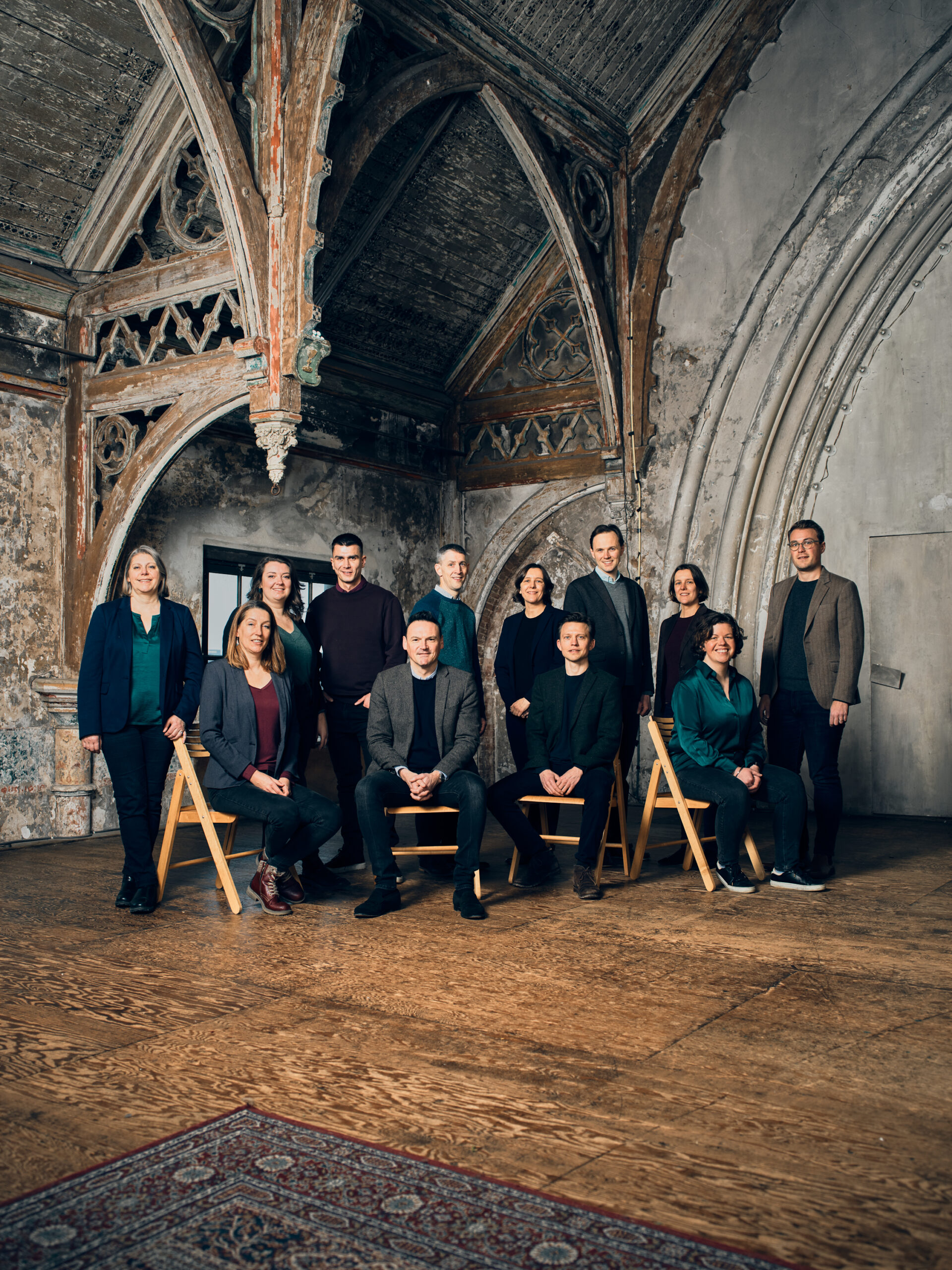
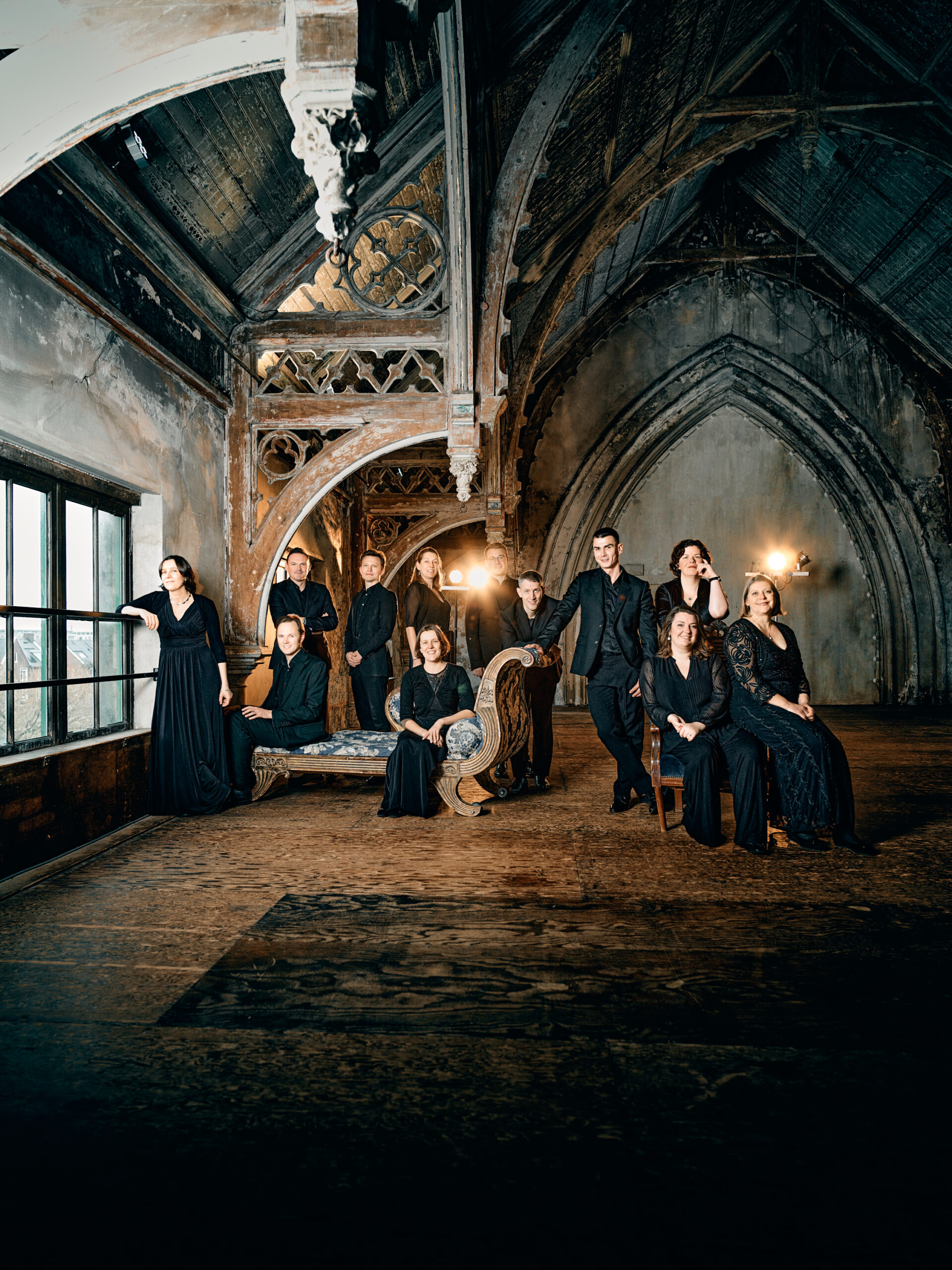
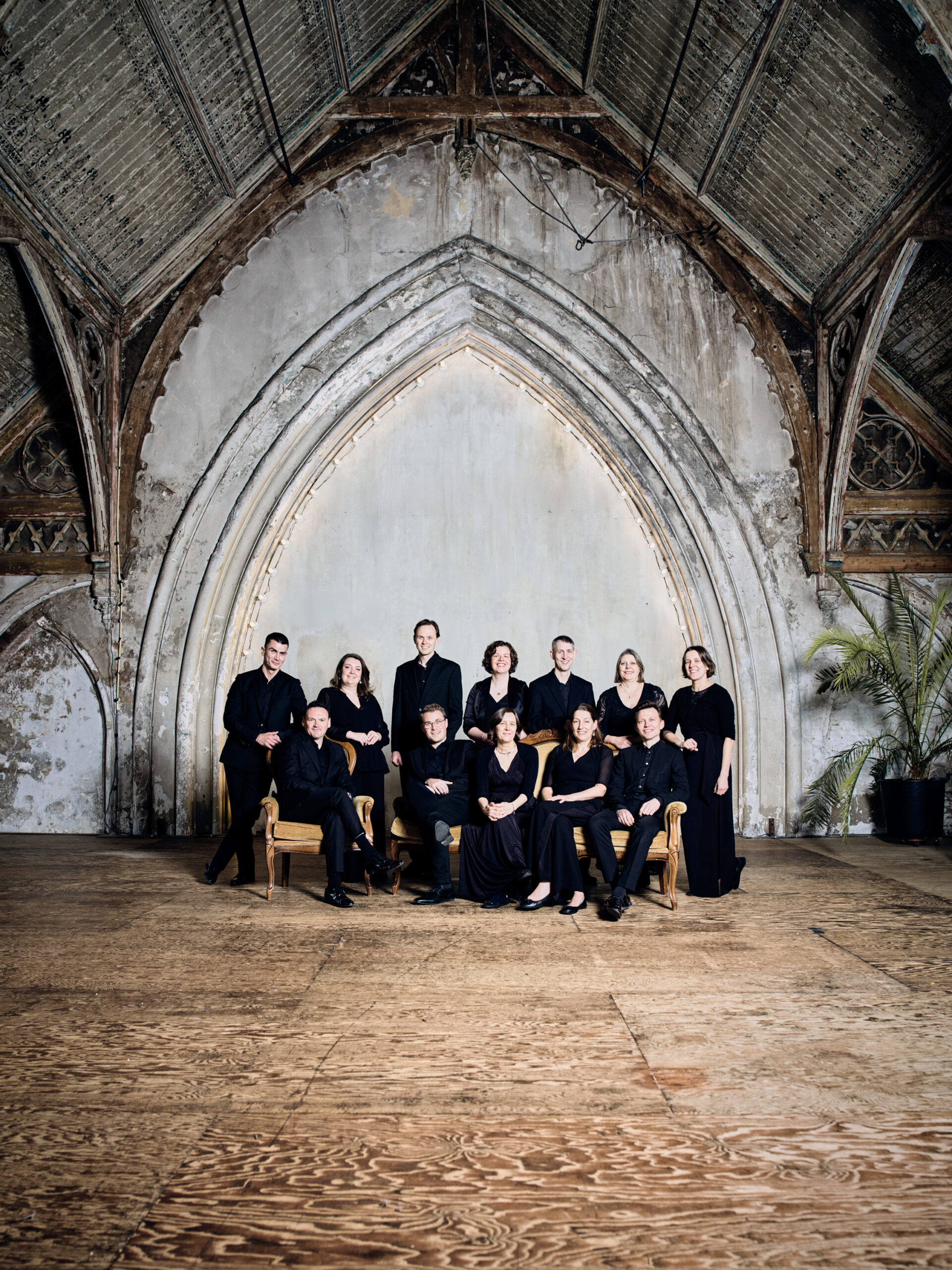
NEW YORK – The British choral group Stile Antico has been together for twenty years, and while they have premiered several new works, the ensemble specializes in repertoire from the Renaissance era. Indeed, this past Saturday on Miller Theatre’s Early Music series, at the Church of Saint Mary the Virgin in midtown Manhattan, the theme of their program was “The Golden Renaissance.” At St. Mary’s, Stile Antico presented works by noteworthy composers of the sixteenth and early seventeenth centuries. They may be lumped together in a historical pigeon hole, but Renaissance composers exemplify a plethora of approaches, and the music often is quite demanding to sing. Stile Antico took a versatile approach in their program, sometimes performing with their full complement of a dozen singers and at others with subgroups thereof. Thus, the concert afforded listeners intimate experiences as well as resounding anthems sung in full voice. 


Some of the selections were the usual suspects on choral programs, but there were also a few less familiar pieces that proved worthy companions to the hits of the Renaissance. One of those that might be considered a “deep cut” was  “A un niño llorando,” a villancico by Franciso Guerrero (1528-1599). Its subject was the story of the gifts given to the infant Jesus by the magi. Beginning with a solo by soprano Rebecca Hickey, its compound rhythms provided both the lilt of a cradle song and a framework for hocketing between parts. Two other Spanish composers were represented on the program, with Recessit pastor noster from the Tenebrae Responsories by Tomá Luís De Victoria (1548-1611) performed with dramatic declamation and cascading linear overlaps. Jubilate Deo by Cristóbal De Morales (1500-1553) is peppered with plangent dissonances. Apparently the composer took his jubilation quite seriously. All was well in the end, with the final cadence of both parts of the motet arriving to rest on a major chord. These works, as well as most of the other music on the program, have been recorded by Stile Antico. 


A more festive mood was captured in the performances of O clap your hands and Hosanna to the Son of David, both by Orlando Gibbons (1583-1625). Short phrases ricocheted between subsections of the choir, delivered in crisply animated fashion. Ein Kind geborn, by Michael Praetorius (1571-1599), subdivides the choir into various smaller units who engage in a kind of call and response, the resulting antiphony building to a thrilling tutti finale. 

Clemens non Papa (1510-1555) is a composer who is underserved by current ensembles. His best known piece, Ego flos campi, was sung in a luxuriantly legato rendition. Stile Antico’s interpretative approach has been enriched over the years, with more dynamic and articulative shadings and ever greater fluidity of pacing. Hearing them sing something again, such as Ego flos campi, underscores their evolving approach to this repertoire. In Manus Tuas, by Thomas Tallis (1505-1585) is another piece that shows Stile Antico to their best advantage, the ensemble making the most of plangent cross-relations to paint the aspects of devotion and surrender integral to its text. 


Included on the program was The Phoenix and The Turtle, commissioned nearly a decade ago from Huw Watkins. A setting of Shakespeare, various explanations of the poem’s meaning have been suggested, from symbolizing various lovers to eulogizing Christian martyrs.Watkins uses a polytonal framework that has a number of added note chords, corruscating motivic entrances, and much antiphony. The result sounded well in the reverberant acoustics of St. Mary’s.


This was the 500th anniversary of the birth of Giovanni Pierluigi da Palestrina (1525-1594), and Stile Antico has recorded an entire album of his music as part of their trio of Golden Renaissance CDs, with the others representing Byrd and Josquin.  All are well worth seeking out. Two pieces by the composer William Byrd were featured in the concert. A recusant Catholic, Byrd vented his anger at the persecution of those of his faith in “Exsurge Domine,” the concert’s fiery opener. His late piece “Retire my soul” was of a mournful cast and sung with plaintive, sinuous legato lines. Josquin’s masterpiece of compositional architecture, Salve Regina, with two borrowed parts to thread between original  lines, was performed with seamless interweaving of its contrapuntal entrances. As for Palestrina, his Laudate Dominum couldn’t be done on the choir’s last visit to St. Mary’s, as baritone Gareth Thomas was too ill to perform, and the piece’s twelve-part divisi would not permit it. For an encore, they performed it here, and the rendition proved well worth the wait.
 

Contemporary Classical

Erika Dohi – “Myth of Tomorrow”

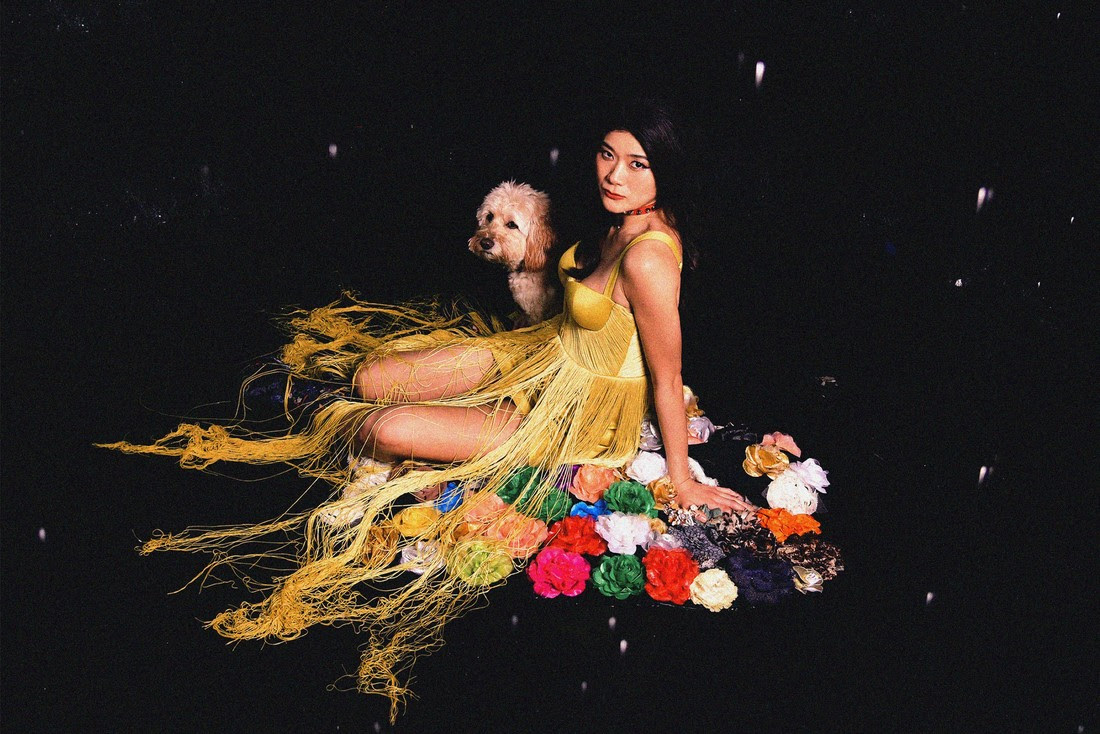
Erika Dohi is a pianist, vocalist, composer, and improviser. Her full length recording Myth of Tomorrow is out today, Friday, October 24th, via Switch Hit/Figure Eight. She collaborates with Metropolis Ensemble on several of the album’s songs, including the title track (previewed below). Vocoder plays a big role in her singing, and the instrumental component combines classical instrumentation, fluid synths, and programmed rhythms.

Composers, Concert review, Concerts, Dance, File Under?, New York, Orchestras

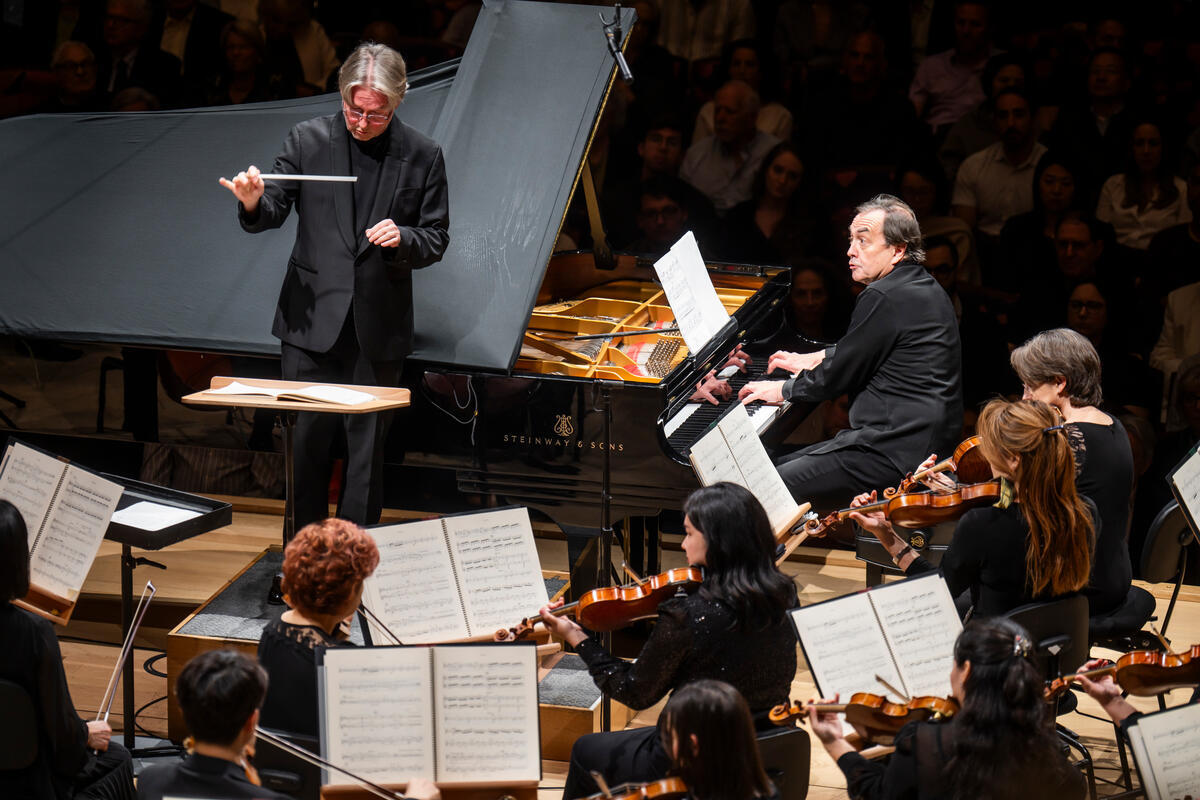
Salonen Conducts New York Philharmonic (Concert Review)

Photo: Chris Lee.

The NY Philharmonic Celebrates Boulez’s Centenary
Works by Bartók, Boulez, Debussy, and Stravinsky
Pierre-Laurent Aimard, piano
New York Philharmonic, Esa-Pekka Salonen, conductor
Saturday, October 4, 2025
Saturday, October 11, 2025

NEW YORK – In October, Esa-Pekka Salonen conducted the New York Philharmonic for two consecutive weeks. Both programs celebrated the centenary of the composer and conductor Pierre Boulez (1925-2016), who was Music Director of the New York Philharmonic from 1971-1977. Boulez was a key figure of the post-WWII avant-garde and a proponent of serial music, then in its early stages. By the 1970s, Boulez was an internationally renowned conductor of a wide range of repertoire, and his time with the NY Phil was distinguished by a high level of music-making. Still, his advocacy for increasing the number of contemporary works presented was not welcome in all corners. Balancing the programming of repertory staples with that of twentieth and twenty-first century music remains a much-debated topic at the NY Phil, both within the organization and among its listeners. This is true of most American orchestras, and had more than a bit to do with Salonen’s recent decision to end his directorship of the San Francisco Symphony. Thus, it was heartening to see Boulez’s music received so well by the audiences at well-attended concerts on October 4th and 11th.

Claude Debussy (1862-1918) was the other composer on the first concert, and it was a simpatico pairing. Boulez admired Debussy and frequently performed his music. In the concert’s first half, works by the two composers alternated. Debussy was represented by movements from the orchestral version of Images, which shared a point of inception with the programmed Boulez pieces: they are transcriptions of piano pieces. In the 1940s, Boulez wrote twelve piano miniatures called Notations, each twelve measures long but varied in tempo and character to create a group of pieces that helped prove his avant-garde bona fides. In succeeding decades, Boulez returned to some of them and remade them for orchestra. Three of these, in both their original and orchestrated forms, were performed. Pierre-Laurent Aimard played the movements from Notations in authoritative fashion, scrupulously observing the tempos conceived for their solo renditions. Frequently the orchestral version has been written to be played a bit more slowly, for the purposes of resonance and ensemble coordination; the latter at times is formidably challenging. It is to the NY Phil’s credit that their playing took into account the disparate nature of all the music in the first half, rendering each inflection, some quite nuanced, with sensitivity. Salonen abetted this effort with a clear approach that embodied the scores in a manner not dissimilar to Boulez’s conducting style.

Aimard would later be the piano soloist in Fantasie, an infrequently performed early piece by Debussy, started during his Prix de Rome days and only published posthumously. It is not one of Debussy’s finest pieces, and its spate of revisions shows seams in a number of places, sounding like a grand tour of the stylistic evolution throughout his career. The piano part is virtuosic, sometimes stepping into the spotlight and at others blending in with the orchestra in a demonstration of esprit de corps. If anyone can make Fantasie at all compelling it is Aimard, who distinguished himself with fleet-fingered runs and thoughtful turns of phrase.

Debussy’s La Mer, his beloved orchestral work, was the program’s finale. Water’s motion, environs, and the denizens dependent upon it are frequent touchstones for the composer, nowhere more so than here, although the grotto scene from his opera Pelleas et Melisande is a strong contender. The piece has had a somewhat quixotic afterlife as a shorthand trope for the sea in many films, from documentaries to Hollywood blockbusters. The real thing still trumps all of them. The NY Philharmonic played it pristinely under Salonen’s direction.

Photo: Brandon Patoc.

The concert on October 11th featured two more composers in Boulez’s orbit: Béla Bartók (1881-1945) and Igor Stravinsky (1882-1971). The latter was represented by his Octet for Winds, a piece firmly rooted in the neoclassical tradition that pits a woodwind quartet of flute, clarinet, and two bassoons against two trumpets and two trombones. The music is filled with contrapuntal assertions and responses between winds and brass. This heterodox ensemble is difficult to balance and wasn’t perfect in this respect here, and the position of the group didn’t seem to be in an acoustically ideal spot onstage. Still, the interplay between performers was impressive.

Bartók’s Concerto for Orchestra is among the masterpieces of the past century. Like the octet, it is filled with counterpoint, including some of the fugal variety. Both Stravinsky and Bartók were able to navigate the delicate balance between music of the past and innovation. In addition to baroque music, Bartók references folk music from Eastern Europe. There is also a jocular trope on a theme by Dmitri Shostakovich (1906-1975), poking fun at his Russian counterpart for toeing the cultural lines drawn by Stalin. Not the first concerto for orchestra, in which each section gets an opportunity to be highlighted, it remains the best yet composed. The NY Phil, especially with the dynamic gestures of Salonen, played it like few other orchestras can dream to match.

In the performance’s second half, a more extensive work than Notations was presented. Rituel in memoriam Bruno Maderna was composed in 1975, while Boulez was still conducting the NY Phil. Maderna was a close associate, and his death from lung cancer at 53 was a difficult loss to contemplate. Although its use of gongs and chorale-like chords in the brass is evocative of ceremony, Rituel does not explicitly reference any religious traditions. Rather, it is a postmodern, secular type of valediction, in which spatial deployment envelops the audience in a solemn, eloquent meditation on grief. With a cohort onstage, other members of the orchestra were arrayed throughout the hall, their parts reverberating in well-coordinated fashion. There is a plethora of percussion instruments, with the players deployed in an additive fashion, with each of Rituel’s eight sections supplying more percussionists. This was also true of the other players in the other sections of the orchestra, supporting a long, powerful crescendo, one that then subsides in a gradual denouement.

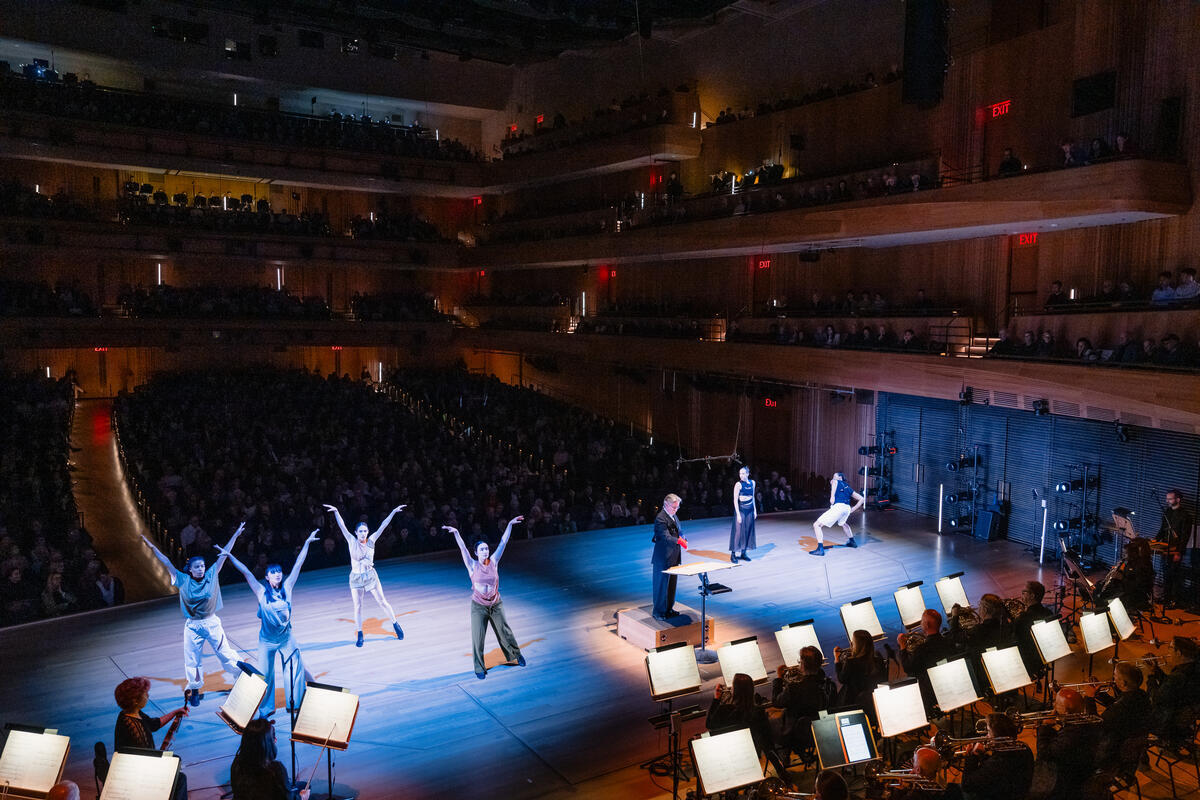
The LA Dance Project was on hand for Rituel, performing onstage in front of, and sometimes between, members of the orchestra. It featured six dancers, two principals who wore black and four others in various shades of color. The choreography captured both fluid musical lines and percussive gestures, representing the stages of grief encountered after a loss in a dance that was modern in character and well-executed. Given Maderna’s death after an illness, the physicalization of violence, with both symbolic crucifixion and stabbing, seemed in places more like Sacre du Printemps than the demeanor of Rituel. Still, it added a layer of emotionality to a compelling use of the entirety of Geffen Hall. One hopes that more spatial music is on offer in the future, and that Salonen remains a frequent visitor to New York to perform with the orchestra.

-Christian Carey

Classical Music, Composers, Concert review, Contemporary Classical, File Under?

The Met Orchestra Plays Ortiz, Blanchard, and More at Carnegie Hall

Photo: Arthur Elgort.


The Metropolitan Opera Orchestra, Yannick Nézet-Séguin, Music Director and Conductor

Angel Blue, Soprano

Carnegie Hall, April 18, 2025

Published on Sequenza 21 

By Christian Carey


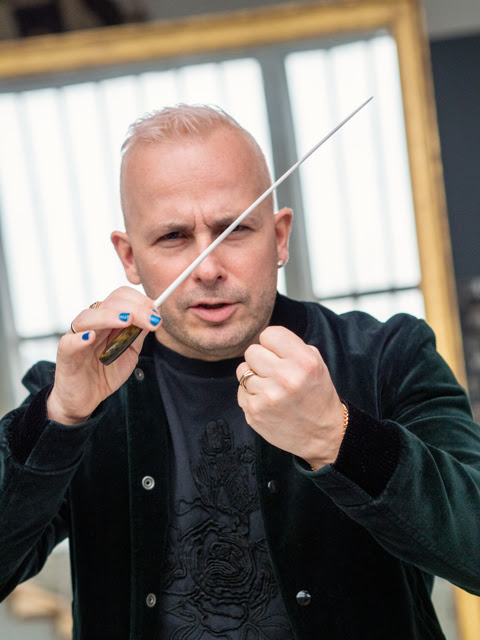
NEW YORK – Virtually since its inception, the Metropolitan Opera Orchestra, Met Orchestra for short, has given concerts alongside its main role accompanying operas. For over a hundred years, this has allowed the ensemble to stretch itself, performing vocal works, unstaged or semi-staged operas, repertoire staples, and several premieres. Yannick Nézet-Séguin has relished the opportunity to work with the musicians in this capacity. On Wednesday night, the Met Orchestra premiered a suite from Fire Up in My Bones, an opera staged at the Met by Terence Blanchard. They also performed pieces by Carnegie Hall’s current Debs Composer Chair Gabriela Ortiz, Leonard Bernstein, and Antonin Dvořák. 


Ortiz’s piece, Antrópolis (2018, revised 2019), was an ebullient opener, recalling the various nightclubs the composer had frequented during her youthful years in Mexico City. The piece is a showcase for percussion, with varied dance rhythms, ranging from mambo and rumba to incipient techno, articulated by timpani soloist Parker Lee and the rest of the percussion cohort.


Symphony No. 1, “Jeremiah,” (1942), was written when Bernstein was twenty-three. Its directness of expression betrays a bit of naivete that makes it somewhat less compelling than his musical theater pieces of the forties. Still, the orchestration demonstrates an impressive grasp of mid-twentieth century music, both the Americana style of Aaron Copland and Roy Harris, and the neoclassical music of Stravinsky, who seems to loom large over the piece. Mahler, a composer for whom Bernstein, throughout his career, advocated strongly, serves as another touchstone, particularly in the inclusion of a soprano soloist in the final movement of Jeremiah. The texts are taken from the Hebrew Bible book “The Lamentations of Jeremiah,” selected to analogize the destruction of the temple in Jerusalem with the plight of Jewish people in Europe under the Nazi regime. 


Soprano Angel Blue, standing on a platform in the midst of the orchestra, declaimed the music with an authoritative demeanor that underscored its mournful message, singing with flawless legato and rich tone. Here and elsewhere, Nézet-Séguin was a commanding presence, underscoring the rhythmic vitality of the piece’s earlier mixed meter sections only to build it to a stirring climax by the symphony’s conclusion. 


Terence Blanchard’s opera Fire Up in My Bones was staged with jazz musicians, including Blanchard, participating. He created a suite of music from the opera with the Met Orchestra’s forces, sans additional musicians, in mind. Apart from an interlude depicting the sounds of a chicken processing plant, which includes syncopated percussion in playful fashion, Blanchard instead presents the opera’s powerful thematic material depicting human struggle. Charles M. Blow’s memoir, in which, among other experiences, he discusses being abused as a child and coming to terms with his homosexuality, is a compelling story, and the arias from Fire Up in My Bones provide it with the gravitas it deserves. The suite presents selections from these set pieces in sweeping melodies that are romantic in scope. The harmony sits astride Mahlerian late tonality and a fluid use of jazz vocabulary, ending on a charged chord rife with dissonant extensions. Blanchard’s scoring is fluent in a variety of idioms, and even if the suite only tells part of Fire Up in My Bones’s musical story, it is replete with well-paced dramatic contrasts.


The concert concluded with one of the most beloved pieces by Dvořák, his Symphony No. 9, “From the New World.” It was written in 1893, during his extended visit to the United States. Dvořák advocated for composers from the United States to explore their own nation’s folk music, mining it for material, just as he did with vernacular Czech music. Viewing the music of native Americans and spirituals as the most consummately authentic folk music in the US, he recommended that their works be collected and employed by the predominantly white male students who were his composition pupils in New York. One can argue about the authenticity of this practice through a contemporary lens, but it certainly made an impression on US composers of that generation and successive ones. 


Musicologists love debating the derivation of the materials Dvořák used in the New World Symphony. He insisted that there were no direct quotations in the piece. Apart from the rhythm of a tom-tom drum, that is likely the case, although its most famous tune, the achingly beautiful theme from its second movement, was later used to create a spiritual-styled song. Much of the music sounds like it could just as easily have been written while Dvořák was in Europe. Whatever the pedigree of its sources, the Ninth Symphony is a fantastic piece and the Met Orchestra performed it gloriously. 


Nézet-Séguin approached the piece in energetic fashion, allowing it to speak for itself mostly in tempo rather than using too much rubato. This returned a sense of balance to the phrasal and rhythmic construction of a piece that can, upon occasion, seem  schmaltzy in its presentation. The sections of the aforementioned second movement that called for pliable moments seemed all the more noteworthy as a result. This was abetted by superlative playing from the winds and brass, particularly Pedro R. Díaz, who performed the English horn solo in eloquently beautiful fashion. The strings had many moments to shine as well, playing the theme of the scherzo, marked molto vivace, with rhythmically incisive élan. The blend in tutti sections was impressive as well. 


While there were no pains to overstate it, the program was nicely tied together by the Symphony “From the New World.” Each composer in their own way explored the cultural and musical traditions that resonated with them. Ortiz’s Latin dance, Bernstein’s Jewish liturgical references and tropes on folk music, and Blanchard’s jazz chords, however different they sounded, came from a place of deep cultural resonance for each respective composer. Thus, the Met Orchestra’s concert was both diverse in its offerings and well curated. A memorable evening of music.


-Christian Carey

File Under?, Improv, jazz, Piano

Keith Jarrett – New Vienna (CD Review)

Keith Jarrett

New Vienna

ECM Records


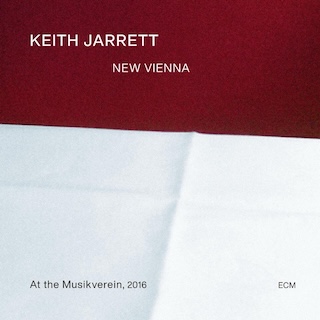
Keith Jarrett turned eighty on May 8th, 2025, and to fete him, ECM Records has released New Vienna, a solo piano concert recorded on his last tour, in 2016, at the Goldener Saal, Musik Verein in the Austrian city. A previous recording, The Vienna Concert, recorded in 1991 and released in 2000, was also a solo outing by Jarrett, at the Staatsoper. It has been cherished by many listeners as a particularly fine example among the many live appearances by Jarrett that have been documented and released. New Vienna is a worthy successor. 


As is the case with all of Jarrett’s concerts, the pianist incorporates a cornucopia of styles: free jazz, blues and gospel-tinged ballads, various traditional jazz genres, and neo-classicism. “Part I” uses the language of modern jazz as a vehicle for virtuosity, with cascading arpeggios and muscular clusters set alongside thrumming bass register oscillations. There’s also a hint of acknowledgement of Arnold Schoenberg’s early atonal piano pieces, and “Part II”  begins like Farben from “Five Pieces for Orchestra” before moving towards a blues-based harmonic vocabulary (more about Schoenberg later). Jarrett revels in the spontaneity engendered by juxtaposition, and here modernity and the vernacular, two seeming opposites, are set side by side. Ultimately, the different vocabularies blend and synthetic scales bridge the distance between them. All the while, Jarrett’s playing is detailed, vibrant, and assured. 


“Part III”  opens with a rambunctious ostinato in the bass that soon is joined by fluid hard bop soloing. Jarrett may enjoy exploring free play, but his jazz bona fides are well intact here. In “Part IV,” the pianist performs in the spiritual ballad vein that is one of his calling cards. Given that he would soon step away from giving concerts, the arresting nature of his playing here seems even more poignant. On “Part V,” Jarrett remains in a slow tempo, with limpid runs over changes that move through a series of keys. The patterning may be familiar to jazz aficionados, but the touch, delivery, and fluidity of the performance affords it an eminently assured character. Partway through, there is a shift to a standard-worthy melody. The modulatory character is resumed, with the tune parsed and segmented until a solo turn that combines it with scalar passages from the outset. The extraordinarily detailed inflections here belie the sequential character of much of the music. 


The title “New Vienna” also seems to be a bit of a pun, as Jarrett has noted in interviews his connection of the city with its past, namely the history of “new” music from approximately a century ago, created by the Second Viennese School of composers: Schoenberg, Alban Berg, and Anton Webern. The affinity for this modernist movement is explored in the concert. Dodecaphony (12-tone writing) is well represented by “Part VI,” which includes a thorough distillation of Schoenberg’s writing into an eight and a half minute long section that is also contrapuntal in design. It is a hat-tip that the audience gets and responds to with enthusiastic applause. Imagine if there were other crowds who would recognize and appreciate an original riff on Schoenberg.  


From Part VI, he goes right into a bluesy modal jazz improvisation in “Part VII,” using a descending lamento bass-line to impart a mournful cast. The piece moves to a major key and briefly is reminiscent of the shuffle patterns that are Randy Newman’s stock in trade.  


There is a return to the blues in “Part VIII,” the pianist playing in an ambling medium tempo yet soaring time and again with vivacious solos. The closest to idiomatic that Jarrett hews, the section is also an entertaining showcase for this style of playing. “Part IX,” which closes the concert proper, takes on a triumphally funky character. 


For an encore, Jarrett plays a chestnut, Arlen and Harburg’s “Somewhere Over the Rainbow,” in a slow rendition that begins mid-bridge. A song that can become overly sentimental quickly, Jarrett manages it tastefully, wringing the most out of the tune without slipping into the bathetic, using substitute chords and countermelodies to turn the performance into an elaborate valediction. 


In 2018, Jarrett’s health caused him to retire. One is grateful that excellent recordings were made of his final live appearances, and doubly grateful that he is around to see his eightieth birthday celebrated with this memorable release. 


-Christian Carey


CD Review, File Under?, Pop

Swimming Bell’s Early Summer Serenade

Swimming Bell

Somnia EP

Perpetual Doom


Summers have been getting progressively hotter in much of the world. Here in the Northeast United States, we have had a mild Spring, but anticipate that summer will be a scorcher. Happily, singer/songwriter Katie Schottland ‘s project Swimming Bell has returned to serenade the season.  


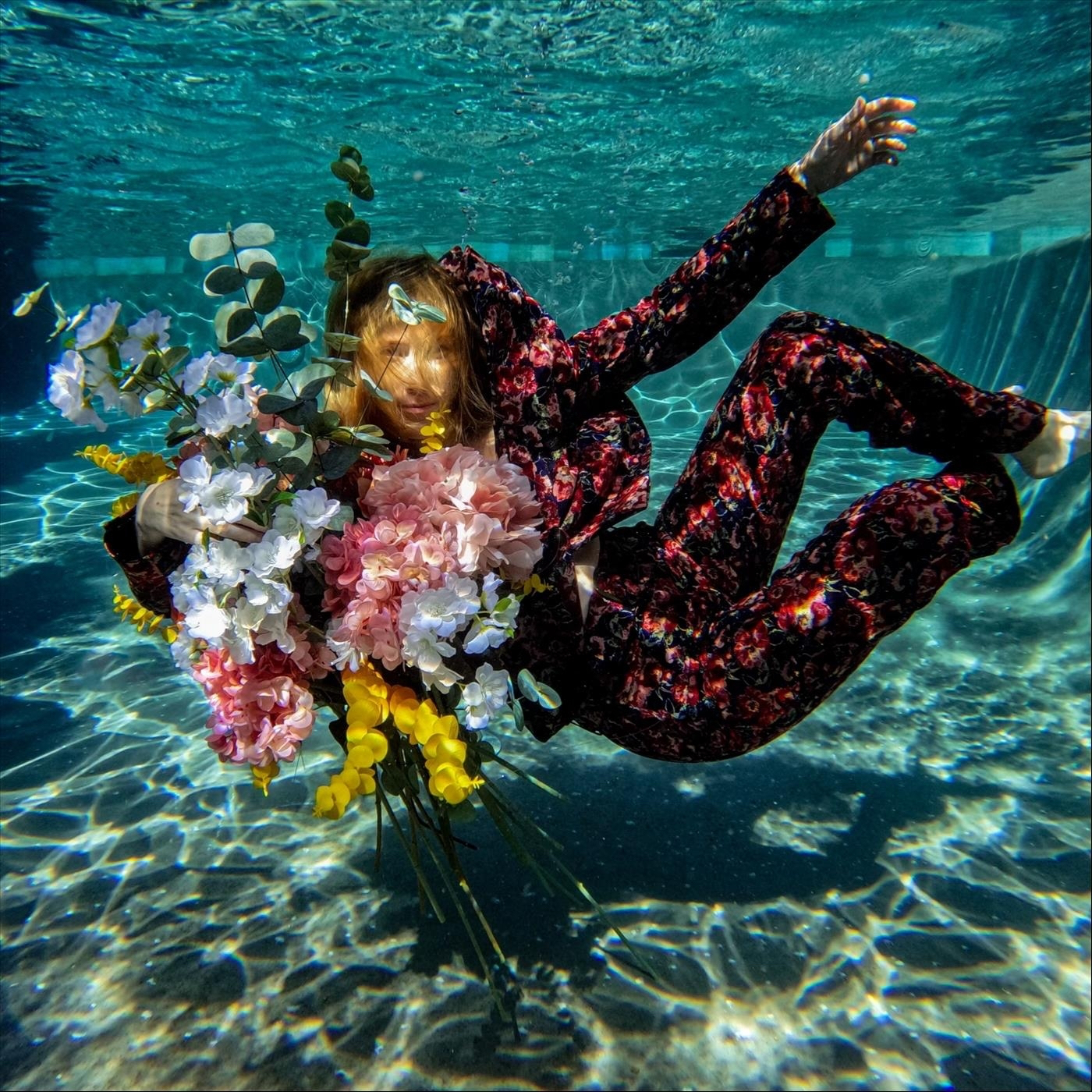
Swimming Bell’s latest EP, Somnia (Perpetual Doom, 2025) adopts a summery vibe. “95 at Night” both embraces the heat with fevered blur and seeks to assuage it with soothing vocals, pedal steel, and an undulating beat. The end of a summer romance could find little better to accompany burgeoning tears than the ballad “I’m Always Down,” with honeyed vocal harmonies and the twang of loping surf guitar. “Found it at the Bottom of the Ocean” has a seaside ambience of gentle singing, guitar glissandos, and supple rhythm courtesy of bongo drums. The closer, “Mushrooms in July,” seems self-explanatory. 


Somnia concludes after sixteen minutes, and many listeners will want more. Swimming Bell has recorded two full length albums, Charlie (Adventure Club/Permanent, 2024) and Wild Sight (Adventure Club, 2019), both well worth seeking out. 


-Christian Carey


Concert review, Contemporary Classical, early music, Festivals, File Under?, New York

Alisa Weilerstein’s Fragments 3 Program at Zankel Hall (Concert review)


Photo: Richard Termine

Fragments 3: Alisa Weilerstein at Zankel Hall

May 20th, 2025

Published in Sequenza 21

By Christian Carey


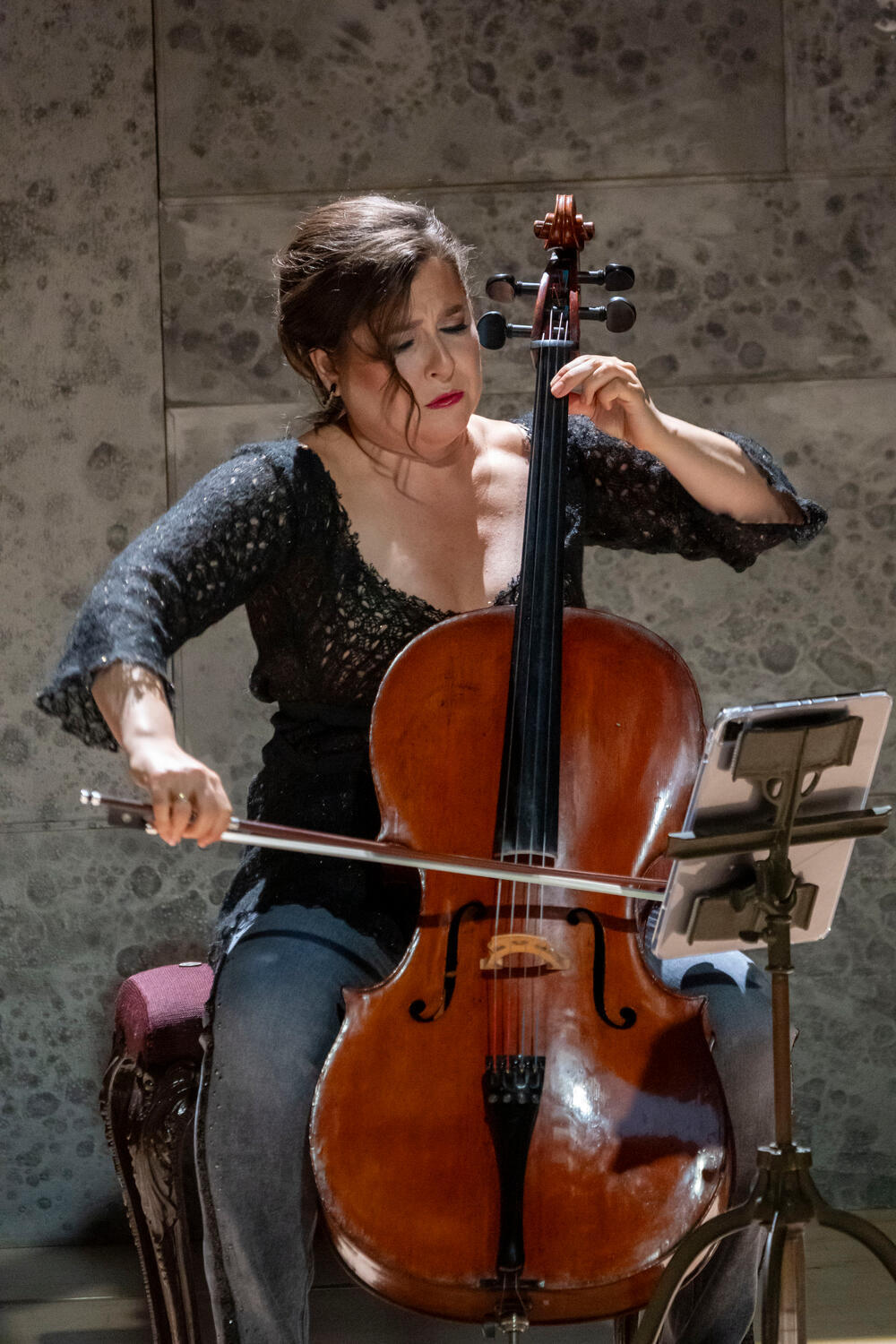
NEW YORK – Alisa Weilerstein is a supremely gifted cellist, and it is hard to imagine being anything less than riveted by her playing. At Zankel Hall last Tuesday, she made decisions for her Fragments project that seemed to be needlessly distracting. 

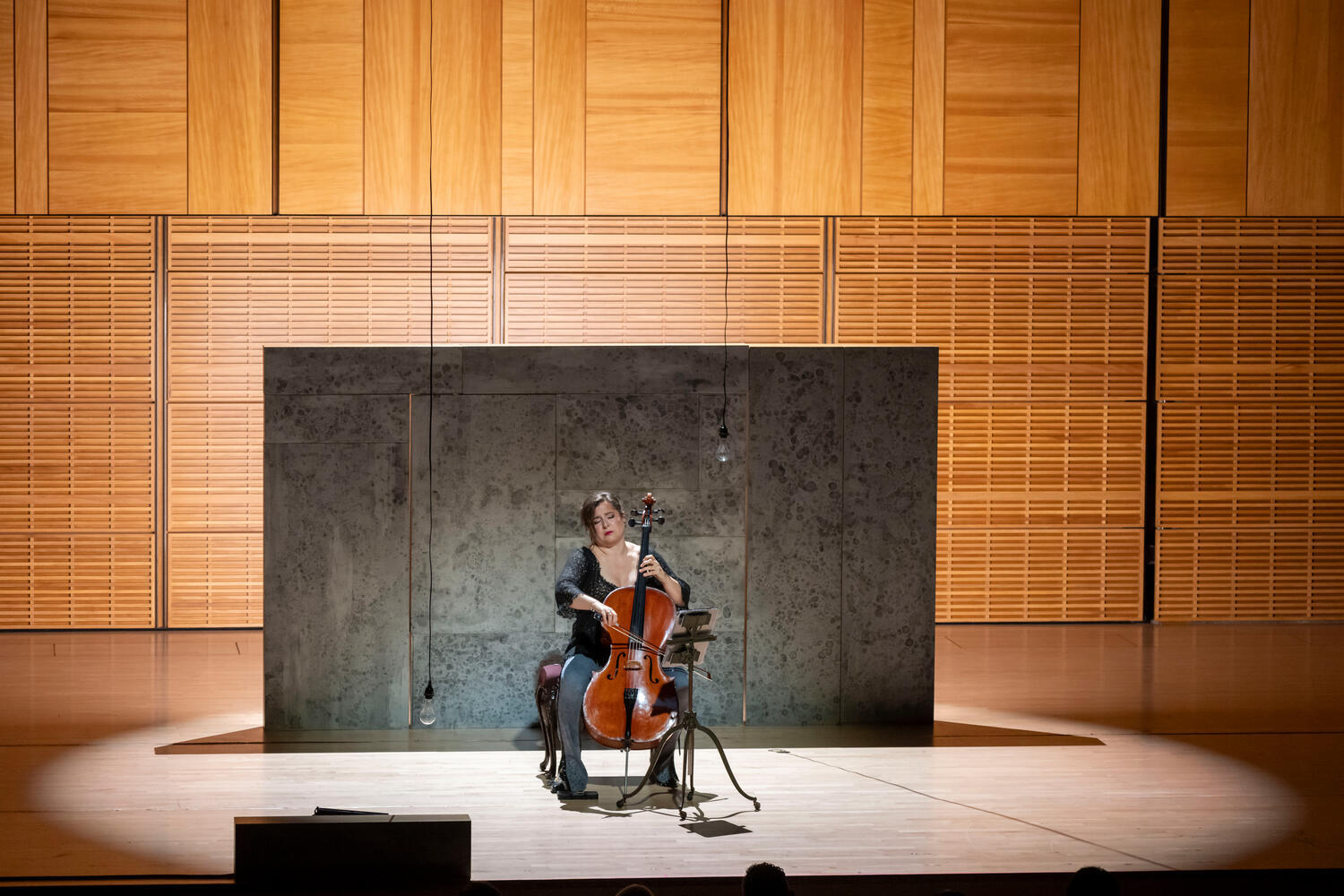
There are six Fragments programs all told, each based on one of the Bach Suites, joined by new pieces commissioned for the project. Fragments 3 featured the third cello suite alongside pieces by Joseph Hallman, Thomas Larcher, Jeffrey Mumford, and Carlos Simon. A design team helped to bring Weilerstein’s concept to life. The set, by Seth Reiser was elegantly simple, a multi-sided screen behind Weilerstein, and costume designer Molly Irelan did a fine job creating a chic yet downtown look for the cellist. The effective lighting, also by Reiser, included various spotlights as well as a moving magic lamp that accompanied moments of intensity. Director Elkanah Pulitzer did not seem to overtly interfere with Weilerstein’s usual performing demeanor. Perhaps ordering and pacing were part of her remit. 


The fragmenting of the pieces themselves is where things got challenging for listeners. Instead of presenting each of them in toto, individual movements of all of the pieces, Bach included, were excerpted out of order. In addition, audience members weren’t given a listing of the ordering of these sections, having to wait until after the concert to download a program, using a QR code found in the booklet. In remarks that were printed for consumption beforehand, Weilerstein exhorted the audience to “just listen.” This, by the way, is every reviewer’s nightmare – playing “name that tune” with pieces that you have never yet heard. 


It is laudable that so many new works for solo cello have come from this project. However, one feels for the composers, who, instead of being given a bow, were represented by the fragmenting of their pieces into a mix without metadata. It can be said with confidence that all four of the commissioned composers know cello writing authoritatively, including a catalog of extended techniques that featured Weilerstein’s adventurous streak and admirable facility to excellent advantage. Indeed, Simon and Hallmark seemed to invigorate their writing with extra doses of well-integrated 21st century virtuosity.


It was a bit disorienting to hear the Allemande, the second movement of Bach’s suite, appear as the penultimate fragment. Out of order though its movements may have been, the performance of the Bach suite was engaging, played with consummate care and thoughtful phrasing. Most of the program relied on the juxtaposition of old and new music. Only Mumford, with a few ostinatos in an otherwise dazzlingly modernist endeavor, provided a hat tip to Bach. Weilerstein finished the recital with the third movement of Thomas Larcher’s now here, which culminated with a rocket-fueled flourish, dazzling lamplight included. 

Photo: Richard Termine

In the bygone times of analog mixtapes, curation seemed a prerequisite. Playlisting mixes has now become the way that many people usually listen on digital platforms, often passively and without worrying about the aforementioned metadata. When it comes to music consumption, an encroaching facelessness of content seems to be what’s trending. Revising the recital is a welcome endeavor, and annotating program booklets needn’t be an ossified affair. When engaged, just listening is fine, and may be preferable to constantly rifling through the program notes instead of fully attending to the performance. Perhaps supertitles briefly listing who is being played could be a compromise, a mix without undue preconceptual baggage. 


All six installations of Fragments will be presented this week at the Spoleto Festival  over four nights: May 26, 28, 29, and 31. Bring your cell phone and click on those QR codes as soon as the applause concludes. 


-Christian Carey


Choral Music, Concert review, early music, File Under?, New York

Stile Antico Sings Palestrina at St. Mary’s

Photo: Eduardus Lee.

Stile Antico Sings Palestrina at St. Mary’s

March 29, 2025

Church of St. Mary the Virgin


NEW YORK – Celebrating their twentieth year, the vocal ensemble Stile Antico brought a program dedicated to the 500th anniversary of the composer Giovanni Pierluigi da Palestrina’s birth to Miller Theatre’s Early Music Series. The concert was held at the Church of St. Mary the Virgin in midtown, a space that Miller has employed to host a number of Renaissance music performances.


Stile Antico appeared with only eleven singers, instead of their usual complement of a dozen. Baritone Gareth Thomas was ill and couldn’t perform. Between numbers, several of the singers hid surreptitious coughs, leading one to think that a bug had plagued the group en route. The quality of the performance didn’t suffer: they still sang sublimely. 


The centerpiece of Stile Antico’s latest recording, The Golden Era: Palestrina (Decca, 2025), is perhaps his most famous piece, Missa Papae Marcelli. A great deal of lore has grown up around it, with a story that Palestrina wrote it in part to convince the more conservative members of the Council of Trent that they needn’t ban polyphony and revert exclusively to plainchant in services. Composers could write in multiple parts and still clearly convey the text. While it is unlikely that the Pope Marcellus Mass served as a test piece, Palestrina took pains to write polyphony that never obscured the words. Many composers, some even generations later, imitated what had come to be called the stile antico style of declamation and use of dissonance. 


Stile Antico’s performance of Missa Papae Marcelli on the recording is impressive, a standout that is among the best in a crowded field. Their diction is crystal clear, and the tone and blend of the ensemble is particularly beautiful. At St. Mary’s, the mass’s Credo was featured, and it was an expansive display that was well-paced to express the drama inherent in various passages of the piece. 


A number of motets by the composer were also included on the program. Tu es Petrus and Exsultate Deo displayed fleet runs and ricocheting exchanges. Sicut servus was performed with fetching delicacy, and Nigra sum sed formosa was imbued with stately elegance. 

Photo: Eduardus Lee.

Composers besides Palestrina who also served in Rome were on the program as well. Josquin’s Salve regina, with a stark bass motive and a texture frequently divided into duets, represented one of the most prominent elder statesmen of the early Renaissance. Jacques Arcadelt’s Pater noster is an example of the florid writing and frequent use of extra-liturgical texts and tunes that contributed to the aforementioned controversy at the Council of Trent. It is hard to lay blame at Arcadelt’s doorstep when hearing his music, which is pleasing in its bustling rhythms and multihued chords. Tomás Luis de Victoria’s Trahe me post te and Orlando de Lassus’s Musica dei donum represented works by esteemed contemporaries. The former has an austere yet attractive manner and the latter, a six-voice motet, is more intricate in presentation. Christus resurgens was by Gregorio Allegri, a composer of the next generation, who continued in Palestrina’s footsteps, composing music in stile antico style. The piece’s use of antiphony is particularly striking. Another later composer, Felice Anerio, who succeeded Palestrina in the Papal Choir, combined passages of relatively homophonic declamation with expressive chromaticism in his Christus factus est.


The program also included a new work, A Gift of Heaven by the English composer Cheryl Frances Hoad, who used the preface to a publication by Palestrina, in which he flattered the dedicatee, as the text for her piece. Sumptuous polychords undergirded a solo tenor imparting what Frances Hoad describes as “buttering up a patron.” 


Sadly, Stile Antico at eleven could not finish the program with the impressive 12-voice motet Laudate Dominum a 12. They substituted another Palestrina work, Surge Propera Amica Mea, with corruscating runs and an impressive final cadential section, creating an exuberant finale. The group returned to offer something completely different for an encore, “The Silver Swan,” a madrigal by the English composer Orlando Gibbons. It provided a delicately lyrical close to an evening of exquisitely well-performed music. 


-Christian Carey


CD Review, File Under?, Opera, Twentieth Century Composer

Michael Tippett – New Year (CD Review)

Michael Tippett 

New Year

Rhian Lois soprano

Ross Ramgobin baritone

Susan Bickley mezzo-soprano

Roland Wood baritone

Robert Murray tenor

Rachel Nicholls soprano

Alan Oke tenor

BBC Singers

BBC Scottish Symphony Orchestra, Martyn Brabbins, conductor

NMC Recordings


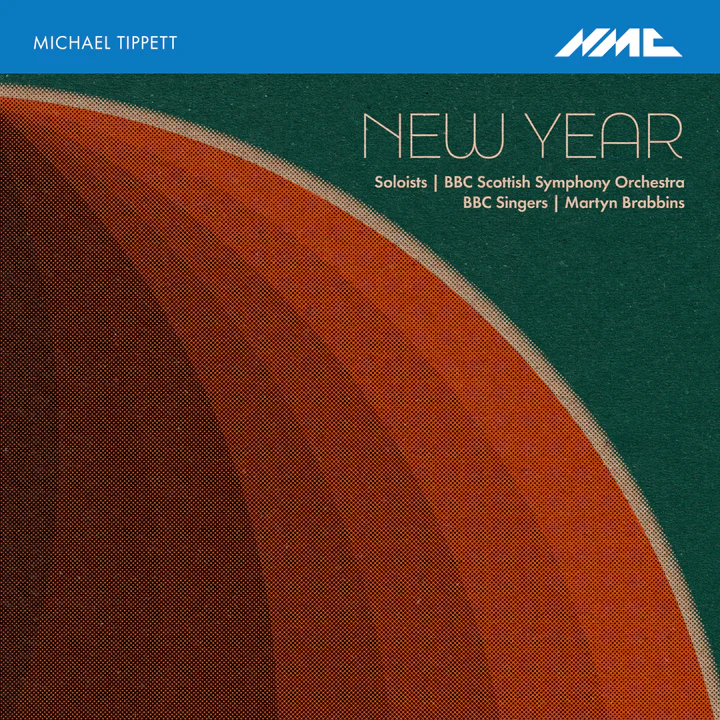
Michael Tippett’s final opera, New Year (1988) has finally been recorded. The work was produced in Houston in 1989 and Glyndebourne in 1990 and then fell out of the repertoire. The Birmingham Opera performed it last year, and the NMC double-CD recording is of a 2024 live semi-staged production by the BBC Scottish Symphony, conducted by Martyn Brabbins. 


New Year’s reemergence is propitious in timing. Combining elements of sci-fi, time travel, and fairy tales, it seems readily approachable for the streaming generation, with shows like Stranger Things, Time Bandits, and Severance providing a suitable backdrop. The opera also takes on social issues that remain important today, such as urban decline, poverty, racism, and Tippett’s ubiquitous concern for pacifism. However, the vernacular elements are the least successful of the piece, and the Jamaican accent adopted by one of the characters, Donny, played by baritone Ross Ramgobin, is cringeworthy today, and perhaps was back in the eighties too. 


Even by the composer’s standards, New Year is abundantly eclectic. Electric guitars, a large percussion section, and electronics combine with a traditional orchestra. Pop styles from the late eighties, notably rap and reggae, are enfolded in an otherwise modernist score with complexly chromatic parts for both soloists and chorus. The narrative itself is circuitous, with one part featuring a time traveling spaceship and the other a dystopian urban landscape. Thus, the challenges, never mind the costs, for any production are substantial.


Brabbins and company surmount most of them in a dedicated and well-prepared performance. The soloists are excellent, in particular soprano Rhian Lois, who plays the principal character Jo Ann, and Robert Murray, who plays the time traveller Pelegrin, both vibrant singers with considerable charisma to match their voices. Susan Bickley, the foster-mother to Jo Ann and Donny, is a warm presence, perplexed by their challenging behavior, agoraphobia for the former and misbehavior for the latter, and yet as nurturing as she can manage. The other time travellers, Merlin, played by baritone Roland Wood, and Regan, played by soprano Rachell Nicholls, provide excellent characterizations of their roles. Tenor Alan Oake as the Voice, the presenter of the action, is an authoritative presence. 


New Year is a multifarious and, in places, problematic piece. But one can scarcely imagine a better effort to present it to best advantage than this recording.


-Christian Carey


CD Review, Composers, File Under?

Satie (CD Review)

Satie

Alain Planès, Pleyel piano (1928)

François Pinel, piano duets, Marc Mauillon, baritone

Harmonia Mundi


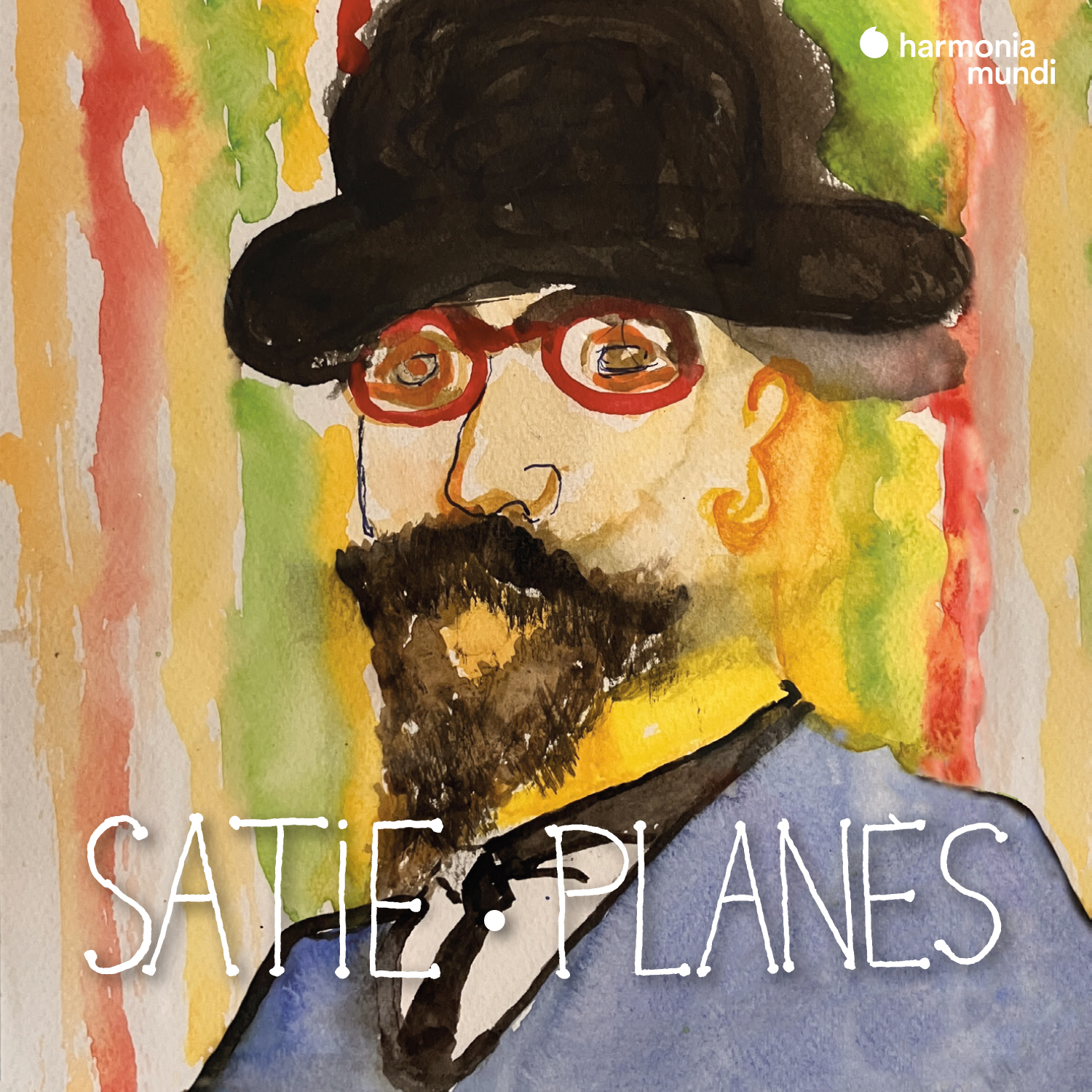
In 2025, substantial attention is being paid to the 150th anniversary of Maurice Ravel’s birth. Pianist Alain Planès has instead decided to celebrate the centenary of Erik Satie’s passing with a recording of music from the various stylistic periods of the eclectic composer’s oeuvre. Most of the music are works originally for piano and transcriptions, but there is a set of four-hands pieces and another of songs. 


At age seventy-seven, Planès has maintained his technique and interpretive skill, accommodating the varying demeanors – lyrical, enigmatic, bumptious, and virtuosic – of Satie’s music. Historically informed performance has extended into the twentieth century, and the pianist observes this by using a 1928 Pleyel, a piano similar to those Satie would have played upon. 


There are pieces that recall Satie’s work in cafes and theaters, such as the Valse-ballet, which opens the recording. Even in idiomatic genre pieces, there is a quirkiness to the dynamics and phrasing. Two song transcriptions, La Diva de L’Empire, and Satie’s “hit tune” Je te Veux, close the recording in a similarly light-hearted vein. The Gymnopedies and Gnossiennes, some of the composer’s well known and best-loved works, figure prominently in the program. Planès plays them with delicacy and small touches of rubato and dynamic inflections, exactly where the score indicates these fluctuations in phrasing. 


Avant-dernières pensées (“Penultimate Thoughts”), Chapitres tournés en tous sens (“Chapters Turned Every Which Way”), and Embryons desséchés (“Dessicated embryos”) are three humorous piano suites from the 1910s. The earlier Pièces froides (“Cold pieces”) exhibit similar jocularity. Even when going for musical jokes – quotations, weird juxtapositions, and sudden dynamic shifts – Satie always creates music that is well wrought for the instrument and its player. Planès presents the humor wryly, never overdoing it to go for a cheap laugh.


Trois morceaux en forme de poire (“Three pieces in the shape of a pear”) is for piano four-hands. The first resembles a Gymnopedie with a jaunty flourish at the end, the second has digressive flurries of runs punctuated with staccato chords and an emphatic bass line, and the third juxtaposes a lilting duple time dance with stentorian cadences. François Pinel is an amicable duet partner. Baritone Marc Mauillon joins Planès for Trois Mélodies, his voice easily navigating the high tessitura of the music with expressive nuance. The first, “La Statue de Bronze” (“The Bronze Statue”) recalls the oom-pah ostinato of popular Parisian fare. “Daphénéo” is more impressionist in tone but still peculiar, with some of its text not easily translatable. “Le chapelier” (“The hatter”) is in a lilting compound time until its forte climax, which is followed by a delicate coda.


Satie is worth yet more anniversary commemorations, but if the only one were to be this excellent recording, it would still provide a significant homage for his influential music. 


-Christian Carey