Les Arts Florissants at Caramoor
Les Arts Florissants at Caramoor
July 17, 2026
Published in Sequenza 21
By Christian Carey
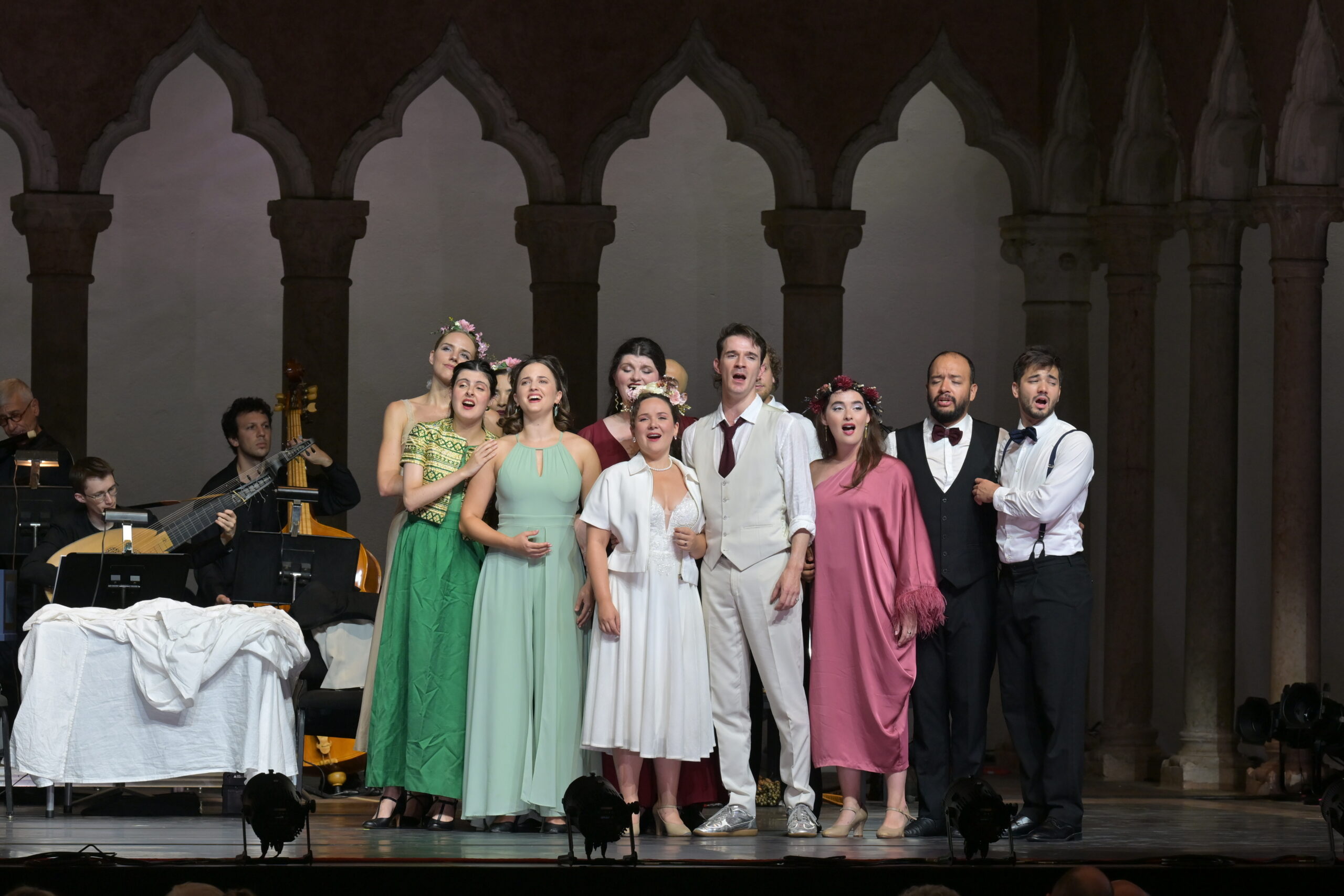
KATONAH, NEW YORK – Les Arts Florissants are the premiere ensemble devoted to French music of the baroque era. Though they have branched out from this remit in recent years – their most recent recording is of Haydn masses – the group remains devoted to performing French opera. On Saturday, they presented two one acts by Marc-Antoine Charpentier (1633-1704), their namesake piece, Les Arts Florissants, and La Descente d’Orpheé aux Enfers.
The ensemble’s dozen musicians were directed by its founder William Christie, who also played harpsichord and organ. They were joined by singers from Le Jardin des Voix, a training program directed by the tenor/conductor Paul Agnew. These may be emerging artists, but they all acquitted themselves admirably.
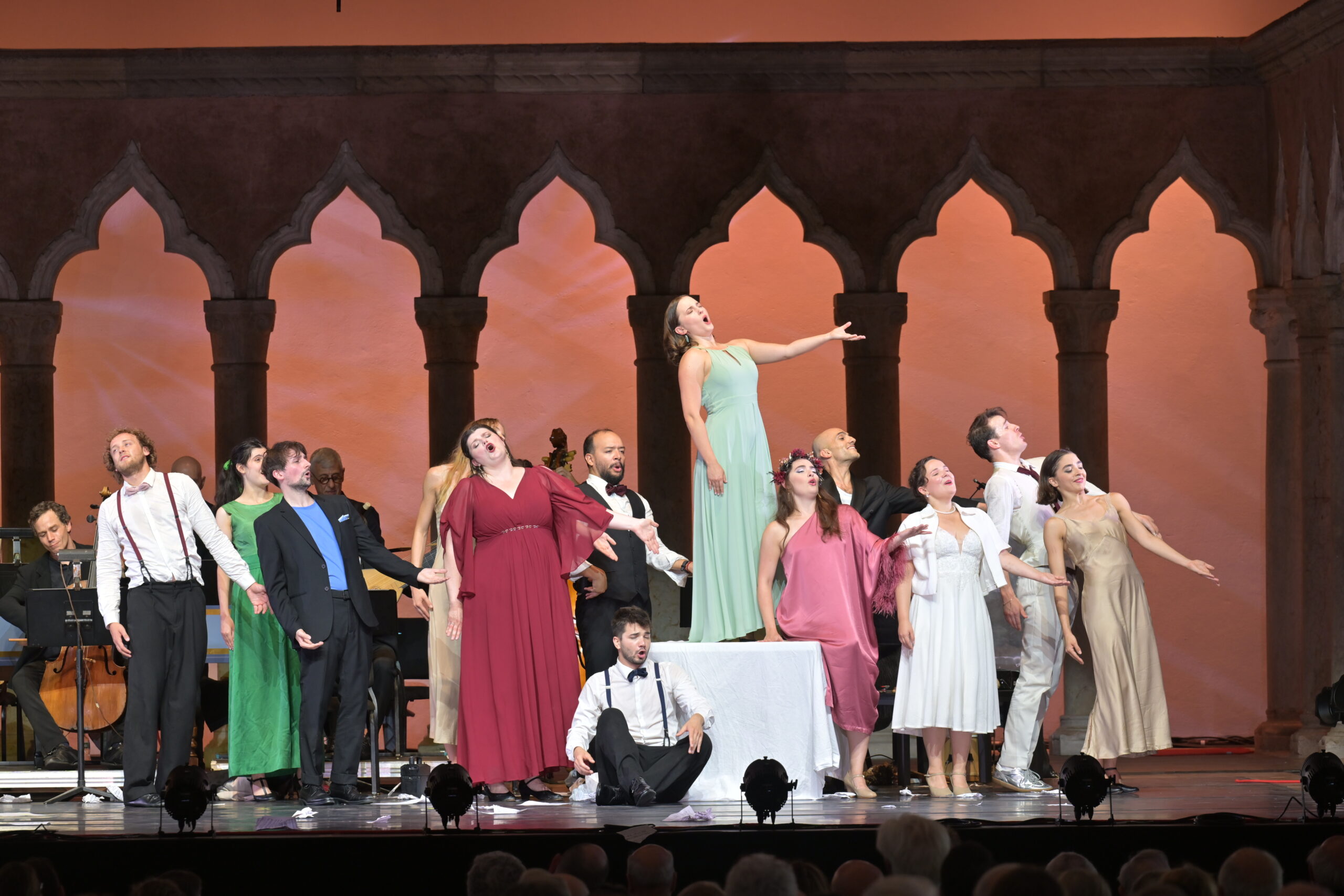
Les Arts Florissants was written in homage to King Louis XIV, in whose court it would have been performed. There are several references to him in the libretto, always as a proponent of the arts and bringer of peace. The Arts are represented by characters playing Music, Poetry, Painting, and Architecture, with each getting a chance to extol the virtues of their respective arts. A standout was soprano Camille Chopin, who sang La Musique with considerable grace and beauty. Soprano Sarah Fleiss as La Poésie was playful, this demeanor and her quicksilver high soprano complementing the other soloists well. Haute-contre (high tenor) Bastien Rimondi as La Peinture and contralto Sydney Frodsham as L’Architecture provided a light-hearted duet, linking their respective arts into a dynamic duo. The Arts are beset by La Discorde, played with wily verve by bass-baritone Olivier Bergeron, and Un Guerrier (War), performed by bass Kevin Arboleda-Oquendo. After their efforts plunge France into conflagration, La Paix (Peace) arrives to help restore order, extolling Louis’s protection of the Arts and his people. Josipa Bilić sang the role with affecting poise and a warm tone. Ultimately, La Paix is victorious and the Arts are restored to their rightful place at court and, by extension, throughout France.
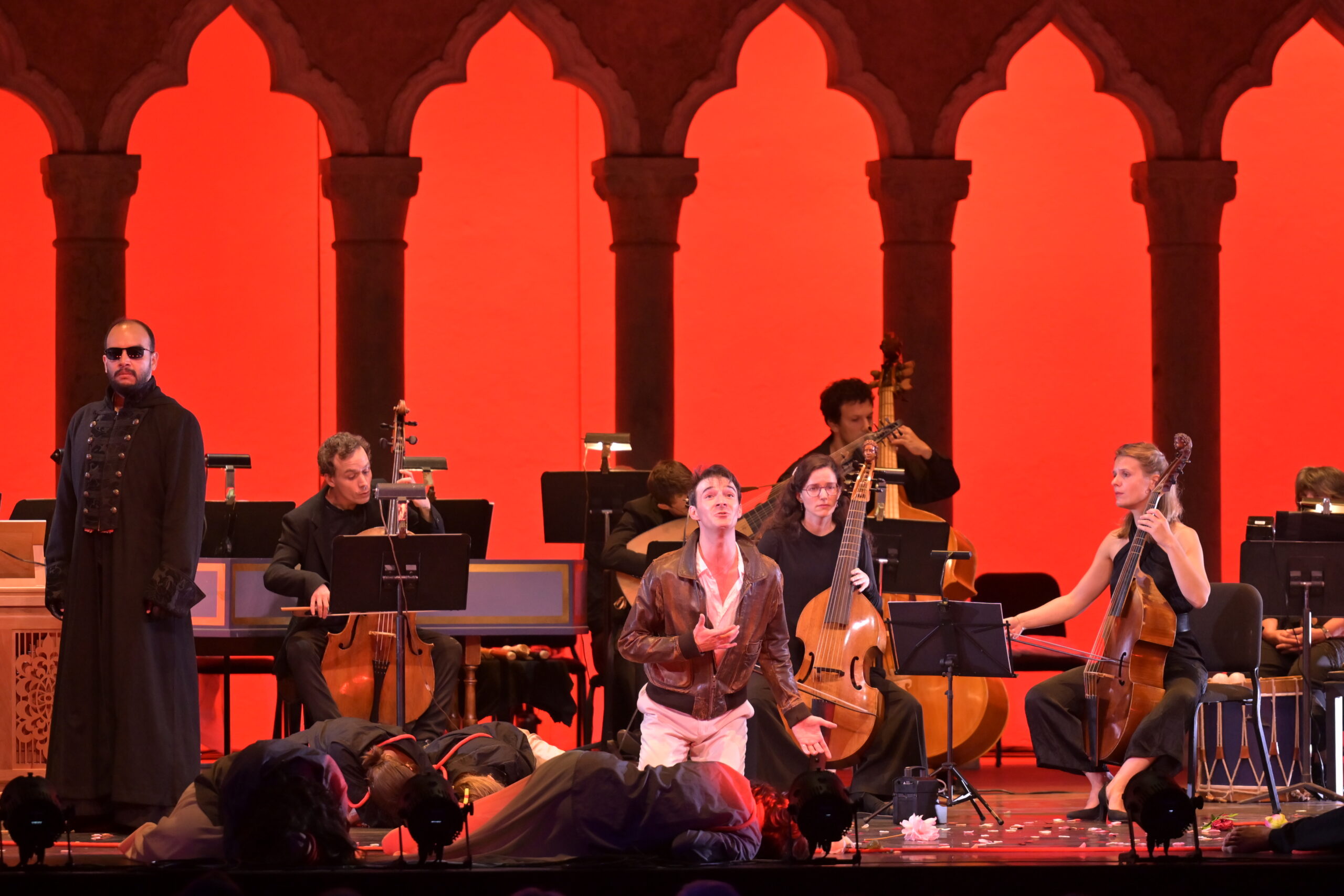
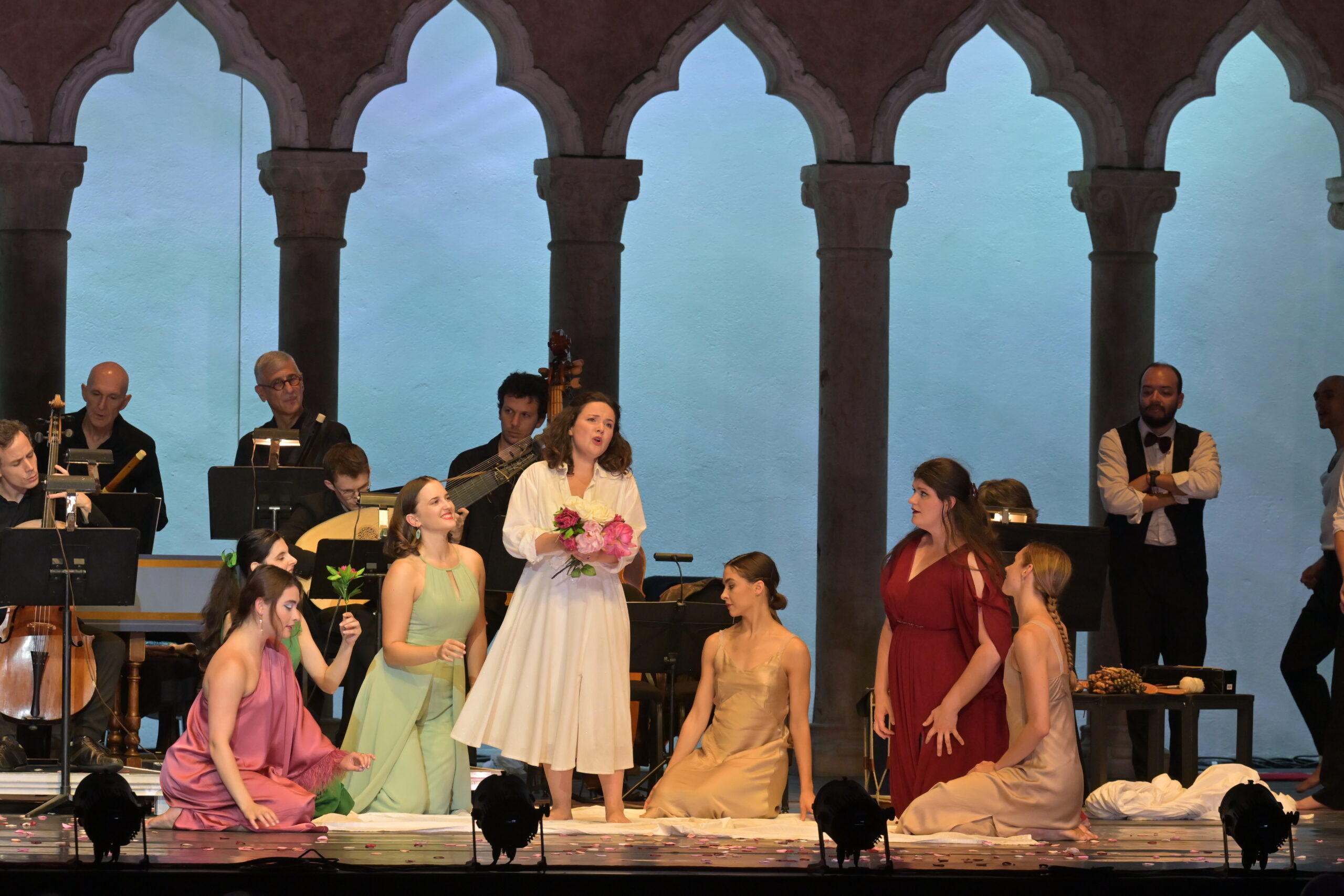
La Descente d’Orpheé aux Enfers is one of a number of operatic adaptations of the Orpheus myth. Unlike others, it doesn’t allow for Orpheus’s backward glance at Eurydice sending her back to Hades, instead ending with them beginning their ascent from the underworld. Apparently Louis didn’t like tragedy. That caveat aside, it is an attractive work, filled with affecting music. Much of it goes to the title character, played here by Richard Pittsinger, whose haute-contre voice was both supple and substantial. He met the considerable demands of a high-lying and dramatically intense role well. Arboleda-Oquendo sang Hades with ominous gravity. Fleiss played his wife, Proserpine, a character far removed from the lightness of La Poésie. Here she performed with affecting dignity. One wished that Euridice was given more to do in the opera, as Chopin lent it considerable poignancy. Rimondi and Bergeron were joined by tenor Attila Varga-Tóth in a trio of tormented souls in the Underworld, their voices blending well in plangent harmonies. Tanaquil Ollivier as the nymph Oenone displayed an attractive lyric soprano voice. Bilić as Daphné again impressed with a captivating presence.
The instrumentalists have inhabited this repertoire for a long time, and their experience and abundant talents were evident. Christie, leading from the harpsichord, elicited nimble tempos and impressive coordination from the ensemble, with considerable dynamic nuance. Although they are a chamber orchestra, Les Arts Florissants demonstrated an impressive blend of colorful timbres. The continuo group included the aforementioned keyboards, as well as archilute, violone, and bass violin, which afforded a number of different ways for the harmony to be realized. The rest of the ensemble consisted of a pair each of flutes, violins and viola da gamba players, as well as a percussionist. A particularly affecting choice made by Charpentier was to silence the violins and feature the viola da gamba players when Orpheus is in Hades.
The semi-staging focused on movement, which was abetted by four graceful dancers. The singers moved quite well too. In Les Arts Florissants, the Arts were besieged by the entropy wrought by Discord and War, and even seemed to slip towards the dark side before Peace helped to reel them back in. La Descente d’Orpheé aux Enfers began with a pastoral scene, in which confetti burst aloft from white sheets and parlor games were acted out in ebullient fashion. The story turns dark, of course, and this was illustrated by the use of red cords throughout, as the snake that bites Euridice, as barriers to Orpheus’s trip to the underworld, and to bind those suffering in Hell. One question lingered; if Orpheus wasn’t supposed to look back at Euridice, why did the blocking make that all but impossible?
In his program note, Christie noted that the advocacy of Les Arts Florissants for French baroque music had yielded gains for the repertoire with other ensembles and in opera houses throughout the world. This shift is a welcome one, but Les Arts Florissants are still the best group on the planet doing Charpentier’s operas.
-Christian Carey