Steve Reich at 90: ‘Music for 18 Musicians’ (The Clore Ballroom, Southbank Centre, London, 27 September 2026)
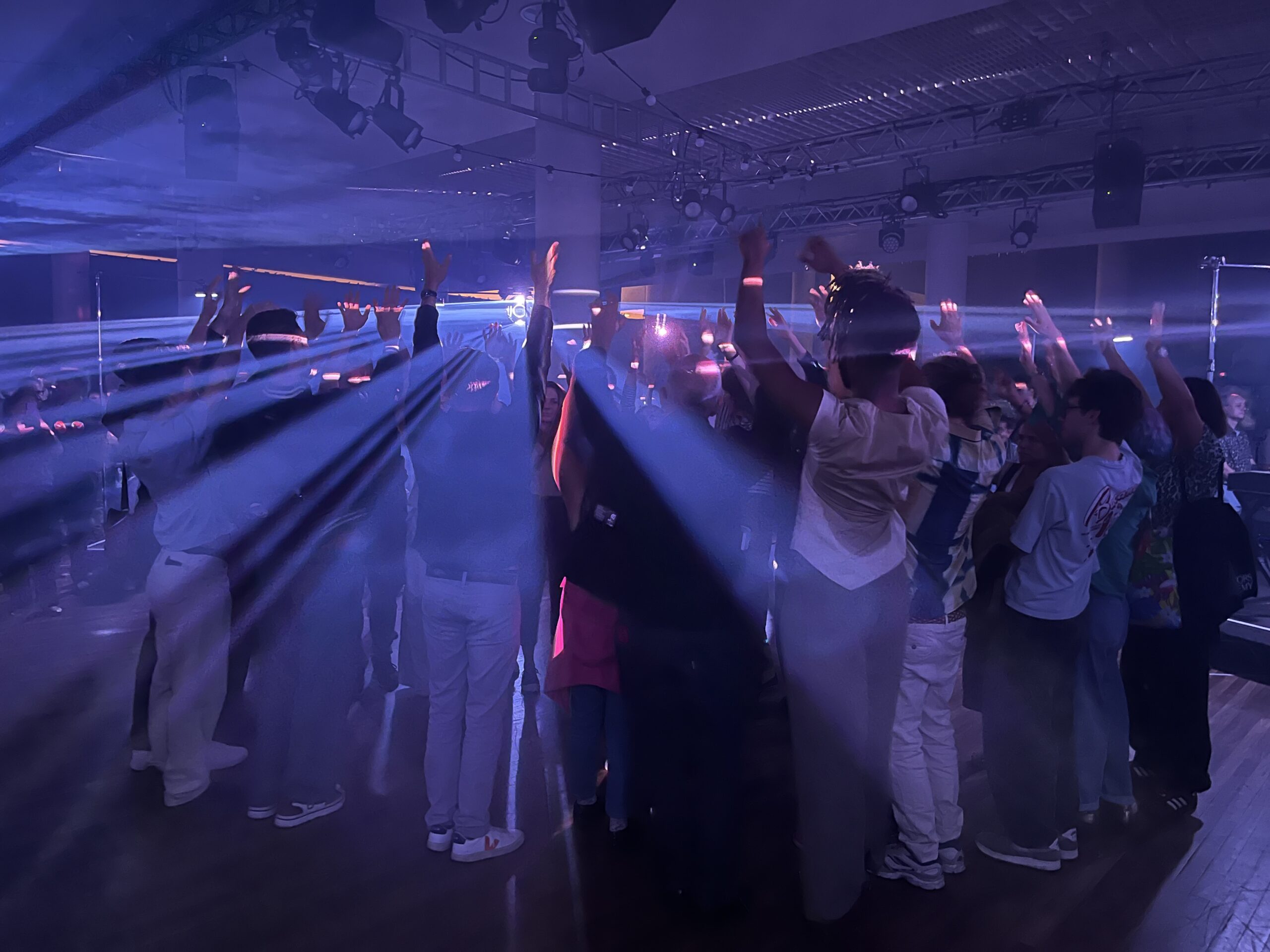
Just when Steve Reich’s ninetieth birthday celebrations appeared to be drifting towards an inauspicious conclusion, along comes Charles Hazlewood and the Paraorchestra to gatecrash the party, tear up the rulebook, let loose a posse of Dionysian dancers on the scene, and transform a routine Reich event into a Bacchanalian rave.
This new take on Music for 18 Musicians provided a breath of fresh air amongst a raft of retrospective events—Reich remodelled and refracted through the prism of psychedelia and 1990s warehouse EDM, with perhaps a whiff of hippy idealism and transcendental meditation thrown in. I’m not sure whether the composer would have approved. Most of those present gleefully lapped it all up.
Hazlewood is known for thinking creatively outside the box, but here he appeared to be operating according to a completely different set of Euclidean principles.
To be sure, Reich’s music has been placed in a variety of unorthodox settings and spaces over the years, ranging from disused train station buildings and repurposed multistorey car parks to all manner of outdoor locations, so there was nothing inherently radical in presenting this classic work at Southbank Centre’s Clore Ballroom.
Nevertheless, dotting the ensemble around the space went against Reich’s own recommended set-up, as did Hazlewood’s encouragement for everyone to move about the space as if viewing an audible sculpture in an art gallery. Likewise, the idea of dancers moving in and around the ensemble was not in itself revolutionary. Reich’s music, including Music for 18, has provided accompaniment to several dance productions in the past, notably those of Laura Dean Dancers and Musicians, and Anne Teresa De Keersmaeker’s Rosas dance company. However, the idea of interpolating freestyle, improvised movement seemed to fly in the face of the piece’s austerely conceptual pretext.
Hazlewood rightly drew attention, in a brief announcement at the beginning of the evening, to a whole range of paradoxes that lie at the heart of Reich’s music—not least that between rigor and freedom—and it was certainly refreshing to see Music for 18 unfettered from its structuralist straitjacket. There’s certainly nothing wrong with shaking things up, so long as the intention is motivated by creative and artistic concerns rather than dramatic effect. While there’s no doubting that Hazlewood’s intentions were genuine, the results were not always persuasive.
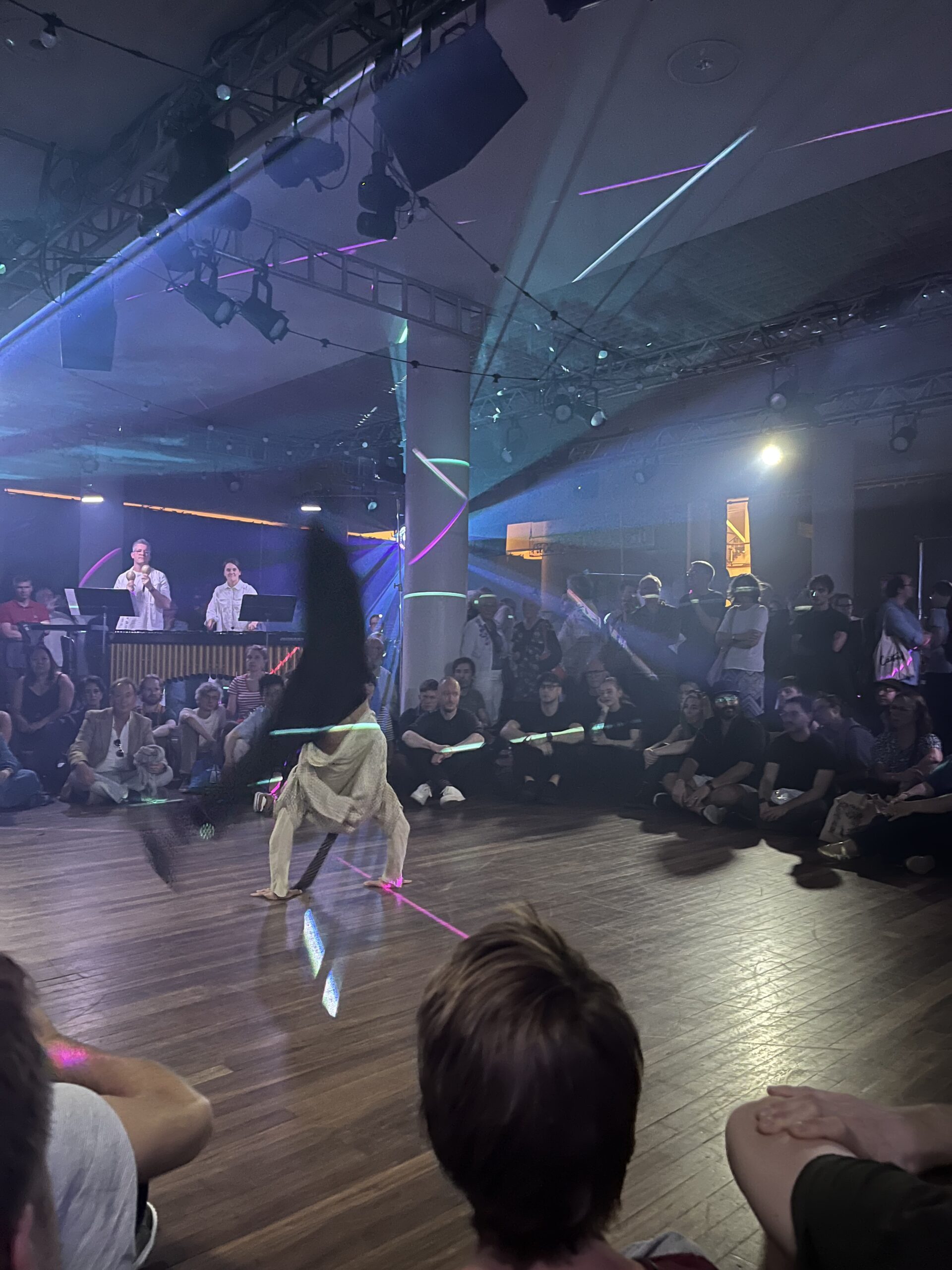
The dance element, pre-planned beforehand, tended to shift attention from the sonic experience to a visual one, and while the idea of encouraging the audience to move in and around the space was in keeping with Music for 18’s ‘immersive’ impact, this too became something of a distraction.
Many members of the audience appeared to circumambulate the space in a kind of somnambulistic daze, and the whole point of the exercise—to listen more attentively to the music—seemed to go by the wayside. I can’t imagine for a moment that walking around while trying to avoid bumping into other people doing the same thing might in any way sharpen one’s focus on the complex layers and textures that underpin Reich’s groundbreaking work. Thankfully, most seemed to have had enough of walking around after the opening set of eleven pulsing chords. So much for walking as a gradual process.
I remained firmly anchored to the vibraphone station—the composition’s ‘signal box’ and timekeeper—where the rest of the ensemble could be heard in more-or-less perfect balance.
What seemed to get lost in all the theatrical paraphernalia was the music itself, which was a shame since the Paraorchestra’s performance was never less than impressive, and at times quite brilliant. Highlights included brightly coloured, bell-like clarinet and vocal buildups in Sections II, IV and XI; surging tonic-dominant movement in the pianos in Section IIIa; warmly glowing and flowing marimba and vocal colours halfway through Section V; and excellent ensemble coordination in Section X. And despite my reservations about the happening-style multimedia nature of the performance, Sections VI–VIII, with their infectious maracas groove, yielded an extraordinarily uplifting synergy between music, dance and movement. At that moment, the entire performance clicked into place.
As an experiment, this presentation of Music for 18 certainly possesses potential, but perhaps it’s worth taking a closer look at those early, gritty, grungy performances of minimalist music in New York’s large gallery spaces and lofts during the late 1960s and early ’70s. Photos of these early performances show audiences scattered about the venue, as was the case here, but sitting (or lying down) on cushions rather than walking around, with an amplified ensemble positioned at the centre of the room. Perhaps future audiences should be encouraged instead to bring a beanbag, lie back, and let the music wash over them, one wave after another…