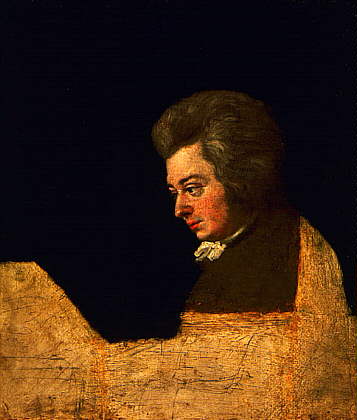
"There are no two points so distant from one another that they cannot be connected by a single straight line -- and an infinite number of curves."
Composer Lawrence Dillon has produced an extensive body of work, from brief solo pieces to a full-length opera. Three disks of his music are due out in 2010 on the Bridge, Albany and Naxos labels. In the past year, he has had commissions from the Emerson String Quartet, the Cassatt String Quartet, the Mansfield Symphony, the Boise Philharmonic, the Salt Lake City Symphony, the Ravinia Festival, the Daedalus String Quartet, the Kenan Institute for the Arts, the University of Utah and the Idyllwild Symphony Orchestra.
Although he lost 50% of his hearing in a childhood illness, Dillon began composing as soon as he started piano lessons at the age of seven. In 1985, he became the youngest composer to earn a doctorate at The Juilliard School, and was shortly thereafter appointed to the Juilliard faculty. Dillon is now Composer in Residence at the University of North Carolina School of the Arts, where he has served as Music Director of the Contemporary Ensemble, Assistant Dean of Performance, and Interim Dean of the School of Music. He was the Featured American Composer in the February 2006 issue of Chamber Music magazine.
Today’s the day, so this is my opportunity to weigh in on this too mindlessly worshipped and too frivolously disdained composer.
As far as I’m concerned, Mozart the child genius is a perfectly wonderful thing, not as amazing as some would have it, but definitely up there with the great prodigies.
The Mozart who absolutely astonishes and inspires me, though, is the guy from age 33-35. In those three years, he was
- Terminally ill - Shut out, for political reasons, from virtually all the professional opportunities available to a composer of his day - Racing around Vienna to teach piano lessons to uninterested children in their homes - Deeply in debt and begging for loans from friends and acquaintances - Supporting a wife and two toddlers (with four children having died in the previous eight years)
In other words, his life was about as grim as it gets. Meanwhile, what was he composing?
- The clarinet concerto - The last piano concerto - Two piano sonatas - Three string quartets - Two string quintets - The clarinet quintet - Two cantatas - Dozens of songs and other vocal works - Dozens of occasional dances for orchestra - Several pieces for mechanical instruments - Orchestrations for at least three Handel oratorios - Cosi fan tutte - Die Zauberflöte - La clemenza di Tito - The Requiem
In other words, in three perfectly dreadful years, more music than some composers write in a lifetime, and enough masterpieces to make the healthiest and most comfortable composer proud.
That’s the Mozart I celebrate: the Mozart who makes all of my excuses for why I don’t compose more music -- and better music -- thoroughly embarrassing. The Mozart who makes my complaints about the fact that I don’t get more acclaim for my work seem trivial. The Mozart who showed us that our bleakest moments can be transformed into our most ravishing insights.
Happy quarter-millennium, Wolfi.
posted by Lawrence Dillon
5:59 AM