"There are no two points so distant from one another that they cannot be connected by a single straight line -- and an infinite number of curves."
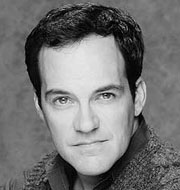
Composer Lawrence Dillon has produced an extensive body of work, from brief solo pieces to a full-length opera. Partially deaf from birth, Dillon grew up in a bustling household with seven older siblings. He began composing as soon as he started piano lessons at the age of seven. In 1985, he became the youngest composer to earn a doctorate at The Juilliard School, and was shortly thereafter appointed to the Juilliard faculty. Dillon is now Composer in Residence at the North Carolina School of the Arts, where he has served as Music Director of the Contemporary Ensemble, Assistant Dean of Performance and Dean of the School of Music.
Dillon's music, in the words of American Record Guide, is "lovely...austere...vivid and impressive." His works are recorded by Albany Records, Channel Crossings and CRS, and published by American Composers Editions. He is represented by Jeffrey James Arts Consulting.
What is the job of a composer? To write music. But what kind of music? How should it sound? We want composers to spark our imaginations, to bring us fresh and stimulating ideas. In other words, we want something new, whatever our notion of newness is -- even if it's not particularly new in an objective sense. But how much newness is the right amount?
Most young composers, and some older ones, battle with this riddle on a daily basis. Teachers, critics, colleagues, friends and enemies seem to have clear conceptions of how your music should sound. Sometimes it's difficult to remember who is supposed to be in charge.
How should new music sound?
To help young composers cope with this question, I give them two simple rules.
1. Be Curious About Music. What does this mean? That is up to you. If being curious means reading all of the latest theoretical treatises, then do it. If it means improvising for hours a day, then do it. If it means going to seven concerts a week and listening to dozens of recordings, then do it. Hopefully it will mean all of those things and more, but the crucial message is this: if you are going to commit a lifetime to composing, you have a responsibility to yourself and your listeners to do everything in your power to understand and master the art form. If you go about it half-assedly, expect a half-assed response.
Sure, there are lots of musicians out there who don't know what they are doing, and the world loves them for it. If fifty-nine million people preferred the guy who doesn't understand his job, why should you bother to learn yours? The answer is simple: if you were one of those fifty-nine million, then don't bother. Competence is clearly not an issue for you.
2. Write What You Want To Hear. Seems simple, right? Unfortunately, for many of us it is the most difficult thing you can ask. So many composers are searching for the *right* music, the music that will win them acceptance from whatever group they are hoping to impress, whether that group is made up of professors, peers, critics, performers, or even family members. Forget about them! If you really understand what you are doing, and are honest with yourself and others about what you like to hear, chances are someone else will enjoy it too. How big do you want your audience to be? Is fifty-nine million enough? Peter Serkin: "I would rather have ten people who love what I am doing than 10,000 who don't mind it."
So what is the job of a composer? Educate yourself, and then just tell us what is going on in your head. If every composer did this, we would be that much closer to understanding the world we live in. And that, my friends, would be a welcome change. posted by Lawrence Dillon
9:48 PM