"There are no two points so distant from one another that they cannot be connected by a single straight line -- and an infinite number of curves."
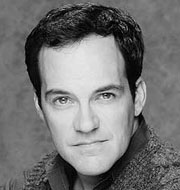
Composer Lawrence Dillon has produced an extensive body of work, from brief solo pieces to a full-length opera. Partially deaf from birth, Dillon grew up in a bustling household with seven older siblings. He began composing as soon as he started piano lessons at the age of seven. In 1985, he became the youngest composer to earn a doctorate at The Juilliard School, and was shortly thereafter appointed to the Juilliard faculty. Dillon is now Composer in Residence at the North Carolina School of the Arts, where he has served as Music Director of the Contemporary Ensemble, Assistant Dean of Performance and Dean of the School of Music.
Dillon's music, in the words of American Record Guide, is "lovely...austere...vivid and impressive." His works are recorded by Albany Records, Channel Crossings and CRS, and published by American Composers Editions. He is represented by Jeffrey James Arts Consulting.
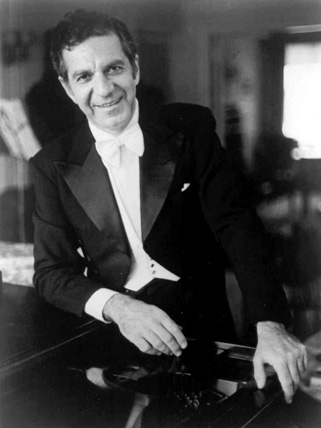
I spent a lot of time last weekend with pianist Claude Frank, who was in town to play a recital. I’ve known Claude for about fifteen years, and I always look forward to conversations with him. He is a witty, charming, and very observant fellow.
This time, conversation was a bit more difficult; the death of his wife, pianist Lillian Kallir, this past fall had clearly left its mark. It was tough to see him feeling low.
As usual, though, we spent a lot of time talking about music. One would think that we should have almost nothing to say to one another on this subject: in Claude’s world, music peaked with Beethoven and has been in steady decline ever since. Naturally, I have a very different perspective.
And yet I always find our exchanges fascinating. In some ways, I prefer to talk about music with someone whose perspective is very different from mine. Rather than being aggravating, I find it helps me clarify my viewpoint, and it reminds me how subjective music is.
I like to think that this characteristic would make me a very bad president.
In Emerson’s words: “Shall I tell you the secret of a true scholar? It is this: every man I meet is my master in some point, and in that I learn of him.”
I can’t speak for scholars, but if I’m going to have to spend the rest of my life with myself, I’d just as soon welcome some sharply dissenting voices into my head from time to time, if only to fend off tedium.











 This time, conversation was a bit more difficult; the death of his wife, pianist Lillian Kallir, this past fall had clearly left its mark. It was tough to see him feeling low.