"There are no two points so distant from one another that they cannot be connected by a single straight line -- and an infinite number of curves."
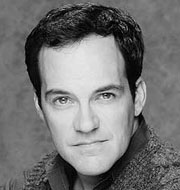
Composer Lawrence Dillon has produced an extensive body of work, from brief solo pieces to a full-length opera. Partially deaf from birth, Dillon grew up in a bustling household with seven older siblings. He began composing as soon as he started piano lessons at the age of seven. In 1985, he became the youngest composer to earn a doctorate at The Juilliard School, and was shortly thereafter appointed to the Juilliard faculty. Dillon is now Composer in Residence at the North Carolina School of the Arts, where he has served as Music Director of the Contemporary Ensemble, Assistant Dean of Performance and Dean of the School of Music.
Dillon's music, in the words of American Record Guide, is "lovely...austere...vivid and impressive." His works are recorded by Albany Records, Channel Crossings and CRS, and published by American Composers Editions. He is represented by Jeffrey James Arts Consulting.
On Friday, I taught a Composition Seminar here, and brought up the issue of creative balance alluded to in my recent post, The Components of Musical Experience. While it’s fresh in my mind, this is a good time to share some tips, not only for maintaining balance, but for saying goodbye to writer’s block forever. So here we go:
All of this is based on the four Jungian psychological functions -- thinking, feeling, intuition and sensation -- I’ve noted before. Everyone is different, but people tend to have one of these four functions as a strong point, and one as a blind spot. Finding your own balance is a very personal affair, but the more you are able to bring all four of these functions into the creative process, the richer your results are likely to be.
Writer’s block -- any creative block -- typically comes from an over-reliance on one of the four functions. We are all familiar with the feeling of banging our heads against a particular problem without making much progress. I’ve learned that the most effective route to getting past this frustration is to examine the way I am approaching the problem: is my approach too rational? too intuitive? Once I have identified the function I am over-relying on, I try out one of the others.
In composing, for example, you may have an outstanding theoretical concept you can’t seem to bring to fruition. Try improvising (intuition), or think of a powerful sensation you can tap into, eg this passage should sound like a delicate rainfall, and you will often find that the path becomes clear.
Sometimes the front door is locked, but the side door is wide open.