"There are no two points so distant from one another that they cannot be connected by a single straight line -- and an infinite number of curves."
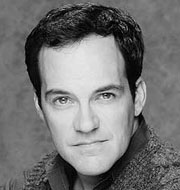
Composer Lawrence Dillon has produced an extensive body of work, from brief solo pieces to a full-length opera. Partially deaf from birth, Dillon grew up in a bustling household with seven older siblings. He began composing as soon as he started piano lessons at the age of seven. In 1985, he became the youngest composer to earn a doctorate at The Juilliard School, and was shortly thereafter appointed to the Juilliard faculty. Dillon is now Composer in Residence at the North Carolina School of the Arts, where he has served as Music Director of the Contemporary Ensemble, Assistant Dean of Performance and Dean of the School of Music.
Dillon's music, in the words of American Record Guide, is "lovely...austere...vivid and impressive." His works are recorded by Albany Records, Channel Crossings and CRS, and published by American Composers Editions. He is represented by Jeffrey James Arts Consulting.
THE LIST: 111 Influential Works, or Every Year Was a Good Year.
Here it is, Sequenza21’s list of most influential pieces since 1970. The list includes the pieces I originally came up with plus readers’ suggestions, both those that were posted and those that were emailed to me. I’ve also added a few pieces I thought of after I published the initial lists. I’ve left out a handful of works I couldn’t find dates for, but the rest are all here.
It’s an amazing, preposterous, fascinating, revealing, disorienting and provocative list of compositions. Take a look at it, and then I have a few questions and observations:
George Crumb: Ancient Voices of Children (1970) John Cage: Songbooks (1970) Gyorgi Ligeti: Chamber Concerto (1970) George Crumb: Black Angels (1970) Karlheinz Stockhausen: Mantra (1970) Tom Johnson: An Hour for Piano (1971) George Crumb: Vox Balanae (1971) Steve Reich: Drumming (1971) Morton Feldman: Rothko Chapel (1972) Gyorgi Ligeti: Double Concerto (1972) Charles Amirkhanian: Just (1972) Peter Maxwell Davies: Hymn to St. Magnus (1972) George Rochberg: String Quartet No. 3 (1972) Frederic Rzewski: Coming Together (1972) Louis Andriessen: De Staat (1972-76) Helmut Lachenmann: Gran Torso (1972-88) Ben Johnston: String Quartet No. 4, “Amazing Grace” (1973) Leonard Bernstein: Mass (1973) Steve Reich: Music for Mallet instruments, Voices, and Organ (1973) Gyorgi Ligeti: San Francisco Polyphony (1973-74) Brian Ferneyhough: Unity Capsule (1973-76) Luciano Berio: Points on the Curve to Find (1974) Peter Maxwell Davies: Ave Maris Stella (1975) Frederic Rzewski: The People United Will Never Be Defeated (1975) David del Tredici: Final Alice (1976) Philip Glass: Einstein on the Beach (1976) John Williams: Star Wars (1977) Peter Maxwell Davies: A Mirror of Whitening Light (1977) Joseph Schwantner: Aftertones of Infinity (1978) John Adams: Shaker Loops (1978) Morton Feldman: Why Patterns? (1978) Robert Ashley: Perfect Lives (1978) William Duckworth: The Time Curve Preludes (1978-79) Ellen Taaffe Zwilich: Chamber Symphony (1979) Judith Weir: King Harald's Saga (1979)
James Sellars: Chanson Dada (1980) Joan Tower: Petroushskates (1980) Harold Budd/Brian Eno: The Plateaux of Mirror (1980) Conlon Nancarrow: Studies Nos. 40, 41, 47, 48 (1980s) Laurie Anderson: O Superman (1981) Ezra Sims: Phenomena (1981) Jaco Pastorius: Word of Mouth (1981) La Monte Young: The Well-Tuned Piano (1981) Judith Weir: Thread! (1981) Peter Maxwell Davies: Image Reflection Shadow (1982) Steve Reich: Tehillim (1982) Michael Finnissy: Banumbirr (1982) Steve Reich: The Desert Music (1983) Morton Feldman: For Philip Guston (1984) Peter Maxwell Davies: Symphony No. 3 (1984) Arvo Part: Te Deum (1984) Louis Andriessen: De Stijl (1984-85) Morton Feldman: Piano and String Quartet (1985) Judith Weir: The Consolations of Scholarship (1985) John Adams: Harmonielehre (1985) Gyorgi Ligeti: Piano Concerto (1985-88) Gyorgi Ligeti: Piano Etudes (1985-1990) Daniel Lentz: The Crack in the Bell (1986) Laurie Anderson: Home of the Brave (1986) Michael Finnissy: String Trio (1986) Janice Giteck: Om Shanti (1986) Carl Stone: Shing Kee (1986) Morton Feldman: For Samuel Beckett (1987) Lois V Vierk: Simoon (1987) Larry Polansky: Lonesome Road: The Crawford Variations (1988-89) David Rakowski: Piano Etudes (1988-) Bunita Marcus: Adam and Eve (1989) Lee Hyla: String Quartet No. 3 (1989) Art Jarvinen: Murphy-Nights (1989)
Gyorgi Ligeti: Violin Concerto (1990) John Cage: Four2 (1990) Pauline Oliveros: Crone Music (1990) Martin Bresnick: Opere della Musica Povera (1990-99) Julia Wolfe: Four Marys (1991) John Cage: Five3 (1991) Robert Ashley: Improvement (1991) Milton Babbitt: Mehr Du (1991) John Adams: The Death of Klinghoffer (1991) Meredith Monk: Atlas (1991) Judith Weir: I Broke Off a Golden Branch (1991) Frederic Rzewski: De Profundis (1991) John Adams: Chamber Symphony (1992) Conrad Cummings: Photo Op (1992) John Cage: Fifty-Eight (1992) David Lang: Cheating, Lying, Stealing (1993) Milton Babbitt: String Quartet No. 6 (1993) David First: Jade Screen Test Dreams of Renting Wings (1993) Michael Daugherty: Metropolis Symphony (1993) Elliott Carter: Symphonia (1993-96) Milton Babbitt: Triad (1994) Mikel Rouse: Failing Kansas (1995) Eve Beglarian: Landscaping for Privacy (1995) Mikel Rouse: Dennis Cleveland (1996) Tan Dun: Marco Polo (1996) Michael Finnissy: Seventeen Immortal Homosexual Poets (1997) Thomas Ades: Powder Her Face (1997) Michael Finnissy: Multiple Forms of Constraint (1997) Pierre Boulez: Sur incises (1998) John Luther Adams: In the White Silence (1998) Mark Adamo: Little Women (1998) Elodie Lauten: Waking in New York (1999) The Magnetic Fields (aka Stephin Merritt): 69 LOVE SONGS (the album) (1999)
Kaija Saariaho: L’amour de loin (2000) Frederic Rzewski: Pocket Symphony (2000) Osvaldo Golijov: La Pasión según San Marcos (2000) Michael Gordon: Decasia (2001) Michael Harrison: Revelation (2001) Chocolate Genius (aka Marc Anthony Thompson): Godmusic (2001) Peter Maxwell Davies: Naxos Quartets (2002-05) John Luther Adams: The Mathematics of Resonant Bodies (2002) John Corigliano: Circus Maximus (2004)
So there it is. Have you memorized them all? Now for some questions.
Are there too many pieces on this list? I don’t think so. There are many, many composers out there doing wonderful work.
Is it possible we missed some? No question in my mind. We’re doing a little better than the Pulitzer Prize, but this list just scratches the surface.
Is this list biased? You bet. I can think of a number of prominent people born in the 1930s in particular who have been left off. Anybody remember an interview a few weeks ago in the NYTimes with James Levine and a couple of composers? Won’t find their names here. Among established composers with prominent careers in 1970-2005, don’t look for Mario Davidovsky, Alfred Schnittke, Lou Harrison, Iannis Xenakis, Sofia Gubaidalina, Toru Takemitsu or William Bolcom either.
We’re also missing a lot of the composers who are getting the majority of orchestral commissions these days. And don’t tell me they don’t have any influence, because there are hundreds of other composers trying to imitate those career paths, even if they won’t admit it.
Do numbers matter? The most represented composer is Peter Maxwell Davies, with five entries. John Adams, John Cage, Morton Feldman, Gyorgi Ligeti, Steve Reich and Judith Weir have four each. All of these composers are very important, but I’m thinking these numbers are only of qualified interest -- they might be a bit skewed by individual enthusiasms to be really significant of the largest trends. But numbers are what they are.
Is there a connection between length and impact? I don’t know all of the works on this list, but of the ones I know, very few are under 10 minutes, and many are over 30 minutes. Is length an appropriate measure of importance?
What is influence? I asked What new works changed the way composers thought about composing from 1970 to 2005. Several people answered with the pieces that had influenced them most. But there are two kinds of influence: there is the piece that changes how you think about music, and there is the piece that reinforces the viewpoint you already hold. No matter how conservative or progressive we may be, we all respond to both types of influence, and I believe that a lot of the pieces that ended up on this list -- both conservative and progressive -- fall into the latter category, even though I was specifically asking for the former.
Actually, there is a third kind of influence, which we all experience as well: the piece that has a negative impact on us, as in, Wow, I never want to write anything like that!
How many of these works have you heard? My score is 37, which is exactly one third. Gives me a great reason to go on living, just knowing that all those life-changing works are still out there for me to experience.
What’s next? You tell me. Hope this list is of some use/interest to you.
posted by Lawrence Dillon
7:35 AM