"There are no two points so distant from one another that they cannot be connected by a single straight line -- and an infinite number of curves."
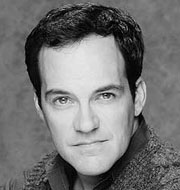
Composer Lawrence Dillon has produced an extensive body of work, from brief solo pieces to a full-length opera. Partially deaf from birth, Dillon grew up in a bustling household with seven older siblings. He began composing as soon as he started piano lessons at the age of seven. In 1985, he became the youngest composer to earn a doctorate at The Juilliard School, and was shortly thereafter appointed to the Juilliard faculty. Dillon is now Composer in Residence at the North Carolina School of the Arts, where he has served as Music Director of the Contemporary Ensemble, Assistant Dean of Performance and Dean of the School of Music.
Dillon's music, in the words of American Record Guide, is "lovely...austere...vivid and impressive." His works are recorded by Albany Records, Channel Crossings and CRS, and published by American Composers Editions. He is represented by Jeffrey James Arts Consulting.
Rodney Lister and David Toub have given me their personal answers to my question What pieces from the 70s, 80s, 90s and 00s have changed the way composers think about composing? which I appreciate greatly, since I didn’t know several of the works they referenced, and will now enjoy tracking them down.
But therein lay my difficulty in answering Radvilovich’s question: my immediate response was completely personal, and he was looking for broader cultural significance. So here’s another approach to the same question. I’ve come up with a short list of works from the 1970s that had an immediate and far-reaching impact on compositional styles. Mind you, these aren’t necessarily pieces that had an impact on me, or even pieces that I particularly like. But a significant number of composers rethought their paths after these pieces were first performed, or at least borrowed heavily from them, either technically or stylistically.
George Crumb: Voice of the Whale George Rochberg: String Quartet No. 3 Steve Reich: Drumming David del Tredici: Final Alice Philip Glass: Einstein on the Beach Joseph Schwantner: Aftertones of Infinity
Any arguments with this list? What have I left out? Please let me know: it’s easy to overlook things, or take things for granted that somehow seemed too obvious. And I’m happy to add to this list, if appropriate.
Next I will attempt a list for the 1980s, although I expect to have a harder time with that one.
posted by Lawrence Dillon
7:46 AM