"There are no two points so distant from one another that they cannot be connected by a single straight line -- and an infinite number of curves."
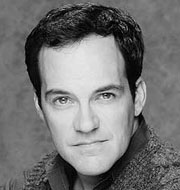
Composer Lawrence Dillon has produced an extensive body of work, from brief solo pieces to a full-length opera. Partially deaf from birth, Dillon grew up in a bustling household with seven older siblings. He began composing as soon as he started piano lessons at the age of seven. In 1985, he became the youngest composer to earn a doctorate at The Juilliard School, and was shortly thereafter appointed to the Juilliard faculty. Dillon is now Composer in Residence at the North Carolina School of the Arts, where he has served as Music Director of the Contemporary Ensemble, Assistant Dean of Performance and Dean of the School of Music.
Dillon's music, in the words of American Record Guide, is "lovely...austere...vivid and impressive." His works are recorded by Albany Records, Channel Crossings and CRS, and published by American Composers Editions. He is represented by Jeffrey James Arts Consulting.
First of all, I should clarify: Milan Kundera once wrote that the novelist should never be smarter than the novel*, by which he meant that the process of writing should be one of discovery, not dictation.
So my experience with Scattering was not really surprising to me: I always try to be open to learning something new from each piece I write. But over the weekend things started developing in an unexpected direction. I noticed a weak moment toward the end of the piece, a measure that simply didn’t measure up to the rest. I picked away at it, as if it were an irritating scab, and it gradually grew and grew into a fearsome outburst, a chaotic flurry of figures that sounded unlike anything that had happened previously in the piece.
And there was my answer: just beneath the surface of this sparkling, joyous music was a outpouring of ferocious, bloody outrage. I found it, nurtured it, and helped it shine, and now Scattering has a very different shape and tone from a week ago.
The rest of the piece remains pretty much the same, but oddly enough, sometimes the passage that sticks out from the rest of the music is the one that actually helps hold it all together.
*"When Tolstoy sketched the first draft of Anna Karenina, Anna was a most unsympathetic woman, and her tragic end was entirely deserved and justified. The final version of the novel is very different, but I do not believe that Tolstoy had revised his moral ideas in the meantime; I would say, rather, that in the course of writing, he was listening to another voice than that of his personal moral conviction. He was listening to what I would like to call the wisdom of the novel. Every true novelist listens for that suprapersonal wisdom, which explains why great novels are always a little more intelligent than their authors. Novelists who are more intelligent than their books should go into another line of work."
-- Milan Kundera, acceptance speech upon winning the Jerusalem Prize, 1985. Translated from the French by Linda Asher