"There are no two points so distant from one another that they cannot be connected by a single straight line -- and an infinite number of curves."
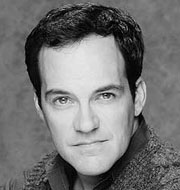
Composer Lawrence Dillon has produced an extensive body of work, from brief solo pieces to a full-length opera. Partially deaf from birth, Dillon grew up in a bustling household with seven older siblings. He began composing as soon as he started piano lessons at the age of seven. In 1985, he became the youngest composer to earn a doctorate at The Juilliard School, and was shortly thereafter appointed to the Juilliard faculty. Dillon is now Composer in Residence at the North Carolina School of the Arts, where he has served as Music Director of the Contemporary Ensemble, Assistant Dean of Performance and Dean of the School of Music.
Dillon's music, in the words of American Record Guide, is "lovely...austere...vivid and impressive." His works are recorded by Albany Records, Channel Crossings and CRS, and published by American Composers Editions. He is represented by Jeffrey James Arts Consulting.
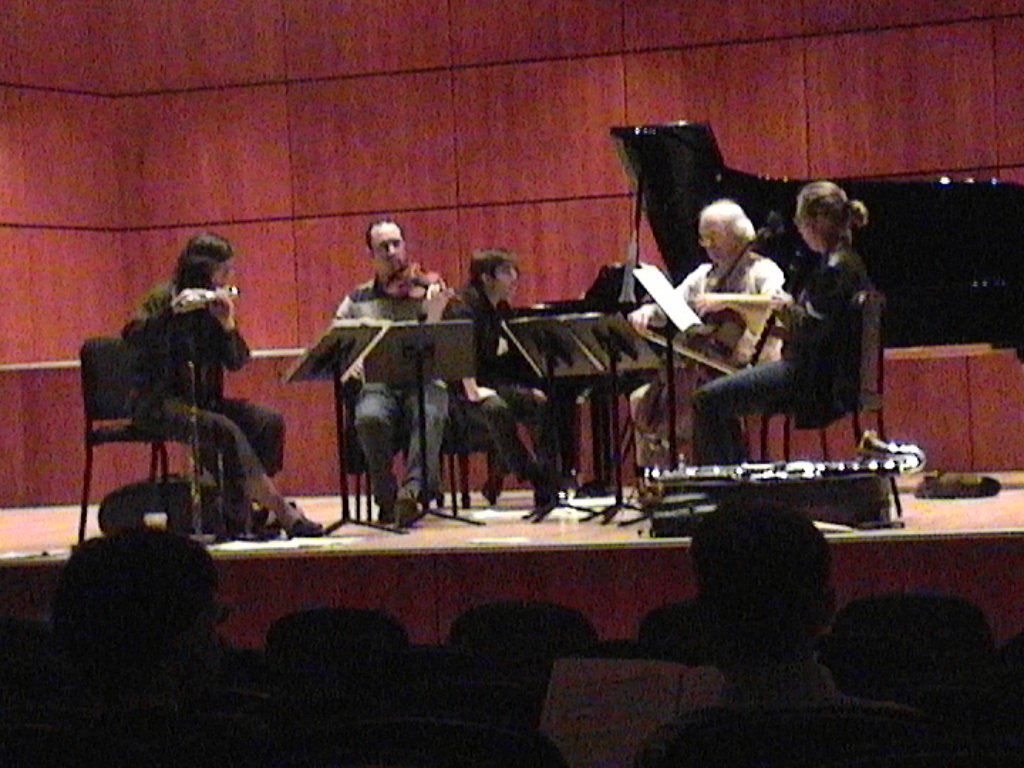
Da Capo’s in dress rehearsal right now for tonight’s program: music by Charles Wourinen, Stefan Wolpe, Shulamit Ran, Chinary Ung, John Harbison and Joan Tower.
While the da capites were teaching instrumental classes last night, I snuck off to hear a lecture by Carol Gilligan, noted psychologist, author and feminist.
Dr. Gilligan was here as part of the ongoing Kenan Writers Encounters series. I’ve read her 2002 book “The Pleasure Principle,” which recounts her studies of childhood and adolescence. In it, she draws a wonderful parallel between girls in their teens and boys in the 5-7 year age range. According to her studies, these are the times when we learn to hide our true feelings in order to fit into our social milieus. For adolescent girls, it’s often the pressure of the “good girl/bad girl” dichotomy, of acting like a lady. For boys in the 5-7 year age range, it’s the pressure of acting like a man, of not being emotional.
In her lecture, she tied all of this developmental psychology into the creative arts, into finding one’s voice, or, more accurately, not losing ones voice. She drew a vivid distinction between the academic and artistic worlds, clearly having experienced the worst of academia. It was an interesting, thoughtful presentation on the dangers and benefits of artistic expression.
A fascinating sideshow was the audience: about 300 adults of all ages, many of them busily taking notes on little pads. It was as if we were at a convention of the nation’s psychology journalists.
Or maybe they are all sitting at their computers at this moment, blogging away on their thoughts and observations from the evening.











 Dr. Gilligan was here as part of the ongoing Kenan Writers Encounters series. I’ve read her 2002 book “The Pleasure Principle,” which recounts her studies of childhood and adolescence. In it, she draws a wonderful parallel between girls in their teens and boys in the 5-7 year age range. According to her studies, these are the times when we learn to hide our true feelings in order to fit into our social milieus. For adolescent girls, it’s often the pressure of the “good girl/bad girl” dichotomy, of acting like a lady. For boys in the 5-7 year age range, it’s the pressure of acting like a man, of not being emotional.