"There are no two points so distant from one another that they cannot be connected by a single straight line -- and an infinite number of curves."
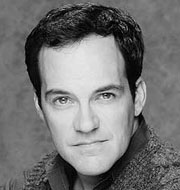
Composer Lawrence Dillon has produced an extensive body of work, from brief solo pieces to a full-length opera. Partially deaf from birth, Dillon grew up in a bustling household with seven older siblings. He began composing as soon as he started piano lessons at the age of seven. In 1985, he became the youngest composer to earn a doctorate at The Juilliard School, and was shortly thereafter appointed to the Juilliard faculty. Dillon is now Composer in Residence at the North Carolina School of the Arts, where he has served as Music Director of the Contemporary Ensemble, Assistant Dean of Performance and Dean of the School of Music.
Dillon's music, in the words of American Record Guide, is "lovely...austere...vivid and impressive." His works are recorded by Albany Records, Channel Crossings and CRS, and published by American Composers Editions. He is represented by Jeffrey James Arts Consulting.
In "On Significance in Music," (1942) long before the serialists overtook academia, philosopher Susanne Langer marvelled at the way that musical disagreements tended to take the form of dogma vs. heresy.
There was a time when I thought we might be beyond all of that, but I’m starting to hear more and more us-vs.-them divisiveness in the music world.
Many years ago I heard an audience member needle John Cage, trying to get him to say something negative about Milton Babbitt’s music. Cage deflected him several times, then, as close to exasperation as I ever saw him, said, "There are so many people in this world. Why can’t Milton do what he wants to do, and I’ll do what I want to do?"
So I ask the same question: Isn’t the music world big enough for all of us to do what we need to do? Can’t we care deeply about what we do without insisting that there is no other possibility? What is it about music, that most ephemeral form of expression, that makes people behave so territorially?
Langer has an answer: “Whenever people vehemently reject a proposition, they do so not because it simply does not recommend itself, but because it does, and yet its acceptance threatens to hamper their thinking in some important way. If they are unable to define the exact mischief it would do, they just call it degrading, materialistic, pernicious or any other bad name. Their judgment may be fuzzy, but the intuition they are trying to rationalize is right; to accept the opponent’s proposition as it stands, would lead to unhappy consequences.”
I think she was right then and now. So when I hear someone making music that is foreign to my artistic needs, instead of coming up with derogatory names, I think Thank god s/he’s doing that so I don’t have to.











 In "On Significance in Music," (1942) long before the serialists overtook academia, philosopher Susanne Langer marvelled at the way that musical disagreements tended to take the form of