"There are no two points so distant from one another that they cannot be connected by a single straight line -- and an infinite number of curves."
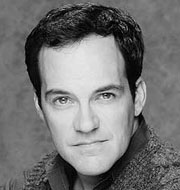
Composer Lawrence Dillon has produced an extensive body of work, from brief solo pieces to a full-length opera. Partially deaf from birth, Dillon grew up in a bustling household with seven older siblings. He began composing as soon as he started piano lessons at the age of seven. In 1985, he became the youngest composer to earn a doctorate at The Juilliard School, and was shortly thereafter appointed to the Juilliard faculty. Dillon is now Composer in Residence at the North Carolina School of the Arts, where he has served as Music Director of the Contemporary Ensemble, Assistant Dean of Performance and Dean of the School of Music.
Dillon's music, in the words of American Record Guide, is "lovely...austere...vivid and impressive." His works are recorded by Albany Records, Channel Crossings and CRS, and published by American Composers Editions. He is represented by Jeffrey James Arts Consulting.
I’ve had some email suggestions for my 80s list that have been very provocative and helpful. Time to take a crack at the 90s and 00s. This isn't a "best of" list, it's a list of works I have seen have an impact on young composers. I don’t claim to be an expert, I’m hoping to get feedback from younger composers whose are in the process of shaping their voices, because the fallout from a lot of newer music is difficult for older composers to measure:
Julia Wolfe: Four Marys (1991) John Adams: Chamber Symphony (1992) David Lang: Cheating, Lying, Stealing (1993) Michael Daugherty: Metropolis Symphony (1993) Tan Dun: Marco Polo (1996) Thomas Ades: Powder Her Face (1997) Pierre Boulez: Sur incises (1998) Frederic Rzewski: Pocket Symphony (2000) Osvaldo Golijov: La Pasión según San Marcos (2000) Michael Gordon: Decasia (2001)
As Kyle Gann and Rodney Lister have averred, and I certainly agree, there are a number of reasons why a list like this will always fall short of being comprehensive. Again, I am looking at this as a starting point. Most of all, I want to know what I’ve missed, so I can take a crack at filling in my own gaps. So let me know what you think!
posted by Lawrence Dillon
10:04 AM