"There are no two points so distant from one another that they cannot be connected by a single straight line -- and an infinite number of curves."
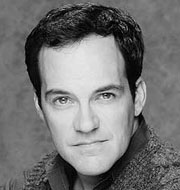
Composer Lawrence Dillon has produced an extensive body of work, from brief solo pieces to a full-length opera. Partially deaf from birth, Dillon grew up in a bustling household with seven older siblings. He began composing as soon as he started piano lessons at the age of seven. In 1985, he became the youngest composer to earn a doctorate at The Juilliard School, and was shortly thereafter appointed to the Juilliard faculty. Dillon is now Composer in Residence at the North Carolina School of the Arts, where he has served as Music Director of the Contemporary Ensemble, Assistant Dean of Performance and Dean of the School of Music.
Dillon's music, in the words of American Record Guide, is "lovely...austere...vivid and impressive." His works are recorded by Albany Records, Channel Crossings and CRS, and published by American Composers Editions. He is represented by Jeffrey James Arts Consulting.
After the concert Friday night, a woman came up to congratulate me, then said, “I just love hearing a new piece for the first time.” This was a wonderful thing for me to hear, and I told her so. She continued, “I was taught that you should always listen very carefully the first time you hear a new piece, because you will never have that experience [of hearing that music for the first time] again.”
When I heard those words, four pieces immediately popped into my head: 4’33”, Le sacre du printemps, Beethoven’s Fourth Piano Concerto and Josquin’s Absalon, fili mi.* I felt a complex mix of emotions: sadness that I would never again experience any of those pieces for the first time, and exhilaration at the thought of all the people who have yet to hear those pieces, who have yet to have the kind of transformative experiences I had when I first heard them.
One of the joys of teaching is being able to vicariously relive this loss of virginity to favorite works, as you share them with avid young listeners.
But I was grateful to this particular listener on Friday night for articulating something that I had begun to take for granted. You should always listen carefully the first time you hear a new piece. Those words will stay with me for some time to come. I think they can apply to a wide range of listening experiences, with new and old music.
I’m reminded of a line I heard about ten years ago that has also stayed with me, though I can’t recall the author. I’d be very pleased if anyone out there could identify the source of this one for me: “The oldest books are new releases to those who haven’t read them.”
*I keep wondering -- why these four pieces in particular? Out of the hundreds of compositions that have opened my ears, I really can’t put my finger on why these specific works popped into my head at that moment, but there they were.